

I haven't worked with amidol developers for some 15 years so I don't have anything current to compare with, but the amidol I got from Russia works. If I have to complain about anything, it was a little bit difficult to dissolve. Even after extensive stirring, there was still quite a lot of very fine, dark solid particles in the solution. Dipping a test strip in the developer showed that the particles stick to the paper and won't go off when washing, so I decided to strain the developer through a coffee filter and that solved the problem.
I initially started with the following recipe, which I found on Unblinking Eye http://unblinkingeye.com/Articles/Amidol/amidol.html
35g sodium sulfite desicc
0.75g potassium bromide
0.6g benzotriazole
10g citric acid
11g amidol
Since at least sodium sulfite and citric acid dissolves much easier in warm water, I first dissolved everything except the amidol in about 300ml warm water, then let it cool before I added the amidol and topped up to a total liquid amount of 1200ml. The developer was initially quite slow and I assumed that I might have filtered out too much undisolved amidol. Adding some more amidol didn't make any change, but adding some more sodium sulfite sped things up quite a lot. After developing several prints and running low on liqued in my tray, I tried first to top up with a fresh solution of only sodium sulfite and that worked very well, even if I then dilluted the amidol, potassium bromide and benzotriazole. Next time, I will at least increase the initial amount of sodium sulfite to 50 or perhaps even 60g.
I went through my stash and tried many of the papers I have laying around, new papers from Ilford and Foma and some very old papers from ORWO, Wephota and Mimosa (old stock from the German Democratic Republic). With some of the papers, I even made two prints and developed one in Amidol and the other in Ilford Warmtone developer, which I otherwise usually use. The amidol developer worked well with all papers I tried, I had absolutely no problems with spots or staining, as has often been reported as issues with amidol. The differences between the two developers turned out to depend a lot on exactly which paper I was using. I had expected that the Ilford WT developer would show a warmer tone, but that was generally not the case. The only papers showing a significant difference in tone, were the Fomatone MG Classic (131, 133, 532) papers. These tend to get a little bit greenish in the Ilford WT developer, but showed a much more neutral tone when developed in amidol. The other papers showed subtle differences in density and contrast, but also here, the differences depend on the paper. ORWO BN111 came slightly darker and flatter in amidol, Fomabrom 123 came brighter and more contrasty.
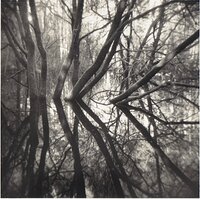
My scanner is not the best and I understand that it is difficult to judge the quality of a print by viewing a scan of it, but here is one of the prints I developed in amidol yesterday:

I initially started with the following recipe, which I found on Unblinking Eye http://unblinkingeye.com/Articles/Amidol/amidol.html
35g sodium sulfite desicc
0.75g potassium bromide
0.6g benzotriazole
10g citric acid
11g amidol
Since at least sodium sulfite and citric acid dissolves much easier in warm water, I first dissolved everything except the amidol in about 300ml warm water, then let it cool before I added the amidol and topped up to a total liquid amount of 1200ml. The developer was initially quite slow and I assumed that I might have filtered out too much undisolved amidol. Adding some more amidol didn't make any change, but adding some more sodium sulfite sped things up quite a lot. After developing several prints and running low on liqued in my tray, I tried first to top up with a fresh solution of only sodium sulfite and that worked very well, even if I then dilluted the amidol, potassium bromide and benzotriazole. Next time, I will at least increase the initial amount of sodium sulfite to 50 or perhaps even 60g.
I went through my stash and tried many of the papers I have laying around, new papers from Ilford and Foma and some very old papers from ORWO, Wephota and Mimosa (old stock from the German Democratic Republic). With some of the papers, I even made two prints and developed one in Amidol and the other in Ilford Warmtone developer, which I otherwise usually use. The amidol developer worked well with all papers I tried, I had absolutely no problems with spots or staining, as has often been reported as issues with amidol. The differences between the two developers turned out to depend a lot on exactly which paper I was using. I had expected that the Ilford WT developer would show a warmer tone, but that was generally not the case. The only papers showing a significant difference in tone, were the Fomatone MG Classic (131, 133, 532) papers. These tend to get a little bit greenish in the Ilford WT developer, but showed a much more neutral tone when developed in amidol. The other papers showed subtle differences in density and contrast, but also here, the differences depend on the paper. ORWO BN111 came slightly darker and flatter in amidol, Fomabrom 123 came brighter and more contrasty.
My scanner is not the best and I understand that it is difficult to judge the quality of a print by viewing a scan of it, but here is one of the prints I developed in amidol yesterday:
Last edited:
