• Welcome to Photrio!
    Registration is fast and free. Join today to unlock search, see fewer ads, and access all forum features.
    Click here to sign up

Agfa photo-paper blast from the past!

Recent Classifieds

Forum statistics

Threads
202,672
Messages
2,843,901
Members
101,456
Latest member
Ragnarock
Recent bookmarks
0

joho

Member
Allowing Ads
Joined
May 13, 2011
Messages
233
Format
Large Format
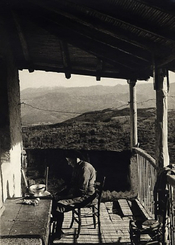
I am looking to find a paper that gives this results -
photo was made on Agfa brovira-or Portiga Rapid [?]
the film was FP4-in ID-11 ____DATE [1972]
 

Attachments

  • Portiga-Rapid tones-vue 1972.jpg
    Portiga-Rapid tones-vue 1972.jpg
    158.9 KB · Views: 207
Last edited by a moderator:
Portriga was unique. There's no current equivalent. I was one of those classic graded papers which disappeared once cadmium was banned from the emulsions. But I have simulated some of the "feel" of Portriga highlights using Ilford MGWT in combination with subtle pinkish sulfide toning. But the greenishness of the dark tones in actual Portriga would be hard to preserve that way. Brovira was a neutral black graded paper.
 
..."once cadmium was banned from the emulsions"... how was cadmium used ????
 
Foma 132 glossy or matte is a killer paper...can't we just learn to love what we actually have....
 
Trace amounts of cadmium were allegedly the secret sauce to both the original Oriental Seagull G and Portriga emulsions. Once that ingredient got banned, these papers were never the same. The ban itself, and its timing, is well documented. Oriental had to comply because so much of its paper was being shipped to Europe, just like how the ban on thorium affected lens glass manufacture. Cadmium was soon highly restricted in the US as well (but ironically, not in batteries, which use far more of it). But specific emulsion formulas were well guarded secrets; and in that respect, all that many of us have to go on is the most probable rumors of the era.
 
The issue with past Portriga or current Foma retro-look products, or even my multi-toned MGWT prints, is how much longer will my remaining little bottles of SpotTone olive shade hold out? It doesn't take much in comparison to the "neutral black" and "selenium brown" shades, but I'd hate to be without it.
 
Portriga was unique. There's no current equivalent. I was one of those classic graded papers which disappeared once cadmium was banned from the emulsions. But I have simulated some of the "feel" of Portriga highlights using Ilford MGWT in combination with subtle pinkish sulfide toning. But the greenishness of the dark tones in actual Portriga would be hard to preserve that way. Brovira was a neutral black graded paper.

I believe nick b from GEH knows how to make Portriga emulsion, I saw samples there years ago and I think he still coats paper for himself.
 
If you are in the E.U you might be able to find Slavich papers still (or was) made in Russia, their warm tone was close.
 
Having the best particular paper and development, toning,etc. to fit a particular type of image has been the name of the game for me. And there was a time when nearly all the classic graded papers were disappearing, but VC options not really ripe yet, when b&w printmaking became pretty frustrating. It's like depriving a chef of good ingredients.

Now we do have some excellent VC papers to choose from, with their own range of possibilities and certainly convenience, but that still leaves a void in what the old classics could do so well in their own right. Glad to have made a good number of prints with those, to still look at at least. Going forward, we make do as needed.
 
If you are in the E.U you might be able to find Slavich papers still (or was) made in Russia, their warm tone was close.

Just curious what you have in mind.
As I recall none of soviet / russian / ukrainian photo papers were marked as warm tone.
Grade, weight, surface were marked.
There were different brands, almost all of them with mixed bromide / chloride emulsions and warmest was Bromportret - that one?
 
Just curious what you have in mind.
As I recall none of soviet / russian / ukrainian photo papers were marked as warm tone.
Grade, weight, surface were marked.
There were different brands, almost all of them with mixed bromide / chloride emulsions and warmest was Bromportret - that one?

And they shall hammer their swords into really excellent fiber photo paper! Pray for Peace.
 
When Slavich was available in the US, last to have it was B&H I found that it was close to 70s vintage Agfa. I only used one package of the warm tone, but it was very nice. At the time Slavich only made graded FB papers, seemed to be throw back to the 60s and 70s.
 
When Slavich was available in the US, last to have it was B&H I found that it was close to 70s vintage Agfa. I only used one package of the warm tone, but it was very nice. At the time Slavich only made graded FB papers, seemed to be throw back to the 60s and 70s.
never saw a Slavich warm tone paper...only what looked like to me a slightly cold tone
graded paper can be bent and shaped to do different things.
looking for a formula to make a nice grade3 paper....I even have the cadmium!!
 
never saw a Slavich warm tone paper...only what looked like to me a slightly cold tone
graded paper can be bent and shaped to do different things.
looking for a formula to make a nice grade3 paper....I even have the cadmium!!

Yes. the Slavich paper i used maybe 10 yrs ago was distinctly cold tone.
 
Dye transfer paper contained mildly radioactive Thorium. Too bad a Geiger counter can't be used to evaluate the quality of black and white paper in advance, while it's still in an unopened box.
 
Yes. the Slavich paper i used maybe 10 yrs ago was distinctly cold tone.

At the time B&H and before that had Slavich in both warm and cold tone in a vanity of surfaces. I generally do not print with warm tone and only bought a packet of 25 sheets of warm tone. I did find the Slavish web site, still up and running and selling in the E.U through a distributor in Lithuanian but only a few grades in double wt, not sure how sanctioned are working out.
 
Trace amounts of cadmium were allegedly the secret sauce to both the original Oriental Seagull G and Portriga emulsions. Once that ingredient got banned, these papers were never the same. The ban itself, and its timing, is well documented. Oriental had to comply because so much of its paper was being shipped to Europe, just like how the ban on thorium affected lens glass manufacture. Cadmium was soon highly restricted in the US as well (but ironically, not in batteries, which use far more of it). But specific emulsion formulas were well guarded secrets; and in that respect, all that many of us have to go on is the most probable rumors of the era.

The Cd misnomer is a convenient excuse but it probably had a lot more to do with a more complex sequence of changes. The change to washed emulsions (so that they could be coated on RC) and the removal of Cd happened in the 1970s, along with some emulsion structural changes (and the loss of some emulsions that could not be conveniently re-engineered with the technology of the time) - the real cause of death of some warmtone emulsions seems to have been their use of lead salts in the initial precipitation step (to produce a favourable crystal habit) and sales levels that were too low (by late 1990s standards) to accommodate the re-engineering of the emulsion using modern emulsion crystal growth technology. Changes in anti-oxidants and other components to enhance the batch-to-batch consistency also seem to have had effects on processes that require the creative misuse of particular papers.
 
Portiga falls into the warmtone category; but what do you surmise was behind the significant quality drop in Seagull G, which was distinctly cold tone? I think there was a change in its ownership around the same time - it's been quite awhile, so that might need double-checking. And its alleged revival as "New Seagull" around 2000 seems to have been an even further drop in quality; pretty disappointing to me at least.
 
Last edited:
what do you surmise was behind the significant quality drop in Seagull G

We could start with at least one factory move in the 1980s (which essentially means reformulation), bankruptcy in the 1990s and a whole host of external factors relative to both.

There does seem to have been a limited continuance of usage of small amounts of Cd for preservative use, but some of the replacements were sometimes chemically close relatives of Phenidones (and you can imagine what that'll do to a lith print) - along with other addenda that help make emulsions work properly and consistently from batch-to-batch (and also stop infectious development). It is worth noting clearly that with an appropriately formulated developer, even supposedly non-lithable papers (e.g. various Ilford ones) can be lith processed successfully - i.e. if the components that stop the effect are defeated.
 
If you are in the E.U you might be able to find Slavich papers still (or was) made in Russia, their warm tone was close.

The sales company representing Slavich is based here in Lithuania. At the moment, they have their Unibrom paper and B&W reversal paper in stock. Getting Russian goods can be quite tricky these days, though, because of the political situation. Look at geola.com.
 
Agfa made magical papers, I used Record Rapid, Portriga, and Brovira depending on the subject, nowadays with digital somebody would accuse you of using 'effects'. Does anybody remember Kodak Bromesko, a viable alternative to the Agfa papers but not as easily available in the UK?
 
Kodak Bromesko, a viable alternative to the Agfa papers but not as easily available in the UK

Given that it was a Kodak Ltd paper (i.e. made in Harrow for the UK market), I'm a bit perplexed by your statement that it wasn't as easily available in the UK as Agfa papers. It may have been that the Kodak material was more readily available through the professional supply channels rather than high street shops.

I have got some in to-be-lithed pile, along with a chunk of Record Rapid. The other main Kodak Ltd papers were Bromide (not Kodabromide) and Royal Bromesko. Royal Bromesko looks like it was being aimed at Portriga.
 
Thanks for the answer, Lachlan. I never "lith" printed, except maybe a bit experimentally early on. But I did sometimes "snatch" develop portrait prints for an especially soft delicate look. I married that to the extreme micro-contrast ability of my multicoated Kern 14 in Dagor lens, the most contrasty lens in any format I've ever seen. The combination gave me great tonality in midtone and highlight detail, but an overall gentle rendering due to pulling the print prematurely out of the developer.

Graded Brilliant Bromide was my favorite paper for doing that trick, followed by graded EMaks. The original Seagull G did it decently too. But today's VC papers are worthless for that application; they just go blaaah rather than silky, if underdeveloped.
 
Last edited:
Photrio.com contains affiliate links to products. We may receive a commission for purchases made through these links.
To read our full affiliate disclosure statement please click Here.

PHOTRIO PARTNERS EQUALLY FUNDING OUR COMMUNITY:



Ilford ADOX Freestyle Photographic Stearman Press Weldon Color Lab Blue Moon Camera & Machine
Top Bottom