
• Welcome to Photrio!
    Registration is fast and free. Join today to unlock search, see fewer ads, and access all forum features.
    Click here to sign up

After 40 years in the darkroom, I am still working this out what is a fine print to you?

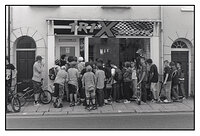
New Kids on the block

A
New Kids on the block

  • 1
  • 0
  • 28
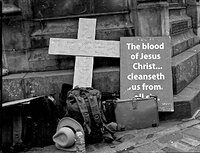
Parliament Square.

A
Parliament Square.

  • 1
  • 0
  • 92

Forum statistics

Threads
203,342
Messages
2,853,222
Members
101,796
Latest member
wus1026
Recent bookmarks
0
How well you interpret the scene, the subject and its minutiae of detail that 'speaks' or tells a story to the viewer; how effectively you bring it with and through the camera to be expressed on film and eventually, the finished print, is of far more importance than what and how it is printed (or what was involved in that printing), or assigning a flash, now uquitous moniker like "fine print", "fine art print" or "silver gelatin fine art print", among a host of glamorised (and clichéd terms). A print that does not ask the viewer questions, does not pique their conscience, does not arouse, excite or enthuse in any genre and is bereft of any meaning — like a piece of Mr Squiggle art — has failed, irrespective of what the photographer wants to call it.

Your right, but, defining fine prints, how do you judge Eugene Smith's Tomako in Bath to Ansel Adams Moon Rise over Hernandez New Mexico? Very different artists, very different approach, one taken as a commercial work, the other as "fine art" both stand alone in terms of conveying the message the photographer intended.

A lot of Adams' work has had little to no impact on me. That includes the oft-talked about image of Moonrise over Hernandez NM. What is the message or the conversation — evoked or embedded, in the photograph.

Much of his work published in his three books came up sub-standard through the print process, rather than any perceived lack of technical proficiency of Adams. I know this because his works have been shown in Australia in the past, but still ... up against others like Rudman (e.g. Iceland: An Uneasy Calm) et al, the impact of Adams is low.
 
To my mind, a Fine Print is one that at the least doesn’t limit the impact of the photo, and very likely adds to it. The Ultimate Print is where that partnership is crafted to perfection!

BTW, I think you mistake the meaning of ‘communication’ if you think it must convey a ‘message’ that could be replaced by a caption. Words are not terribly efficient at communicating feeling, and even a thousand words may fail where one photo communicates so much.
 
does everything in this print serve the same intention? A soft, warm, quiet print and a harsh, cold, confrontational print can both be extraordinary. What seems to matter is whether every choice — tonal range, contrast, finish, even how it is framed and hung — points in the same direction.
So, in a word, consistency. I think that's an important point for me as well.
I'd add: craftsmanship that supports the image without putting itself center stage.

A fine print for me is any physical manifestation of an image that allows the image to speak for itself, while at the same time possibly/optionally adding certain characteristics that support the image without being an inherent part of it. But at the least, a fine print should not get in the way of the photograph. That still leaves an infinite gamut of possibilities and they are furthermore not necessarily hierarchically structured, which is also comforting: there's for me no quest for "the finest" print (either in making them or viewing them).
 
How well you interpret the scene, the subject and its minutiae of detail that 'speaks' or tells a story to the viewer; how effectively you bring it with and through the camera to be expressed on film and eventually, the finished print, is of far more importance than what and how it is printed (or what was involved in that printing), or assigning a flash, now uquitous moniker like "fine print", "fine art print" or "silver gelatin fine art print", among a host of glamorised (and clichéd terms). A print that does not ask the viewer questions, does not pique their conscience, does not arouse, excite or enthuse in any genre and is bereft of any meaning — like a piece of Mr Squiggle art — has failed, irrespective of what the photographer wants to call it.


A lot of Adams' work has had little to no impact on me. That includes the oft-talked about image of Moonrise over Hernandez NM. What is the message or the conversation — evoked or embedded, in the photograph.

Much of his work published in his three books came up sub-standard through the print process, rather than any perceived lack of technical proficiency of Adams. I know this because his works have been shown in Australia in the past, but still ... up against others like Rudman (e.g. Iceland: An Uneasy Calm) et al, the impact of Adams is low.

Don't blame the sender if the receiver is on mute.
 
A fine print comes from the heart and soul.
I think this nails it. The first work-print is just a matter of basic technique. But to go further you have to have a vision what to aim for and the experience or the examples from others what is possible. To have a realistic vision of what the picture could be and what you want it to be to me is artistically the most challenging part. From there it is again "just" applying the right technique to get there. The first is something you have to find inside you the second can be learned from outside sources like books, forums or workshops.
 
A lot of Adams' work has had little to no impact on me. That includes the oft-talked about image of Moonrise over Hernandez NM. What is the message or the conversation — evoked or embedded, in the photograph.

As Ralph already hinted to: It depends. A snapshot of my daughters probably means little to you but the world to me. Having been in that western desert the pictures evokes a lot in me especially the momory atmosphere of a calm evening in that area. It's calm not screaming at you but very unique.
 
In other words, a fine print looks the way you want it to.
 
The link I came from points to another post in this discussion, but I would start again from the original question:

"How do you think about print quality especially at the level where technique is no longer the main question?"

It’s a simple question, but at the same time a complicated and layered one.

In mature prints (or simply well-made ones) there should be less demonstration of skill. Burning, dodging, tonal control all of these can and often must be present to arrive at the final print, but they shouldn’t be perceived as virtuosity.

This, however, is not easy to judge. In the end we often return to the emotion the print creates both in the person who made it (whether they conceived it in printing, in shooting, or earlier) and in the person who looks at it.

A print does not necessarily need to be “realistic,” but it should somehow appear believable. On this point, Ansel Adams himself said that his prints are actually quite far from the reality observers often think they represent.

A good print like a strong subject or interpretation should not become tiring to look at. Even though a photograph has, in a sense, a finite visual path, unlike music where you must wait for the piece to end, a photograph can still hold attention without exhausting itself.

Please sorry for my poor english...I hope this is understandable.

Enzo
 
A lot of Adams' work has had little to no impact on me. That includes the oft-talked about image of Moonrise over Hernandez NM. What is the message or the conversation — evoked or embedded, in the photograph.

Much of his work published in his three books came up sub-standard through the print process, rather than any perceived lack of technical proficiency of Adams. I know this because his works have been shown in Australia in the past, but still ... up against others like Rudman (e.g. Iceland: An Uneasy Calm) et al, the impact of Adams is low.

You are correct, not every photograph has the same impact on every viewer, same with painting, writing, poetry, you name the art and there are many different responses. I think that what art interesting, one size does not fit all.
 
There are some really fine insights in this thread. Ha ha.

I think @Vaughn mentioned something about a fine print failing. I'm still pretty stuck on fine denoting quality of the print, so to me, that means the negative was lacking, or the photographers print didn't quite match their visualization.

You can all feel free to call me the a-hole here who doesn't find "Moonrise" to be a special image when compared with all of the other Ansel Adams work. It's hard for me to say that since for me, night photography instantly adds drama vs the same image in the daylight whether it's a 'good" image or not it gets bonus points for being taken at night. This sounds needlessly harsh, what I mean is simply that "Moonrise" doesn't evoke any special feeling for me.

@koraks based upon your answer above, when you are finished and happy with a print, is that not the "finest" print of that negative for you?
 
For any scene there may be many variations of a fine print, at the end of the day I think the print must satisfy the photographer and exhibit known print values of execution/production.
 
@koraks based upon your answer above, when you are finished and happy with a print, is that not the "finest" print of that negative for you?
Another fine (quite possibly finer, still) print is always around the corner! Also, I don't think it's a hierarchy, per se, even though one can have favorites. Even this preference can shift over time.
 
There are some really fine insights in this thread. Ha ha.

I think @Vaughn mentioned something about a fine print failing. I'm still pretty stuck on fine denoting quality of the print, so to me, that means the negative was lacking, or the photographers print didn't quite match their visualization…
As long as we understand each other. I just apply the term ‘fine’ to a print the same way I would in ‘fine art’…as an identifier of a category, not a measurement of quality.
So I see that Fine prints can include manipulated SX-70s to torn prints held together with transparent tape.

A print can fail simply by the photographer’s message not being translated visually to his or her audience.

PS…“Moonrise” was a daytime image (before the sun set).
 
Last edited:
Another fine (quite possibly finer, still) print is always around the corner! Also, I don't think it's a hierarchy, per se, even though one can have favorites. Even this preference can shift over time.

good point;for example AA made several variations of 'moonrise' over time with different darkness to the sky. They all were fine prints; just different ones.
 
I am not sure you were referring to my answer or someone else's — either way, I think we agree more than you might expect. The idea of a print within a series is actually a wonderful extension of what I mean by coherence — a print that works perfectly in its narrative context, serving the intention of the whole sequence, may be held to an even higher standard than one that stands alone. The coherence is simply operating at a larger scale.

Which makes the craft demands greater, not lesser. So perhaps we are saying the same thing from different directions.

A fine print is in the craft.!!
But it starts in the head and ends in the eye.
 
As long as we understand each other. I just apply the term ‘fine’ to a print the same way I would in ‘fine art’…as an identifier of a category, not a measurement of quality.
So I see that Fine prints can include manipulated SX-70s to torn prints held together with transparent tape.

A print can fail simply by the photographer’s message not being translated visually to his or her audience.

PS…“Moonrise” was a daytime image (before the sun set).

Wow! I need to revisit the examples book. I'm not sure how I missed that tidbit.

I also understand the distinction that happens when one doesn't so stubbornly apply a level of craft distinction to the word "fine" as I tend to do. I would call approximately 10 of my prints fine, and the rest simply prints. Whether a viewer would agree or not is that whole other can of worms.
 
Yeah, the big hubbabaloo about Moonrise was that Adams had to guess the exposure because he didn’t have time to find his meter as the sun was setting and he didn’t wanna lose the sun shining on the crosses, so the story goes.
 
Many years ago I took a class on Fine Printing, and I still ascribe to the things I was taught therein. To wit:
1. A good negative. You can't add texture to blank areas or to blown highlights.
2. A good paper. Fiber based, an RC print always looks like it was printed on a piece of plastic. My paper of choice was Portriga Rapid, which is no longer made.
3. Contrast control. Portriga was a graded paper, so we mixed Dektol and Selectol to fine tune the overall contrast.
4. Maximum blacks. Portriga, a warm tone paper, had a greenish cast straight out of the fixer. So we learned how to use selenium toner to achieve rich, deep blacks. This led to learning about all the other toning possibilities.
5. Crisp whites. We learned how to use benzotriazole to get those sparkling whites.
6. Enlarger light. We learned how to use cold light heads, and when not to.
In sum, a making a fine print is about Quality and Control. Quality materials and careful control based on knowing about the materials and process. It's not solely about artistic intent, but how to use the materials to achieve that intent. It's been a long time since I made a really fine print, as the onrush of billions of digital images has greatly lowered the value of a fine print, and of analog B/W in general. But I still am a believer in fine printing. And hey, if you can't appreciate Moonrise, perhaps you should stick to your Iphone😎
 
Other than what it may or may not take to make a fine print, the bottom line, to quote Duke Ellington "If it sounds good it is good." If it looks good it is good.
 
Old Portriga Rapid III was a beautiful paper. Losing it was one of my reasons to explore carbon printing.

I see technique as only one-third of the qualities of a ‘fine print’. Another third is image/content, and the other third how well the photographer ties the other two-thirds together and connects with the viewer.

The perfectly made print may or may not be ‘fine’. Ai and a computer controlled printing process may produce a print of the highest possible quality, but it will never be a fine print.
 
You're absolutely right! The techniques and attitudes I was taught were current 45 years ago, and though they stick with me, much has changed since then. There were no d-cams or computers to process their images nor inkjets to print them. AI existed only as a concept, we had no obvious reason to doubt the reality of the images, they were made by people with intent and a wide variety of actual human talent.
 
Ai and a computer controlled printing process may produce a print of the highest possible quality, but it will never be a fine print.

The problem with that idea is that, from the viewer's standpoint, the print is whatever it appears to be. So, if it seems great to them, it is great to them.
 
Point taken . But in the old days, any impression of greatness was predicated on the assumption that the image being viewed had some relation to reality, it's an image of something real, and maybe the "fine print" made it more real. Today we can create a completely artificial image that has no basis whatsoever with the real physical world. So, the viewer thinks it's great...for about 5 seconds.
It's like photography has come full circle...painters of old could create an artificial image and observers think it's great. Photographers struggled to get folks to appreciate the beauty of real things, unfettered by the expectations of painters. So if it's completely artificial...is it still a photograph? Or is it painting?
 
The problem with that idea is that, from the viewer's standpoint, the print is whatever it appears to be. So, if it seems great to them, it is great to them.

‘Great’ does not necessarily make it a fine print. Again, I read the term ‘fine print’ to be short for ‘fine art print’… so I stand by my post you quoted, and understand where you are coming from as equally valid.
 
Photrio.com contains affiliate links to products. We may receive a commission for purchases made through these links.
To read our full affiliate disclosure statement please click Here.

PHOTRIO PARTNERS EQUALLY FUNDING OUR COMMUNITY:


Ilford ADOX Freestyle Photographic Stearman Press Weldon Color Lab Blue Moon Camera & Machine
Top Bottom
