• Welcome to Photrio!
    Registration is fast and free. Join today to unlock search, see fewer ads, and access all forum features.
    Click here to sign up

Adding effects during print process

The Chicken

A
The Chicken

  • 3
  • 4
  • 80
Amour - Paris

A
Amour - Paris

  • 1
  • 0
  • 83

Recent Classifieds

Forum statistics

Threads
203,241
Messages
2,851,918
Members
101,743
Latest member
Pablino
Recent bookmarks
0

JBoontje

Member
Allowing Ads
Joined
Sep 19, 2009
Messages
48
Location
The Netherla
Format
35mm
A very long while ago, I read something about people that use certain fluids to achieve certain effects in their prints. One example was to add coffee to one of the baths (developer/fixer/stop bath? probably not the developer) to get this Sepia toned print.

I was wondering if you every heard of this, if so, what do you add to a bath to get this special effect?
 
Weak tea was often used, coffee would need to be extremely weak - you do it after fixing and washing. It needs care to make sure it's not uneven.

This way you can imitate the ivory cloured base of older discontinued papers. Works best with a warmtoned or slightly sepai toned image.

Ian
 
Careful, guys... too much manipulation and you'll be tempted to the dark side of (*gasp*) digital.
 
Shhh.... must keep that kind of talk to a whisper... there are analog ears here.
 
Another method is to flash your print while in the developer to get the Sabattier effect. This can be quite spectacular, especially in color. There are at least 3 text books on this subject, one published by EK.

PE
 
Another method is to flash your print while in the developer to get the Sabattier effect. This can be quite spectacular, especially in color. There are at least 3 text books on this subject, one published by EK.

PE

Interesting, I've never heard of this before :smile:
 
Another method is to flash your print while in the developer to get the Sabattier effect. This can be quite spectacular, especially in color. There are at least 3 text books on this subject, one published by EK.

PE

By any chance, do you know the name of the book published by EK? This sounds pretty cool. I might want to give it a try some time :smile:
 
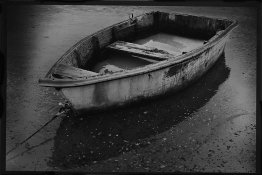
You can also use a small LED flashlight around the outer edges of the print while it's in the developer.
 

Attachments

  • img317boat sm-2.jpg
    img317boat sm-2.jpg
    248.7 KB · Views: 204
It is "Creative Darkroom Techniques".

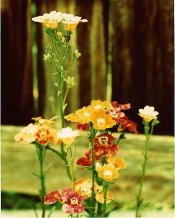
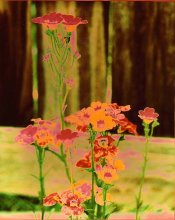
Here is an example of cross processing and Sabattier effect combined.

The left picture is the print from cross processed EPP and the right picture is a print that has been flashed in the color developer.

PE
 

Attachments

  • flower trio 1.jpg
    flower trio 1.jpg
    51.5 KB · Views: 197
  • flower trio 2.jpg
    flower trio 2.jpg
    48 KB · Views: 201
That is very cool. I've never seen the effect on color paper. Is that 1/10 second or something in that vicinity?
 
How about using sand over the image when enlarging I have seen some cool effects doing that, none to hand thou!
 
It is "Creative Darkroom Techniques".

Here is an example of cross processing and Sabattier effect combined.

The left picture is the print from cross processed EPP and the right picture is a print that has been flashed in the color developer.

PE

Thanks. I'll check that out when I get a chance
 
How about using sand over the image when enlarging I have seen some cool effects doing that, none to hand thou!

Sand.. that sounds like a good one. Probably the most messy one too, have to try it out some time.
 
i wouldn't introduce tea or coffee into your fixer bath --- why ruin your fixer ?
instead i would have a bath after the first wash
where the print could be soaked in tea or coffee ..
it is the tannins that stain the paper,
you can also get tannins by boiling tree nuts ( acorns )
and bark and other "stuff" that may or may not work better.

if enlarge through a bath of water, you are able to get interesting effects as well ...

have fun!
 
Last edited by a moderator:
That is very cool. I've never seen the effect on color paper. Is that 1/10 second or something in that vicinity?


The time at which you flash, and the length of time depends on both the original exposure on easel and on the development time. I used 2' at 68 deg F for the ones shown, and the flash was about 1 second at 1.5 minutes. It took about 5 tries to get the right effect.

PE
 
split toning, with 2 or more different toning chemicals, putting prints in toners, or parts of toners (i.e. bleach) then another toner that you wouldn't normally use a bleach for, etc. look at the toning galleries at alexisneel.com for some of the examples.
 
Photrio.com contains affiliate links to products. We may receive a commission for purchases made through these links.
To read our full affiliate disclosure statement please click Here.

PHOTRIO PARTNERS EQUALLY FUNDING OUR COMMUNITY:


Ilford ADOX Freestyle Photographic Stearman Press Weldon Color Lab Blue Moon Camera & Machine
Top Bottom