
I'm just beginning to develop my own negatives at home, so forgive my efforts to wade through some technical issues.
I believe I have a firm grasp of the definitions of both "acutance" and "contrast" as they apply to a negative. But I'm trying to understand how those qualities are inter-related and might be manipulated in the development process.
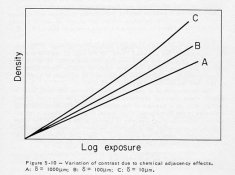
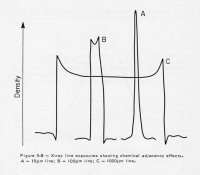
Acutance or microcontrast (to borrow from Roger Hicks, Shutterbug 2003) might be maximized by minimizing agitation in the development process. Minimal agitation will allow for acutance-enhancing adjacency effect to take place.
However, INCREASED agitation is known to INCREASE contrast and by extension compromise acutance. Is this a matter of macro- vs microcontrast? Whereby agitation is increasing contrast on a macro level while compromising microcontrast.
Does this make high "macro" contrast and high acutance mutually exclusive? Is my question clear or am I complicating an otherwise simple concept?
I believe I have a firm grasp of the definitions of both "acutance" and "contrast" as they apply to a negative. But I'm trying to understand how those qualities are inter-related and might be manipulated in the development process.
Acutance or microcontrast (to borrow from Roger Hicks, Shutterbug 2003) might be maximized by minimizing agitation in the development process. Minimal agitation will allow for acutance-enhancing adjacency effect to take place.
However, INCREASED agitation is known to INCREASE contrast and by extension compromise acutance. Is this a matter of macro- vs microcontrast? Whereby agitation is increasing contrast on a macro level while compromising microcontrast.
Does this make high "macro" contrast and high acutance mutually exclusive? Is my question clear or am I complicating an otherwise simple concept?