• Welcome to Photrio!
    Registration is fast and free. Join today to unlock search, see fewer ads, and access all forum features.
    Click here to sign up

Acros: A question on developing

Recent Classifieds

Forum statistics

Threads
203,205
Messages
2,851,345
Members
101,721
Latest member
rptn
Recent bookmarks
0

Gerry M

Member
Allowing Ads
Joined
Nov 14, 2005
Messages
1,290
Location
Oregon
Format
Multi Format
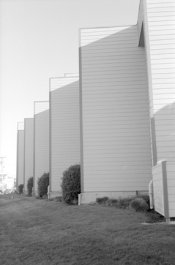
Sorry if this is kind of windy. I just recently tried developing some 35mm Acros. The negatives appear to be very over exposed. Roll #1: Metered with body (Rollei 35TE) and Gossen Pilot in reflective mode. Roll #2: Minolta P&S, all AE. Both bodies have been tested with Fuji color and mini-lab processing and exposures were good.
Afternoon winter sun, clear sky with pronounced shadow.
I rated the Acros at box speed (100) and developed in Rodinal 1:50 for 13.5 mins at 68F/20C, as per the MDC. Jobo daylight tank with 485cc and 2 gentle inversion per minute. Washed with filtered tap water in upright film washer for 5 mins. Fixer for 7 mins.
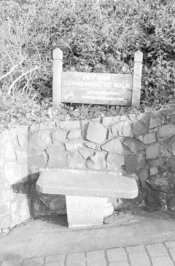
Other than the time in developer, this has been my routine with Arista Ultra 100 & 200 and that has been satisfactory. I have attached a couple of sample frames.
Any suggestions on altering my process?
Thanks for any help,
Gerry
 

Attachments

  • ACROS sample web APUG.jpg
    ACROS sample web APUG.jpg
    79.6 KB · Views: 207
  • ACROS sample for APUG.jpg
    ACROS sample for APUG.jpg
    42.2 KB · Views: 198
Are these scans or prints? I always soup Acros in Pyrocat-HD and it prints extremely well. I prefer my negs to be slightly dense, easier to print than thin negs.
 
Try varying your development time. The recommended times are good starting points, but you have to alter them to fit your own processing and exposure methods. I've used Across in 120 and 35 mm and with Rodinal, Xtol and HC 110 with varying results in contrast, gradation, etc. Try developing for a little bit less and measure your results. Remember, that when you have a lab processing your color work, they will automatically compensate for over/under exposure to render an acceptable print. I really wouldn't use that reference as your baseline.
 
Try varying your development time. The recommended times are good starting points, but you have to alter them to fit your own processing and exposure methods. I've used Across in 120 and 35 mm and with Rodinal, Xtol and HC 110 with varying results in contrast, gradation, etc. Try developing for a little bit less and measure your results. Remember, that when you have a lab processing your color work, they will automatically compensate for over/under exposure to render an acceptable print. I really wouldn't use that reference as your baseline.

Thanks for this info. By what amount (mins or %) is a good starting point to reduce the time?
 
That's a bit tricky. Looking at your thumbnails, your exposure looks off by about 1 stop. Based upon your experience with Rodinal (or any other developer) decrease your development to that point. Try a short roll (if you bulk load) and develop for 12 minutes under the same conditions.

Gary
 
Last edited by a moderator:
You really need to print your negatives to determine if your development times are correct. Scanning doesn't give accurate renditions to judge results.
 
Bummer dude.
 
Ah, the MDC. MDC should stand for more dense confusion.
This is a primary reason I don't use the MDC, you don't know the source of the numbers given. Both Kodak and Fuji numbers are for contrast of .56, but most likely the starting numbers you used were derived from the original AGFA info sheet which processes to a contrast of .65. D'oh! That will instantly give you a nice rich neg like you have, great if you print on a nice strong cold light head, very challenging if you scan or print on condenser. I'd start at something closer to 11 or even 10 min.
 
These look overexposed to me. I would try less exposure and also 13.5m in 1:50 might be a bit too long. With 35mm film you can do your trial and error sequences very easy: shoot several bracketed frames, cut the exposed part of the film in complete darkness and develop. Scan. Then adjust exposure for shadow detail, adjust development time for highlights density. Repeat. Have fun :smile:
 
These look like someone has done auto-levels from a neg scan to me. There is much more dynamic range in the negative than in a final image, which means that when you scan and just blindly set your black and white points from the information in the scan, you will get a result with too-low contrast, particularly in the highlights. It looks exactly like this.

So your exposure and/or processing might be out, or it they might not. We can't tell from a jpeg because there's a whole bunch of transformation (white, black points and gamma) between the raw scan data and the image presented here.
 
Funny, but it is really hard to find times for Across, it's like it doesn't exist! I just developed a roll in Beutler, 10:10;100 for 8 mins, negs look really good. From memory I used to develop Across in Rodinal 1:50 for 12 minutes, rated at box speed, it is a good combination.
 
How do the negatives themselves look? Scans introduce variables. You need saved "standard" scan settings to be able to judge exposure halfway decently with a scan.

But why bother with that when you can just look at the negs?

I would not use color neg film and mini lab printing to judge your exposures. The film has a lot of latitude and is easily printed by an automatic processor even if the exposure is off.
 
If you can manage a way to make contact prints with trays and a light bulb (no enlarger necessary), you'll get a better idea of how the development is working for making silver gelatin prints. If that's not your goal, then you might want to go to dpug.org (formerly hybridphoto) and ask about scanning techniques and manipulating curves in software. Silver gelatin paper and scanner sensors do not have the same response curve, and making a good scan takes a different skill set.

Lee
 
First off; Thanks to all for your very helpful response. Viewing the negatives does show some over exposure on the full roll. I have rechecked the metering and am satisfied that they are reasonably accurate. I think some reduction in time of developer is in order. Also, probably some film clips will be tried.. I hadn't given any thought to the standardizing of mini lab processing color film. The only time I use color film is with medium format, and very, very little of that. It goes to a full scale lab. I also left scanning out of the post as I know it doesn't belong on APUG. Again, a big Thank You to those who have responded.
Gerry
 
I've happily used 12 minutes for 20C 1:50 rodinal with 120 Acros......with nice results. I've heard that people scanning prefer lower contrast negs than darkroom printers so you may end up at something lower than 12 even.
 
Yeah, see, a minute and a half (12 vs 13.5) for Acros in Rodinal 1:50 is too much, but, hey, My Dumb Cranium is always right!
 
Photrio.com contains affiliate links to products. We may receive a commission for purchases made through these links.
To read our full affiliate disclosure statement please click Here.

PHOTRIO PARTNERS EQUALLY FUNDING OUR COMMUNITY:


Ilford ADOX Freestyle Photographic Stearman Press Weldon Color Lab Blue Moon Camera & Machine
Top Bottom