
• Welcome to Photrio!
    Registration is fast and free. Join today to unlock search, see fewer ads, and access all forum features.
    Click here to sign up

ACROS 120 in HC-110. Times???

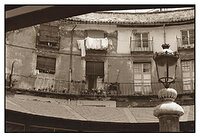
Valencia

A
Valencia

  • 1
  • 1
  • 64
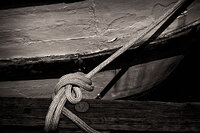
Tied to the dock

D
Tied to the dock

  • 4
  • 0
  • 98

Recent Classifieds

Forum statistics

Threads
203,096
Messages
2,849,760
Members
101,664
Latest member
logan.perrin
Recent bookmarks
0

Iridium

Member
Allowing Ads
Joined
Dec 26, 2007
Messages
93
Location
Athens, Hell
Format
Multi Format
Up to the moment I was using Xtol for developing the ACROS 120 with really nice results. However, I have 3/4 of an HC-110 developer bottle and I think to start using it more often as the liquid will start to getting weak in a while.

The problem is that I haven't read anywhere around a recommended dilution-time combination. I use dilution H most for the other films.

Anybody has tried this combination with good results? Please, let me know about the dilution and time used.

Thanx!
 
Massive development chart at Digital Truth for the answer.
 
I rate Acros at ISO 125 and develop in HC-110 1:50 for 9 minutes at 68 degrees. Agitation is three inversions every minute. I like the film, but not as much as TMX or Delta 100.
 
I don't know about dilution H, but I developed a roll of Acros with HC110 dilution B (1:31 from concentrate) for 5:30 a couple of days ago and it turned out fine. On a side note, it was the first roll I've ever developed
 
I really like 1:100 ratio, 10 minutes at 68/20 degrees. The problem with any numbers someone gives you is that development is tied to how you print. So for me, since I scan, not print, and have a cheap scanner, I go for a somewhat flat or underdeveloped negative. If I was printing on a cold head enlarger I'd want thicker negatives.
 
@Dan Daniel: by thicker negatives, you mean stronger contrast. Right? Now, I do scan my negatives, but in the future some of them will go for printing in the darkroom.
 
@Dan Daniel: by thicker negatives, you mean stronger contrast. Right? Now, I do scan my negatives, but in the future some of them will go for printing in the darkroom.

Yep, stronger contrast. Basically the same shadow look, but just extended densities in the upper end. I realized recently how I have been compressing my negatives for my scanner (epson v500- low end of usable) when I had a chance to scan the same negatives on an Imacon. At standard settings, the full range of my negatives filled up about 2/3 to 3/4 of the range the Imacon offered, based on the histograms and how commercially developed color negatives were showing on the histogram.

I have NOT printed any of these negatives on an enlarger, with either a condenser or soft head. It's been a long time since I have done any enlarger printing, but my gut feeling is that my present negatives are pretty thin compared to what I used for wet chemistry enlarging. I mention this just so people have an idea of some of the key factors in my time of 10 minutes. Any development time and such involves the full process, from shooting to final print. Other peoples' time are helpful but you have to make it work for your specific end result.
 
Last edited by a moderator:
Well, a few days ago I had my first ACROS 120 in HC-110 @ nominal ISO. Dilution H, 9 min., continuous agitation for the first 30 sec., then 2 inversions every minute.

The result was nice. The film was shot under low light and night. I got detail in the shadows. The liquid after the development got a mint green colour.

Apart from that, I could admit that Fuji Acros is a great film and the best for low light and night photography (on a tripod), as it doesn't need adjustments for normal exposure times. In general Fuji has the most sophisticated design on its films. I mean package, spool design, gelatin base, adhesives, etc.
 
Agree, I love Acros, it pushes extremely well in 120 with HC-110 also (20 minutes in Dilution H for EI400 for example worked well for me).

It' strange that Dilution H gives you guys a time of 9 minutes though, because it's twice diluted from B, which the recommended dev time is is 5:30 at massive dev chart. (I often use 6 minutes at Dilution B, but reduce agitation a little the last two minutes).

Any particular reason you guys are not using a time of 11-12 minutes at dilution H ?
 
...
It' strange that Dilution H gives you guys a time of 9 minutes though, because it's twice diluted from B, which the recommended dev time is is 5:30 at massive dev chart. (I often use 6 minutes at Dilution B, but reduce agitation a little the last two minutes).

Any particular reason you guys are not using a time of 11-12 minutes at dilution H ?

The Fuji data sheet specs 4:30 at 20ºC for Dil B. So I tried around 9:00 for H and it gave me good results. I do typically incident meter for ISO 80. I can't claim to have done any fancy personal EI testing on it, and different folks have different ideas as to what they want, not to mention variations in working methods, agitation, etc.
 
Just jumping on the bandwagon here as someone else who has had good luck with dilution H for 9 minutes at 20C. My test notes say that I liked this dilution/time when rated anywhere between 50 and 100 ISO, although I know in practice I have almost always rated it at 100. Fuji's spec. calls for an EI of 80, so this all seems consistent with their recommendation. :smile:

Jeff
 
I just did 1 hour stand last night with Acros 120 @ box speed in HC-110 1:100 (couldn't find a thermometer).

Good density, perfectly even.

But it is the worst looking stuff ever, gradients become flat tones of one solid tone. Changes/details at below a certain contrast threshold disappear entirely, like someone has taken it to photoshop and ran healing brush intricately over it all removing certain things. Trying to raise the contrast, even on a scan with levels or curves, until both blacks and a whites have heavy clipping.. it still looks like having a lack of contrast, when you've clipped most of the pic!

It's like a really heavy negative local contrast has been applied. It is bizarre.
 
Last edited by a moderator:
I just did 1 hour stand last night with Acros 120 @ box speed in HC-110 1:100 (couldn't find a thermometer).

Good density, perfectly even.

But it is the worst looking stuff ever, gradients become flat tones of one solid tone. Changes/details at below a certain contrast threshold disappear entirely, like someone has taken it to photoshop and ran healing brush intricately over it all removing certain things. Trying to raise the contrast, even on a scan with levels or curves, until both blacks and a whites have heavy clipping.. it still looks like having a lack of contrast, when you've clipped most of the pic!

It's like a really heavy negative local contrast has been applied. It is bizarre.

Sounds like dev exhaustion. It does the same to me if I semi-stand it in Rodinal 1+100 (5mL/roll), whereas 1+50 (10mL/roll) looks quite good. I've given up on stand-developed Acros and it's not like it needs the shadow boost anyway.
 
Rodinal stand has always given me accentuated details.

This.. this is as about as opposite from Rodinal standing as I could imagine.

I've got patterns and design on this shirt I was wearing, and it actually came out as a plain black t-shirt. And the shirt is a large continuous area, much lower density than other parts of the neg, being black.

Many of the gradient/detail areas that are now single tone essentially aren't as high density as some other areas.
 
Photrio.com contains affiliate links to products. We may receive a commission for purchases made through these links.
To read our full affiliate disclosure statement please click Here.

PHOTRIO PARTNERS EQUALLY FUNDING OUR COMMUNITY:


Ilford ADOX Freestyle Photographic Stearman Press Weldon Color Lab Blue Moon Camera & Machine
Top Bottom
