
• Welcome to Photrio!
    Registration is fast and free. Join today to unlock search, see fewer ads, and access all forum features.
    Click here to sign up

Achieving extremely grainy Delta 3200 (Dektol, maybe?)

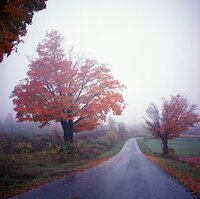
Rainy Day Trees

A
Rainy Day Trees

  • 1
  • 0
  • 25
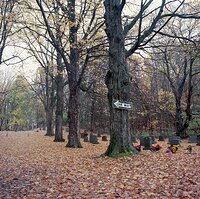
One Way

A
One Way

  • 0
  • 0
  • 18

Forum statistics

Threads
203,144
Messages
2,850,513
Members
101,695
Latest member
zzbao
Recent bookmarks
0

mabman

Member
Allowing Ads
Joined
Jun 7, 2007
Messages
834
Location
Winnipeg, MB
Format
35mm
I've got some subject matter that I think will look good (or at least interesting) shot with a Holga, and it would lend itself well to a "moody", rather grainy texture.

So, I'd like to experiment with exaggerated grain with Delta 3200. After some searching and reading, some people suggest Rodinal 1+25 and using times from the Massive Dev. Chart should be good (the subject matter should be roughly 3200 or maybe 6400 ISO). I already have some Rodinal, so that might work. However, I've read with some films developing in print developers such as Dektol can possibly enhance the grain even further - but I can't find any times for starting points with Dektol or similar.

Being a Holga, this will be shot on 120 film, esp. as I don't really want to mess around with adapting it to 35mm (I know one suggestion is to shoot a smaller format and enlarge to emphasize the grain, but I won't be doing that here).

Any suggestions for this combo appreciated.
 
"Graininess" in film is a really a function of the degree of acutance achieved in the development process. I'd try rodinal 1 :100 for one hour, no agitation.
 
I don't know about that - I've been playing with Rodinal 1:200 stand dev. lately, and I've done a couple of rolls of 35mm Delta 3200 - they don't look terribly grainy to me, not to the degree I'm looking for here.
 
The problem here is that there's your definition of graininess. then there's mine and then all the others. This makes an answer which meets your requirements very difficult to supply. I thought that 5x7 prints of D3200 in ID11 at 1+1 was pretty grainy so if Rodinal which I found even more grainy doesn't do it for you then I am stuck for an answer. D3200 and Rodinal is a favourite of Les McLean and his shot of the Navajo power station in his book is pretty grainy. If you have his book look at his section on grain and the power station shot and using that as a standard you can at least say whether it's grainy enough and if not by how much.

pentaxuser
 
I haven't used it, but others have said that Kodak D-19 yields large grain. I have two bags of D-19 waiting for an experiment.
 
As long as we are on the subject of speculation and hearsay…

I have read testimonials that Delta 3200 developed in Dektol 1+10 or 1+15 (I believe these numbers refer to diluted liquid concentrate, not Dektol made from powder) produce very pronounced grain, but no starting times were given.

If I were to try this - I would use Delta 3200, EI 1000, Dektol 1+10 for perhaps 7 minutes at 20C as a starting point and take it from there.
 
I've accidentally developed properly exposed bergger 200 in pure dektol and gotten a lot of grain, time was about 3-4mins. I dumped the developer as soon as I realized and flushed it in water for 30 secs then fixed.
 
The grain of delta 3200 does not gain or diminish in size with different developers so it's misleading to refer to bigger or smaller grain. The appearance of grain is mostly a function of acutance or the edge sharpness of the particles of exposed silver halide. I don't know of a developer that yields higher acutance than highly dilute rodinal. Some users might suggest over-developing your film to achieve the results you're after. This too is misleading as all you're really doing is enhancing contrast which gives the appearance of increased grain. In reality excessive agitation reduces acutance thereby producing an image comprised of softer grain.

Perhaps you should experiment with reticulation by either subjecting your development process to extreme temperature variations or microwaving your film after exposure but before processing. I hope this helps:smile:
 
try dektol 1:10
not sure about the time though .. you'll have to experiment a bit ...
 
Dektol 1+10 is a time proven way to get good tonality,,, and nice, chunky, sharp grain.
On the whole, a good general purpose developer from another era. Now, it's a handy grainy device.
 
Why Delta 3200? Remember, this is a very pushable film that is really,what, about 1000? And being a Delta, the grain is inherently finer. And with 120, you are shooting against your desires.

I would think on the lines of Tri-X, pushed. There is no reverse magic in Dektol, it is really just a concentrated universal developer. Diluted, it is a perfectly good film developer. The only reason it gives grain is the lack of lots of sulfite and high alkalinity undiluted. Any print developer would behave similarly.

Where's Kodal High Speed Recording Film when you need it?
 
Use paper developer and shake it the whole time you develop it. I guarantee you will get more grain than you can use!
 
How does it go ?

The acetone dissociates the sodium sulphite resulting in a rather heavy concentration of sodium hydroxide. There was a fellow in the bay area in the 60's - Don Ross - who used it as his standard film developer. One ounce/working batch. I've used it, and as I recall, it was a very effective developer for sheet film. Never tried it with rolls. I suspect it would be pretty grainy. Tones were nice, though.
 
Thanks, everyone. A few things to try here - since my subject matter isn't going anywhere, I'll shoot a few rolls and try Rodinal 1+25 as well as Dektol 1+10.

Why Delta 3200? Remember, this is a very pushable film that is really,what, about 1000? And being a Delta, the grain is inherently finer. And with 120, you are shooting against your desires.

I would think on the lines of Tri-X, pushed. There is no reverse magic in Dektol, it is really just a concentrated universal developer. Diluted, it is a perfectly good film developer. The only reason it gives grain is the lack of lots of sulfite and high alkalinity undiluted. Any print developer would behave similarly.

Where's Kodal High Speed Recording Film when you need it?

In the past I've pushed Tri-X in 35mm to 1600 and 3200 in HC-110 dil B and Rodinal 1:200 stand, and while the grain is more evident, it hasn't been as pronounced as I thought it would be. But, I have a bunch of it in 120 in the freezer right now, so no harm in trying it again :smile:
 
I know you mentioned holga but can I interest you in a submini or even half-frame camera?

I always find it difficult to get serious amounts of grain with mf..
I've never tried Delta 3200 but wouldn't something like hp5 pushed to 3200 be grainier? I always thought that was the deal with high-speed film, less grain at their rated speed vs. the grain with a pushed film. *shrug*

I had a project where I wanted to shoot scenes with snow. I wanted the snow to be grainy, I shot tri-X at 1600 and developed with microphen. 645 negatives and 5x7 prints, they weren't grainy. Just sharp and sparkly.
11x14's were contrasty, sharp and not at all as grainy as I wanted.
In one way I failed but in another way I won as the images are among my favorites.

Perhaps a texture screen?
 
are you suggesting developing in straight acetone or adding acetone to dektol 1:10?

Straight acetone? That might be interesting, or maybe not. Hope the ventilation is pretty good.

Adding. What Ross apparently did was to add one ounce to whatever amount of dektol 1:10 he was using - which might well have been within a limited volume range. I don't know whether that's the correct way, rather than adding so much per known quantity, but that's what he did.

I got this from Jack Welpott (very long ago).
 
Where's Kodal High Speed Recording Film when you need it?

I've got maybe 100 feet plus a few factory loads left. I loved it with Windisch pyrocatechin for night shooting (very bizarre development regime) and especially in fine grain developers. With MCM 100, it had the look of the 1950's, dead on. It could be truly lovely, as could Kodak's IR film. That's an option if you can find any. Use HIE with no filter rated at 800, maybe 1250 (I would rate it at 800 with Windisch pyrocatechin, which would cost maybe 2/3 stop). Without the IR filter, it would look un-IR, and using rodinal, you could use it to do rough sanding if the hardware store were closed. I used 2475 with rodinal to give me a kind of instant aquatint for making photo etched intaglio plates. Worked great. I think that 2475 and HIE were very similar. I've developed them together. It is almost like HIE was 2475 with the extended red extended much deeper into IR. I wonder if PE knows. Hey, PE, you out there?

Some of the films that kodak made for various non-pictorial purposes were pretty rocky when used in the kinds of developers and for the kinds of images we use. I have some "RAR" film, which I understand was used for photographing oscilloscope screens. With Beutler's it's wonderfully gritty. Not fast; I use it at 50. I understand also that 2484 is like that; maybe even grainier than the 2475. I don't know where you'd get this kind of thing now, maybe on eBay. I got it at Boeing Surplus (may it rest in peace!). I have some 70mm 2484; haven't tried it yet. I don't know WHY I like to play with stuff like this. There is something in a sort of disreputable looking image that I find intriguing. It does NOT win prizes, but it's a more productive activity than robbing banks, I think.
 
Sorry, but one oz. to "whatever amount" is pretty useless as a ratio. Seeing how I have all these 120 rolls of Bergger 200 for which I am no longer sure what the subject matter was, perhaps I will try developing some in Dektol and nail polish. It could be the start of awesomely intentionally horrible grain. At least I know Acetone is a very good solvent, so I shouldn't get streaking, right?
 
Sorry, but one oz. to "whatever amount" is pretty useless as a ratio. Seeing how I have all these 120 rolls of Bergger 200 for which I am no longer sure what the subject matter was, perhaps I will try developing some in Dektol and nail polish. It could be the start of awesomely intentionally horrible grain. At least I know Acetone is a very good solvent, so I shouldn't get streaking, right?

So then just don't do it. Do something else. I don't use this method, even though I know it works, having tried it some 40 years ago.

I think he used an excess of acetone which accomplished the necessary result with the excess having no effect. No, it doesn't dissolve your film.

Presented for interest, use if you wish, or not. I won't accept responsibility for your film. You are on your own.
 
If you are shooting on a clear day, your shots will be nice and grainy with any developer just due to the overexposure from the Holga.
 
Photrio.com contains affiliate links to products. We may receive a commission for purchases made through these links.
To read our full affiliate disclosure statement please click Here.

PHOTRIO PARTNERS EQUALLY FUNDING OUR COMMUNITY:


Ilford ADOX Freestyle Photographic Stearman Press Weldon Color Lab Blue Moon Camera & Machine
Top Bottom
