• Welcome to Photrio!
    Registration is fast and free. Join today to unlock search, see fewer ads, and access all forum features.
    Click here to sign up

About the possible use of Kodak Technidol

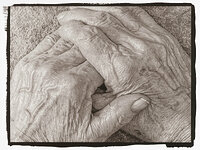
Self-Portrait: Hands

H
Self-Portrait: Hands

  • 4
  • 2
  • 30
22897.jpg

A
22897.jpg

  • 1
  • 0
  • 36

Forum statistics

Threads
204,391
Messages
2,867,904
Members
102,251
Latest member
archgen
Recent bookmarks
0
Efke 25 was an example of a slow extremely fine-grained film which had tremendous latitude. But like Acros, it was Orthopan, and not ordinary panchromatic. I don't know of anything equivalent to E25 today; it was unique, it seems.

No, it didn't. KB14 had very narrow latitude.
 
Who said anything about "KB14"? Efke R25 could easily handle 12 stops of range without minus or compression development. It had an exceptionally long nearly straight line. And I have plenty of negs and prints involving extreme brightness ranges to prove it, including highlight sparkle on gleaming glacial ice adjacent to fully textured dark volcanic rocks at high altitude. I have no idea what "KB14" allegedly could or couldn't do - never shot it - but if what you assert is true, it most certainly is not anything like officially labeled Efke R25 was, which consistently had slightly more latitude or range than even TMax 100 or TMY 400.

Efke made all kinds of things back in their day; so I'd be a little more cautious about this or that equivalence rumor. To my understanding, KB14 was/is a much older design (Agfa 1940's) 35mm film. Efke R25 (120 roll film) seemingly wasn't even made until the 90's, and also came in sheet film version up to 8x10, which a few people on this and other forums actually still use leftovers of, who can confirm my own assessment. I last shot it around 15 yrs ago in the Wind River range; but by then, quality control was beginning to slip in the aging plant. Nothing equivalent has been made since then.
 
Last edited:
Efke R25 could easily handle 12 stops of range without minus or compression development. It had an exceptionally long nearly straight line. And I have plenty of negs and prints involving extreme brightness ranges to prove it, including highlight sparkle on gleaming glacial ice adjacent to fully textured dark volcanic rocks at high altitude. I have no idea what "KB14" allegedly is or isn't - but if what you assert is true, it most certainly is not anything like officially labeled Efke R25 was, which had slightly more latitude or range than even TMax 100 or TMY 400.

Efke made all kinds of things in back in their day; so I'd be a little more cautious about private-label this or that rumors.

I used a lot of Adox KB14, which as far as I know is identical to EFKE 25. I gave up on it.
 
I'm not doubting your word or experience. But I am asserting that if that is true, it simply cannot be anything resembling Efke R25 at all, or its other format renditions, despite being nominally speed rated the same. The biggest problem with the real deal was that you had to load and unload the spools in deep shade, because the roll film version was far more sensitive to edge fogging than typical 120 films.

Keep in mind, I shot a lot of this, specifically for very high contrast conditions. It had stunning gradation, plus superb sharpness and acutance, with very fine grain.

I think you're confusing the Adox revival of a quite old Agfa film formula with a later formulated, entirely different Efke-specific product. I've encountered that equivalence rumor before on the web; but it's mere hearsay, and entirely untrue.
 
I'm not doubting your word or experience. But I am asserting that if that is true, it simply cannot be anything resembling Efke R25 at all, or its other format renditions, despite being nominally speed rated the same. The biggest problem with the real deal was that you had to load and unload the spools in deep shade, because the roll film version was far more sensitive to edge fogging than typical 120 films.

Keep in mind, I shot a lot of this, specifically for very high contrast conditions. It had stunning gradation, plus superb sharpness and acutance, with very fine grain.

I think you're confusing the Adox revival of a quite old Agfa film formula with a later formulated, entirely different Efke-specific product. I've encountered that equivalence rumor before on the web; but it's mere hearsay, and entirely untrue.

Adox KB14, 17, and 21 were introduced in the 1950s. See this:
 
Thanks. One of the links I found said mid-1940's. Probably a degree of evolution involved. I'm not as familiar with the Agfa/Adox lineages as Kodak's film lines, which I have old guidebooks and spec sheets for, going way back. R25 etc was strictly a Czech Ekfe specialty, which appeared sometime in the 90's, and then ended sometime in the 2010's.
I still have a few token rolls in my freezer "mini-museum" bag of discontinued interesting films from the past.
 
Last edited:
Photrio.com contains affiliate links to products. We may receive a commission for purchases made through these links.
To read our full affiliate disclosure statement please click Here.

PHOTRIO PARTNERS EQUALLY FUNDING OUR COMMUNITY:



Ilford ADOX Freestyle Photographic Stearman Press Weldon Color Lab Blue Moon Camera & Machine
Top Bottom