

• Welcome to Photrio!
    Registration is fast and free. Join today to unlock search, see fewer ads, and access all forum features.
    Click here to sign up

Aargh, my Diafine died!

Filling In

H
Filling In

  • 1
  • 2
  • 49
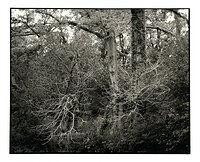
Painted Hills # 3.jpg

H
Painted Hills # 3.jpg

  • 4
  • 0
  • 92

Recent Classifieds

Forum statistics

Threads
203,211
Messages
2,851,499
Members
101,728
Latest member
BrickSandwich
Recent bookmarks
0

ntenny

Subscriber
Allowing Ads
Joined
Mar 5, 2008
Messages
2,537
Location
Portland, OR, USA
Format
Multi Format
And here I thought this stuff was immortal.

The last roll I developed in Diafine was kind of thin, but I figured it was just exposure error and didn't think much about it. Then I ran a couple of rolls of Tri-X last night, pulled it out and...my first thought was "nothing"! On closer inspection there are a few frames faintly visible, and the edge markings are very, very dimly present. Oh, and the leaders are obviously darkened, though not to full black.

This batch of Diafine is old as the hills, so I probably shouldn't be surprised. Fortunately there was nothing totally critical on the rolls---some photos of the family from Christmas that I would have liked to have, some travel shots from a recent trip to Istanbul, but nothing that makes me say "oh my god of all the horrible things to have lost". If I was going to sacrifice a couple of rolls of film to discover a problem, I could have done worse than these two.

But still, how maddening!

-NT
 
Sorry about your luck!

This is why I always do a clip test of the developer and fixer before I start a development session. I eyeball my indicator stop bath to make sure it is still a good color as well. Reminds me I'll have to shoot 35mm forever so I have a supply of film leaders to clip test! 120 doesn't have that though I suppose I could cut a snip off the taped end in the changing bag before I load it...
 
Clip off a piece of film and expose to white light. Put in the developer and make sure it turns black.
 
I was thinking about this and realised that doing a clip test wouldn't be that easy. How do you do it with a two-bath developer? I suppose I could always let the clip soak in the A bath for the full three minutes, then verify that it blackens in the B bath, but is there an easier way?

-NT
 
What is a clip test?

You cut off a small piece of film and test it in developer and fixer to make sure that they are still working properly. From 35mm films this is easy as you need to cut the leader off anyways before you load the film onto reels. You can then cut small pieces off for testing.

You basically want to test the clip in developer the same way you'll develop your film to see if the developer is good and the time is right. Mix a small amount of developer in a beaker in the same dilution you plan to use to process the film. Leave it to work in the light and let it develop for the same time you plan to develop the film. Use stop bath at the end of the development time if you plan on using stop bath. Then place it in a small properly diluted amount of fixer to clear it. Then wash it and dry it and compare it to the leader from a roll of the same film which was developed to your satisfaction. If it is the same darkness, which should be difficult to see through, then the developer and time are right but if it is too light then you either need to replace your developer or adjust the time longer; if it is too dark then you need to reduce the development time.

For fixer place a plain piece of film in your fixer. Make sure that if you plan on using a 3 minute fix that the film is cleared well before 3 minutes are up. Many write that it should take at most twice the time it took to clear when fresh, e.g. if fresh fixer takes 1 minute to clear the film clip then once it takes over 2 minutes to clear you should replace the fixer. After a while you get a feel for it, I watch it clear and I can sort of see it not completely clearing like it should and I dump it as I hate having to re-fix a roll and re-wash it outside of the tank when it is all wet, not fun.
 
I was thinking about this and realised that doing a clip test wouldn't be that easy. How do you do it with a two-bath developer? I suppose I could always let the clip soak in the A bath for the full three minutes, then verify that it blackens in the B bath, but is there an easier way?

-NT

I think you always do a clip test the same way you'd develop the real film but I must say I've never used a 2 bath developer so I could be wrong.
 
I guess you will have to buy a new can. :sad:
 
Isn't Diafine supposed to be immortal, literally? How old was this batch of yours, NT?

On a side note, thanks hpulley, for the info on how to do a clip test. I've been meaning to do it.
 
hpulley: Does it matter how long the piece of leader is exposed to light?

For the clip test you leave the lights on for the whole time. Presumably the leader of the film was exposed to light in the factory and when you loaded it so it will hit maximum density which is what you're measuring.
 
Last edited by a moderator:
Isn't Diafine supposed to be immortal, literally? How old was this batch of yours, NT?

Three years or so; the B bath is newer (from whenever I posted under the heading "My Diafine exploded!"), so I'm guessing it's the A bath that died.

Fortunately I had another can of A on the shelf from when I had to replace the B bath, so I've mixed that up---but I'll check with a test roll before subjecting anything "real" to it. I think I'd have to leave a clip in the A bath for the full three minutes to absorb the developing agents, and I figure if the clip test is going to take that much time anyway, I might as well try to get some images out of it.

-NT
 
why do you use Diafine, anyway? Not trolling, I'm just wondering what good it is. In my experience, Xtol gives just as much shadow speed, with finer grain too.
 
That's the same way mine died - all was fine, then one slightly "muddy" roll, then blank. Mine lasted about 18 months (and not many rolls, since I reserved it for specific films / occasions)

I've not bothered to get a new batch - I'd need it shipped from overseas anyway.
 
Diafine can be a useful developer for a number of reasons. For most films, it gives a fairly genuine speed boost, as opposed to a "push". It's especially good in this regard with Tri-x, which gets a full stop and a half at 1250. Another film that I've found it works very well with is FP4+, which can be rated at 250 and gives good shadow detail, tonality, grain and overall image quality. In general, it tends to have a compensating effect that helps control highlights, and can be processed normally through a wide temperature and development time range without affecting density or contrast -- which for some, of course, would be the very reason not to use it.

And in addition to its legendary keeping qualitites, it also is known to have an almost limitless capacity without replenishment, with reports of users doing dozens and dozens of rolls from the one gallon kit.

Mostly these days I use D-76 or Rodinal, but if I'm in a situation where I need to uprate a film, I can do so knowing I can process with Diafine and get good results.

Best regards,

Dave
 
why do you use Diafine, anyway? Not trolling, I'm just wondering what good it is. In my experience, Xtol gives just as much shadow speed, with finer grain too.

There's a "Tri-X in Diafine" look that I like. For a less extreme-looking push I'd use something else---PC-TEA (similar to Xtol in practice) or Super Soup---but sometimes I want the grit and grain.

Also, there's the compensating effect of a two-bath developer; I'd probably get that same benefit with split D-23 or whatever else, but Diafine happens to be the one I have. I like it with IR film, where it sort of tames the highlights and gives less extreme-looking results.

Oh, and when the B bath leaks on the floor, it cleans up the dirty grout real nice. :smile:

-NT
 
For most films, it gives a fairly genuine speed boost, as opposed to a "push". It's especially good in this regard with Tri-x, which gets a full stop and a half at 1250.

[citation needed]

I used to shoot a lot of TriX in my XA's set at 800 or 1600. I typically develop in Diafine, but one time I accidentally developed a roll in with everything else in Xtol 1+1, and the negatives came out rather well. Then I shot some tests of the same scene and developed in Diafine and Xtol for 'push' times and found the Xtol negatives had the same shadow detail as the Diafine negatives, with a lot more consistent contrast and very fine grain.

It's probably true that there is a "look" to diafine, but it seems really inconsistent to me. Sometimes I get pictures that look grainy and mushy, and sometimes I get images so sharp they look like someone cranked up unsharp mask in the computer, with mackie lines and all. And sometimes I get images with surprisingly fine grain...I have a 11x14 print from a Tri-X 35mm negative on my wall that has amazingly fine grain. Then again I've printed plenty of 8x10s with big popcorn grain, and I can't account for the difference. I will have to experiment with using Diafine with IR film. It seems like a good way to both get maximum shadow speed and avoid blocking up highlights.
 
Photrio.com contains affiliate links to products. We may receive a commission for purchases made through these links.
To read our full affiliate disclosure statement please click Here.

PHOTRIO PARTNERS EQUALLY FUNDING OUR COMMUNITY:


Ilford ADOX Freestyle Photographic Stearman Press Weldon Color Lab Blue Moon Camera & Machine
Top Bottom
