• Welcome to Photrio!
    Registration is fast and free. Join today to unlock search, see fewer ads, and access all forum features.
    Click here to sign up

A new QTR article for making Digital Negatives

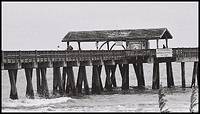
Tybee Beach Pier

A
Tybee Beach Pier

  • 1
  • 0
  • 15
Local Artists Work

D
Local Artists Work

  • 1
  • 2
  • 22

Recent Classifieds

Forum statistics

Threads
201,132
Messages
2,819,602
Members
100,551
Latest member
Franklee
Recent bookmarks
0

pschwart

Subscriber
Joined
Jul 15, 2005
Messages
1,147
Location
San Francisco, CA
Format
Multi Format
Meaning no disrepect to Tim -- there are some useful tips in the article, but I didn't find it provided a structured approach that could be used to build a QTR profile for *any* printer from the ground up. I think newcomers to QTR will still find the process a mysterious black box. I think what Tim actually validated is that most QTR users will realize more success modestly tweaking an existing profile for a specific printer. A few comments:

- The timing was fortuitous as I was switching media from Pictorico to InkPress and that required a major re-engineering of the profile.
I use Inkpress as a drop-in replacement for Pictorico -- no major reengineering required. Not sure why Tim's experience was different.

- For me, the K ink was marginally more effective than MK.
This is highly dependent on the inkset. For example, MK on the 3800 provides far more UV density than PK. This is both a benefit and a curse as it can lead to grainy images. Creating a QTR profile that can leverage the density and mitigate the grain is a real challenge. Without a structured approach for determining ink limits this becomes an extended exercise in hit-or-miss profiling.

- The default ink limit of 100 is too high for some printers! What is needed
is a method for determining an effective default ink limit.

- Limit: set to what ever works.
Well, there's the rub. This will have a lot to do with determining the success of a profile; what is needed is a method for arriving at reasonable numbers.

In short, I still think QTR profiling is an art, and not for the meek. Certainly not for those seeking instant gratification. Ron's tutorial is still the most comprehensive and offers a structured approach, making it a must-read (even for PC users like me and Tim :smile: ). And even though I am a software engineer, I don't see any reason *not* to use the QTR UI to generate a profile (as opposed to editing the QIDF manually).

 

mrred

Member
Allowing Ads
Joined
Mar 8, 2009
Messages
1,251
Location
Montreal, Ca
Format
Multi Format
- For me, the K ink was marginally more effective than MK.
This is highly dependent on the inkset. For example, MK on the 3800 provides far more UV density than PK. This is both a benefit and a curse as it can lead to grainy images. Creating a QTR profile that can leverage the density and mitigate the grain is a real challenge. Without a structured approach for determining ink limits this becomes an extended exercise in hit-or-miss profiling.

....

In short, I still think QTR profiling is an art, and not for the meek. Certainly not for those seeking instant gratification. Ron's tutorial is still the most comprehensive and offers a structured approach, making it a must-read (even for PC users like me and Tim :smile: ). And even though I am a software engineer, I don't see any reason *not* to use the QTR UI to generate a profile (as opposed to editing the QIDF manually).

I thought the article also missed *most* of the community that actually use QTR - people that have replaced their ink with multiple shades of black. There was not even a reference to how to set more than one black. For the same reasons I use 6 blacks, I would prefer to use all of them to make a digital neg.

Still, useful insight. Just not much of a real "how to" guide.
 

clay

Member
Allowing Ads
Joined
Nov 21, 2002
Messages
1,335
Location
Asheville, N
Format
Multi Format
I have taught a couple of digineg workshops using QTR, and as hard as this is to admit, the Windows-based QTRgui makes it far easier to teach to a newbie than using the text editing approach necessary on the Mac. The good news is that the profiles are interchangeable between the two systems, so what I end up doing is running the Windows-based QTRgui in a VM Fusion window to design the profile, and then drag it across to my Mac desktop to use when printing.

I agree that the amazing flexibility of QTR is both a blessing and a curse. It gives you a level of control over the printer that no other approach allows. But with that flexibility comes a whole universe of possible solutions for a given printing process. There is no one 'right' answer. And many times, people just want something that works without demanding too much in the way of decision making along the way.
 

franco

Member
Allowing Ads
Joined
Jun 10, 2009
Messages
2
Format
Multi Format
- The default ink limit of 100 is too high for some printers! What is needed
is a method for determining an effective default ink limit.

- Limit: set to what ever works.
Well, there's the rub. This will have a lot to do with determining the success of a profile; what is needed is a method for arriving at reasonable numbers.

I have found that printing the included calibration file at various percentages is a good way to get in the ballpark on the ink limits. Start at 50% and go up or down depending on the results. It will also show you which inks are doing most of the UV blocking.
 
Photrio.com contains affiliate links to products. We may receive a commission for purchases made through these links.
To read our full affiliate disclosure statement please click Here.

PHOTRIO PARTNERS EQUALLY FUNDING OUR COMMUNITY:


Ilford ADOX Freestyle Photographic Stearman Press Weldon Color Lab Blue Moon Camera & Machine
Top Bottom