

• Welcome to Photrio!
    Registration is fast and free. Join today to unlock search, see fewer ads, and access all forum features.
    Click here to sign up

8x10 out of reach...

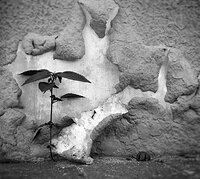
Puddle

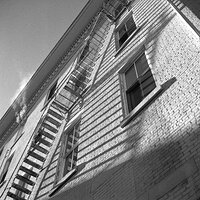
Puddle

  • 2
  • 2
  • 46

Recent Classifieds

Forum statistics

Threads
202,719
Messages
2,844,647
Members
101,486
Latest member
thedetective06
Recent bookmarks
2
I suspect my 8x10 film days are coming to a close, given that I can now make an 8x10 wet plate negative for half the price of film.

How did you calculate wet plate costs? I discussed with one wet plate photographer and he said 4x5 wetplate costs 4..5 euros worth of material. So I concluded that 8x10 is then 8..10 euros.
 
I find the effort and set up time as the format gets larger is somewhat proportional. So as the format gets bigger I shoot fewer shots but on a greater surface area of film. So in an odd way actual film costs (for me) don’t change that much in B&W. If I shoot 12 shots on 120, that might be 4 shots in 4x5 or one or two on 8x10. YMMV
 
How did you calculate wet plate costs? I discussed with one wet plate photographer and he said 4x5 wetplate costs 4..5 euros worth of material. So I concluded that 8x10 is then 8..10 euros.

It costs me one dollar for the 8x10 glass.
A 450 ML bottle of salted collodion costs me about $60 and it will make at least forty 8x10 plates, so that's about $1.50 worth of collodion.
Developer is home-made, and its dirt cheap. It probably costs me about 25 cents (or less) to develop an 8x10 inch plate.
Fixer is Sodium thiosulfate, and I buy it in 10 pound lots for $25. so per plate, fixer likely costs pennies.
Varnish is fairly expensive, but it probably takes 7-10ml per 8x10 to varnish, and at ten cents per ml, that would be $.70 to $1. per plate.

So by these calculations, an 8X10 glass negative is costing me $4.00 or less to make.
 
I just started with 8x10 more "seriously" <-- whatever that means. Anyway, Arista 100 (Foma?) is definitely pretty sweet, still at $4 per sheet though. Pancro 400 is OK, but it's definitely more like ISO 50 film. I do not like X80 at all, even though I like 4x5 Shanghai well enough. I'm going to get a box of real Shanghai 100 from eBay and see. Really wish there are some ISO 400 choices. Not so much that I want to shoot fast film, but with the Packard Shutter on the Pinkham and Smith, I am limited by either 1/25'ish, or "thousand and one"- one second. So more film ISO, more choices.
 
It costs me one dollar for the 8x10 glass.
A 450 ML bottle of salted collodion costs me about $60 and it will make at least forty 8x10 plates, so that's about $1.50 worth of collodion.
Developer is home-made, and its dirt cheap. It probably costs me about 25 cents (or less) to develop an 8x10 inch plate.
Fixer is Sodium thiosulfate, and I buy it in 10 pound lots for $25. so per plate, fixer likely costs pennies.
Varnish is fairly expensive, but it probably takes 7-10ml per 8x10 to varnish, and at ten cents per ml, that would be $.70 to $1. per plate.

So by these calculations, an 8X10 glass negative is costing me $4.00 or less to make.

I don't know anything about wetplates but aren't you missing silver bath here? I've understood that it is the most expensive part?
 
I bought into 8x10 late last year getting a camera, but Im still trying to get everything I need to shoot the format. It might not happen by late this year. That said I picked up 3 boxes of 8x10 film. Some Velvia 50 in 10 sheets, some Shanghai GP3, and some Efke 25 in 20 sheets. The Efke was the most expensive, but its been long out of being made anyway. I must have spent a grand on these 3 boxes of film (in Canadian). 8x10 is not cheap. I just hope the Xrays didn't damage the film as it was mailed to me, or that will be an expensive mistake.
 
Just checked, HP5 8x10, 25 sheets 130,16 EUR + VAT (150,99 EUR) at fotoimpex. Ilford is nice becasue their price for LF if close to rolls (5,61 roll vs 6 sheet) . Thanks ilford.
 
I prefer working with panchromatic, and infrared films.

In Canada what about buyfilm.ca they are about Can $50 / £28 for 5x4 HP5 for 25 sheets, it's£40 a box here in the UK and so significantly cheaper than buying from the US, might be worth asking about 10x8 as there's quite a few Canadians in this thread :D

Ian
 
Fomapan 400 is about 125Euro here, thus not that much off from HP5.


EDIT:
I got it wrong.... The price above is for a 50 sheet and not 25 sheet box.
 
Last edited:
Ooops ... what a blunder of mine.. and I thought Foma raised their prices.
 
Except there's 50 sheets in a Foma box, 25 in Ilfords, the saving is quite significant.

Ian

Well, 2.32€ per 8x10 sheet. This is quite attractive. IMO we should learn well how Foma works in the highlights vs processing, it tends to shoulder highlights which is not good or bad, but we need to know it works.

It is not the same quality than ilford, for example Foma is easy to scratch when wet, but with a proficient usage Foma can be a nice choice in many situations.
 
I don't know anything about wetplates but aren't you missing silver bath here? I've understood that it is the most expensive part?

You're quite right; I forgot to factor in the silver bath cost. So, my 8x10 silver bath takes 1250 ml of solution, and that requires approximately 110 grams of AgNO3 crystals. Yes, the initial cost of the silver bath is a significant expense, but the per-plate cost is very small. a silver bath of that volume will easily make at least 50 plates before requiring replenishment (adding a few grams of AgNO3 crystals), so the amount of silver you remove from the bath with each plate is minuscule. I suspect an 8x10 plate takes less than half a gram of silver to sensitize and in fact may be even less. So at most the actual per-plate cost of silver is quite low: fifty cents at most, probably less.

So add that to my previous estimate and I expect the cost per 8x10 glass collodion negative is still no more than $4 each.
 
Word to the wise, Catlabs 80 X is likely Shanghai 100 (though Omer swears he has his own formulation produced by the same factory, personally I think the film is very good so I don't care). In my tests 80 X should be exposed at ISO 32, and I have developed it in 510 Pyro for 14 minuets with good results. In a Jobo I did a 2-3 minute prewash to match my inversion time.

However, that HP5 price may be covid high and not permanent. In the meantime you may also like Pancro 400 which you can also get from Catlabs (expose at 320 or 250, and develop for 17 minutes in XTol).

I've given up on the CatLabs 80 X. Stating that it is an 80 ASA film is a gross exaggeration: you need to expose it at 25-32ASA to get any shadow information whatsoever. I might use up the sheets of 4x5 I have left on pinhole experiments, but otherwise I won't be using it for "serious" work. IMO the savings aren't worth the compromises.
 
I think I would go back to using paper negatives again though I'm sure that wet plates would also be a lot of fun. Assuming that I can still carry the camera of course.
 
I've given up on the CatLabs 80 X. Stating that it is an 80 ASA film is a gross exaggeration: you need to expose it at 25-32ASA to get any shadow information whatsoever. I might use up the sheets of 4x5 I have left on pinhole experiments, but otherwise I won't be using it for "serious" work. IMO the savings aren't worth the compromises.

Good day Paul, I could use a film in the 25 to 32 ASA range in 8x10. Could you elaborate on the other drawbacks you found with the film?
 
Good day Paul, I could use a film in the 25 to 32 ASA range in 8x10. Could you elaborate on the other drawbacks you found with the film?

The main one is its low ASA rating. I also found it has an odd curve that seems to shove middle values down into the range of shadow detail, while the highlights soar off into oblivion. It delivers a particular look that leans towards "dark tones", as you can see in this example: https://live.staticflickr.com/65535/49790773713_02c3ce5e8f_h.jpg (The foliage was at least one value lighter than it appeared on film)
 
The main one is its low ASA rating. I also found it has an odd curve that seems to shove middle values down into the range of shadow detail, while the highlights soar off into oblivion. It delivers a particular look that leans towards "dark tones", as you can see in this example: https://live.staticflickr.com/65535/49790773713_02c3ce5e8f_h.jpg (The foliage was at least one value lighter than it appeared on film)

Thanks Paul, I see what you mean in the example given the foliage tones compared to the highlights. In this particular situation it makes for a striking image.
 
Thanks Paul, I see what you mean in the example given the foliage tones compared to the highlights. In this particular situation it makes for a striking image.

It would certainly have its uses if this particular look is what you're after.
 
If I were to stock up on 8x10 sheet film it would more than likely be Shanghai GP3 off eBay and not Catlabs. 50 sheets of 8x10 for 145.00 free shipping isn't bad. Also, one seller on eBay sells (cut to order} sheet film and I might just pickup some 9x12cm from them. I had used it in 120 and really liked it, but haven't shot it in sheet film size so can't speak to that. I liked rating the 120 at EI64 or even EI 100 for some scenes. With sheet film the lower rating would bother me as much cuz I'm slow when shooting sheet film anyway. All this said, I'm talking U.S. dollars and not Loonies. JW
 
Photrio.com contains affiliate links to products. We may receive a commission for purchases made through these links.
To read our full affiliate disclosure statement please click Here.

PHOTRIO PARTNERS EQUALLY FUNDING OUR COMMUNITY:


Ilford ADOX Freestyle Photographic Stearman Press Weldon Color Lab Blue Moon Camera & Machine
Top Bottom
