
• Welcome to Photrio!
    Registration is fast and free. Join today to unlock search, see fewer ads, and access all forum features.
    Click here to sign up

35mm pinhole sharpness

Fusion Energy

A
Fusion Energy

  • 2
  • 0
  • 44
The Outhouse

A
The Outhouse

  • 2
  • 2
  • 54

Recent Classifieds

Forum statistics

Threads
203,472
Messages
2,855,301
Members
101,858
Latest member
FreeRanger
Recent bookmarks
0

Thumb191

Member
Allowing Ads
Joined
Apr 15, 2015
Messages
3
Format
35mm
Hi,
I'm new here and i have a question. I have made my pinhole camera last week and today i have first photos.
Is it possible to get more quality photos-i mean sharper? Basic dimensions: pinhole diameter: 0.3mm / focal lenght:45mm / film:35mm (the hole is perfect round-laser drilled)
I know, that i can't make super sharp and quality photos, but i want to achieve the best results.
And the 2nd question: do you think, that change the diameter of pinhole (0.2/f.l.25mm) will help with something?
Thanks!
Petr

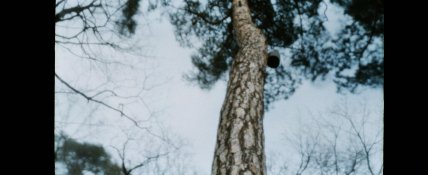
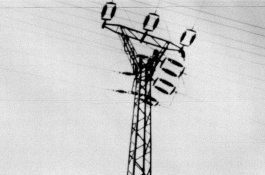
Here are the samples..the color ones seem to be better-don't know why..
attachment.php
attachment.php
attachment.php
attachment.php
attachment.php
attachment.php
 

Attachments

  • 00810002.jpg
    00810002.jpg
    382.7 KB · Views: 623
  • 64560002.jpg
    64560002.jpg
    243.2 KB · Views: 634
  • 64560004.jpg
    64560004.jpg
    311.3 KB · Views: 545
  • 00810012.jpg
    00810012.jpg
    1.1 MB · Views: 550
  • 00810008.jpg
    00810008.jpg
    430.7 KB · Views: 568
  • 00810004.jpg
    00810004.jpg
    1,012.3 KB · Views: 600
Get a copy of "Pinhole Photography" by Eric Renner. I have the second edition and there's and example shot with an 8X10 camera that's tack sharp.
Pinhole size will definitely affect sharpness. There's a slug of useful information in the book. lots of examples too.
 
Petr,
Welcome to APUG! Its great to see more people working with pinhole cameras :smile:

The 0.3mm pinhole diameter you are using with 35mm film and a focal length of 45mm is just about optimal (according to the pinhole camera calculator). Its going to be challenging to get better sharpness from a 35mm pinhole device, since the negatives are relatively small and will inherently not have the greatest resolution/sharpness. If you want sharper images, the best thing to do is to go up in film format size. The Zero Image 6X9cm cameras provide excellent sharpness - in part, because the negatives are so much bigger.

Where are you located? USA or ?

Paul
 
The general rule is that, for sharper images, use a larger film format. There are at least two reasons. One, a larger negative needs less enlargement. Imagine how sharp your 35mm film pinhole negatives would look if contact printed 1:1. Small, yes. But also much sharper.

Two, the Rayleigh formula favors longer focal lengths, as the optimal pinhole size for a given focal length renders higher focal ratios for longer focal lengths; and, for a given angle of view, a larger film format will require a longer focal length.

However, sharpness is not always the only consideration with image-making. Sometimes the mood of the image can transcend technical limitations. I find that for small guage film pinhole work a grainy b/w emulsion works well with soft focus pinhole, giving the eye some fine detail to focus upon.

~Joe
 
I agree with Paul, but I want to tell you that I like the black and white images better, and they look normal for 35mm pinhole to me. I really like the 1st one!

( edit: agree with Joe too! we were typing at the same moment )

Welcome to APUG
 
Petr, that is close to the result that I get with 35mm pinhole shots. I also use a .3mm laser drilled pinhole.

What Paul said about larger format is my experience as well. I have shot up to 4x5 with a pinhole, but have not pulled my 8x10 out to try it as yet.

I think part of the "romance" of a pinhole shot is the lack of sharpness, but the appeal of a pinhole image has a lot to do with the subject matter - so some would say.

I think your images are just fine, by the way.
 
However, sharpness is not always the only consideration with image-making. Sometimes the mood of the image can transcend technical limitations. I find that for small guage film pinhole work a grainy b/w emulsion works well with soft focus pinhole, giving the eye some fine detail to focus upon.

~Joe

I wholeheartedly agree with Joe's sentiment on the subject. It really depends what YOU want the work to look/feel like. Sharpness can be an asset, or it can be a crutch.

Case in point; there is a guy (or gal?) on Flickr who goes by the name of netoSen whose work I love, and this person uses what appear to be very small paper negs that he enlarges quite a bit, and the effect is exquisite. Take a look: netoSen on Flickr.
 
Thanks a lot for your replies.
well I know, that larger film format can do better images, but I wanted to do some collection of pinhole cameras. It's moreless commercial product, so I need the best results for potential clients.
I think, that ONDU 135 pinhole camera has better image quality and it pisses me :D But they are using 0.2mm pinhole.

So I will try to make another 0.2mm variant.
Otherwise, I'm glad, that you like my photos.
Paul, I'm from Czech Republic-its almost on the other side of the Earth :D
 
Yeah, the only way is up, unfortunately, I rarely shoot any pinholes less than 4x5" these days, and I just built a 19x30" box for paper negs. Damn this stuff is addictive.

That said, there's nothing wrong with 35mm pinholes. Just stick to printing them 4x6" or less if you want 'sharpness'. 35mm pinholes enlarged to 8x10 do have a nice soft character to them, if you do it right, that first shot would be a great one to enlarge huge and bask in its diffraction...
 
A smaller pinhole will work better if your working in close so there is no harm in trying. Do you use a tripod or hold it against something. Also so the ONDU (and others) properly scan then apply a bit of USM to there images to make them look sharper.
 
There are two ways to improve pinhole image sharpness. Increasing the film size is one. Decreasing the focal length and therefore the optimum pinhole diameter is the other. A .3mm pinhole for a 45mm focal length is what Lord Rayleigh would have suggested well over a hundred years ago, and his recommendations have been repeated many times since. However, Lord Rayleigh was more of a mathematician than a photographer. Empirical testing should always verify theoretical predictions. I use Pinhole Designer http://www.pinhole.cz/en/pinholedesigner/ with a user constant of 1.4 instead of the Rayleigh constant of 1.9. This is based on the sharpness of lens test chart photographs. A better way of testing would be by whatever kind of subject matter each photographer usually photographs.

A site with rare observations on the pinhole is http://inside.mines.edu/~mmyoung/PHCamera.pdf. For basic and more involved information, visit http://pinhole.stanford.edu/. A site with a wealth of information and links to other sites is Dead Link Removed.
 
For pinhole work I like 4X5 and use it with paper negatives for economy and ease of loading and developing. In the US at least, if you build your own camera, a person could start out for about $100. That would buy a couple of used 4X5 holders, material to make the camera, and paper developer and fixer. A 25 sheet package of 8X10 paper can be cut to size to load up in the holders. Oh yes, you would still need to provide some kind of temporary darkroom set up and buy a safelight blub. Those are silly expensive so it might be a tad over $100 to set up from scratch.
 
Here is an image shot with a 0.2 mm laser cut pinhole:

img339.jpg


This was shot on 35 mm film. The format is 24x72 mm.

I was happy with the look of this one.
 
Petr,
Welcome to APUG! Its great to see more people working with pinhole cameras :smile:

The 0.3mm pinhole diameter you are using with 35mm film and a focal length of 45mm is just about optimal (according to the pinhole camera calculator). Its going to be challenging to get better sharpness from a 35mm pinhole device, since the negatives are relatively small and will inherently not have the greatest resolution/sharpness. If you want sharper images, the best thing to do is to go up in film format size. The Zero Image 6X9cm cameras provide excellent sharpness - in part, because the negatives are so much bigger.

Where are you located? USA or ?

Paul
I agree that your current settings are close to optimal. pinholes are limited to about 7lp/mm due to refraction.That is good enough for contaxt printing but you need 8x10 or 11x14 originals:smile:
 

Attachments

  • 226PinholePhotographyDMCHQEd1.pdf
    546.6 KB · Views: 465
Thank you all for helpful replyes. I decided to make 120mm version with 0.2mm pinhole diameter and the same with 35mm. So...I'm now just little bit confused with focal length..actually with constant. Jim Jones says, that 1.4 works well, but there is to much differences than 1.9 (I found another thread, where is talked about 1.5) .. when i use pinholedesigner, it tells me, that the focal lenght with constant 1.4 is 37.106 (hole0.2mm) and on the other hand 1.9 tells 20.146..its big different, so now I don't know which constant should I use.
Thanks a lot
 
My approach is generally to start with the basic dimensions -- film format size and then pick either the angle of view or the pinhole-to-film distance. Then I use those numbers to calculate the pinhole I need (and try to make it). And Pinhole Designer in particular lets you specify just about any approach you like.

If you are building the entire camera, you can do all sorts of things, but in one case I was doing a pinhole body cap for my Bronica SQ-A, and the film-to-pinhole distance was more or less fixed. So the 57mm square film size and 90mm (or whatever) film-to-pinhole were independent variables used to pick a pinhole size (and the angle of view came out however it came out).

My two latest cameras, a 4x5 and an 8x10, used film size and angle of view as the independent numbers.

I used 1.65 for that constant in my last two designs, but I admit to not having done any major tests or optimizations.
 
Photrio.com contains affiliate links to products. We may receive a commission for purchases made through these links.
To read our full affiliate disclosure statement please click Here.

PHOTRIO PARTNERS EQUALLY FUNDING OUR COMMUNITY:


Ilford ADOX Freestyle Photographic Stearman Press Weldon Color Lab Blue Moon Camera & Machine
Top Bottom