

• Welcome to Photrio!
    Registration is fast and free. Join today to unlock search, see fewer ads, and access all forum features.
    Click here to sign up

35mm film scratches revisited

Cemetery Chapel

H
Cemetery Chapel

  • 1
  • 0
  • 22
2 bath test

A
2 bath test

  • 3
  • 0
  • 48

Recent Classifieds

Forum statistics

Threads
202,769
Messages
2,845,322
Members
101,513
Latest member
adammoore2011
Recent bookmarks
1

Kodachromeguy

Subscriber
Allowing Ads
Joined
Nov 3, 2016
Messages
2,196
Location
Washington
Format
Multi Format
Hi Everyone, I recently bought a 1957-vintage Voigtlander Vito BL as an experiment. My Ilford Delta 100 negatives have linear scratches on the base side. Sure enough, the pressure plate has some tiny pips of rust. Two questions:

1. Is there a permanent scratch filler? I saw that Edwal has (or had) a product, but you use it for optical printing and then remove it before storing the negatives in sleeves. As for nose oil, I may not have enough of a nose for it, and (I assume) would need to remove the oil before storing. I will be scanning for now, and the scanner picks up the scratches (see the example below).

2. Polish or clean the pressure plate? I have seen recommendations for using a rouge cloth, car polishing compound, or a pencil eraser. Do any of you have experience?

Thanks!! PS, I rather like the 50mm f/3.5 Color-Scopar lens on this little camera.
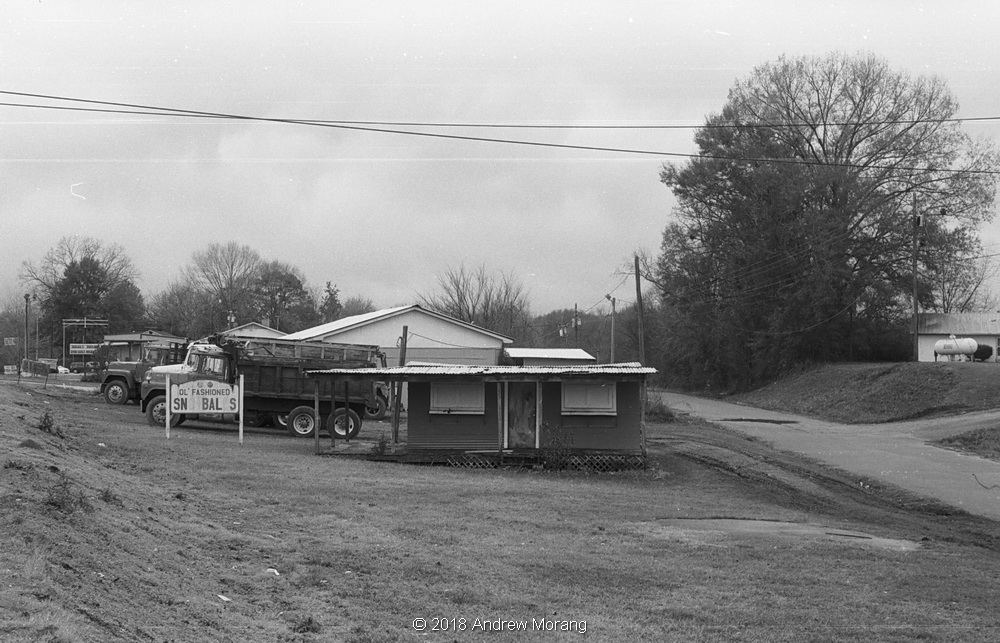
20181215f_Trucks-PortGibson_resize.JPG
 
Pressure Plate:

Two approaches:
-) Grind out just the rusty patch with a miniscule rotary tool (but that needs such tool and the resp.experience)
-) use rust converter on these patches


Scratch Filler:
Tetenal once sold a varnish for a whole negative to be dumped in.
 
Last edited:
Dear Kodachromeguy,

If you have a dremel tool, just polish the area out using the supplied compound, then wipe off any leftover compound with a dry paper towel and you will have solved the problem.

Edwal No-Scratch is still available, but as you mentioned, it must be reapplied each time you print.

Good luck,

Neal Wydra
 
I would start with the pencil eraser and if I needed to go further, go with the car polishing compound- you probably have some in your garage.
 
and use a soft cotton ball and run that over the plate and see if it catches anywhere. if it does, keep working at it. if not, you *should* be good to go.
 
I would start with the pencil eraser and if I needed to go further, go with the car polishing compound- you probably have some in your garage.

This apprtoach means:

-) adding scratches (though minuscule)
-) polishing off thes scratches in a (depending on model) thin steel plate without decent backpressure, with chance to bend it
-) having to paint the plate again
 
I don’t know about you Agx, but I don’t go through the paint when I buff a car. Though people can if they are careless. I suppose you could bend the plate with an eraser with enough pressure too.
 
Let me then tell you someting:

When you buff you car you are not grinding its steel what you proposed here instead.
After having grinded the rusty pressure plate with a glass-fibre eraser, which is a very imprecise tool to handle, the paint around the rusty patch will be off too.
You thus would yield blank steel at a size even greater than the original rusty patch.

With a rotary tool you could make a tiny indentation, which is easy to fill with paint and to be wiped off.

With a rust converter you not only flatten the steel again but, depending on circumstances may even yield a very dark grey, matte patch.
 
On the pressure plate, if it were me, I would go the fine steel wool method. Grade 4 Zero (0000) is very flexible and will remove the rust without scratching. Can be used to polish chrome or glass. I have used it to restore the dullness of chrome on car bumpers of 40 year old cars. I recommend wearing disposable gloves. Amazing stuff. Use only enough pressure to smooth out the rust area and quit.

For the scratches on the base side of film, as shown, you can also use a small amount of Vaseline applied by Qtip/cotton swab. Photo labs used that technique on B&W negs for many years for hopelessly scratched negs. Using a diffused light source in the enlarger (instead of condensers) will also go a long way to reduce or eliminate the scratches in the first place.
 
1. Is there a permanent scratch filler?
I have an old bottle of Tetenal Repolisan (some kind of varnish). I would hesitate to use it, because any dust speck present when applied will be permanently trapped. I have achieved almost full removal of scratches on a badly damaged negative by some kind of DIY wet mounting: sandwiched between the two plates of a GEPE "glass" mount, with ethyl alcool.
Polish or clean the pressure plate? I have seen recommendations for using a rouge cloth, car polishing compound
IMO, you do not need to polish (as if car paint) the pressure plate. In other words, the main goal is to remove little particles (rust, etc...) that protrude from the plate. If in the process you create scratches, i.e. missing paint/metal with respect to the perfect surface, it does not impact the function of the pressure plate: the film will not be sucked into the small grooves! It is essential, however, that you do not bend the pressure plate. Not even sure a small spot of missing paint is a problem: I've seen some cameras with a shiny, unpainted pressure plate.
I would use fine-grain abrasive paper (then very fine-grain) until your fingers feel a smooth surface. No need to go to such fine abrasives as rouge, (iron oxide) normally used at the final stage of lens fabrication.
If you feel the urge to re-paint the pressure plate, remember that the typical thickness of paint coat is approx 50µm; you need to preserve the large-scale flatness of the plate.
 
Hi Everyone, thanks for the comments. Bernard above was right; the goal was to remove pips of rust that projected up out of the pressure plate. This camera's pressure plate is steel and has a blue-black finish, so possibly a blueing as on some gun barrels. I think the repair is complete, but I will not have a chance to test the Vito with film for at least a month. I used a rouge cloth and then an eraser. A 2mm blob of rust needed some treatment with vinegar on a Q-Tip, after which I continued to smooth the area with the rouge cloth. That blob was in the area where the film sprockets would fall, so it was not in the image area. That area (about 4 mm diam.) is now silver, so the blueing is gone. The plate now feels fine to me, and a microfibre cloth pulls with no sticking. Even better: I asked my wife to feel the plate, and she said it felt smooth to her.
 
UPDATE Feb. 16, 2019: Successful repair. Hi everyone, I exposed part of a roll of Ektar 100 in the Vito BL, and the negatives look clean and scratch-free. The rouge cloth and eraser were sufficient. Here are two samples from an abandoned rubber recycling factory south of Vicksburg, Mississippi.

20190112m-RubberPlant-Vicksburg_resize.JPG
20190112n-RubberPlant-Vicksburg_resize.JPG


.
 
Photrio.com contains affiliate links to products. We may receive a commission for purchases made through these links.
To read our full affiliate disclosure statement please click Here.

PHOTRIO PARTNERS EQUALLY FUNDING OUR COMMUNITY:


Ilford ADOX Freestyle Photographic Stearman Press Weldon Color Lab Blue Moon Camera & Machine
Top Bottom
