• Welcome to Photrio!
    Registration is fast and free. Join today to unlock search, see fewer ads, and access all forum features.
    Click here to sign up

35mm body for landscape work

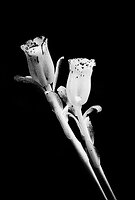
Indian ghost pipe plant.

H
Indian ghost pipe plant.

  • 0
  • 0
  • 12
2026-01-136.jpg

A
2026-01-136.jpg

  • 0
  • 0
  • 12

Recent Classifieds

Forum statistics

Threads
202,928
Messages
2,847,721
Members
101,542
Latest member
Obrian29
Recent bookmarks
0
Sorry about the delay in replying. I was thinking along the lines of I don't need autofocus or motordrive but long shutter speeds would be advantageous, mirror lockup and depth of field preview.
 
Sorry about the delay in replying. I was thinking along the lines of I don't need autofocus or motordrive but long shutter speeds would be advantageous, mirror lockup and depth of field preview.

If you can find a Nikon FE, it has all the above plus up to 8 sec. shutter.
 
Nikon F2 with a standard non-metered prism has speeds up to 12 seconds + B&T. Not especially light but also not battery dependent.
Ian I'm glad the MX is working out for you.
 
Leica M2 and/or M4-P and a good monopod. 50 and 35mm lenses. Plastic bag available for bad weather. Works for me!
 
I'm curious...

... I have also been enjoying the non-coated Nikon glass for the F as well. It has a different character than the FD glass to my eye.

When did Nippon Kogagku produce uncoated SLR lenses? The two I owned from about 1968 or 1969 were coated. Both of my Nikkor LTM lenses from the early to mid 50s are coated. My Canon LTM lens from the 50s is coated as well. I thought that all post-WWII lenses were coated.
 
I have that camera

Sorry about the delay in replying. I was thinking along the lines of I don't need autofocus or motordrive but long shutter speeds would be advantageous, mirror lockup and depth of field preview.

Canon EF. Shutter speeds to 30 sec., mirror lockup with the flip of a lever, and DOF preview with the flick of another lever. I bought mine new in 1975. "It takes a licking and keeps on ticking."
 
You can use any 35mm SLR you care to mention. As mentioned previously, lens choice is more important. If I wanted something light, strong and with excellent optics and metering I'd recommend a Nikon F100 with a 24mm f2.8 lens, a 50mm f1.8 lens and an 85mm f1.8 lens. The whole kit, including a selection of green, red, yellow, blue and orange filters, a pack of AA batteries and a few rolls of film will fit into a small camera bag. I use the bottom portion of a Lowepro 'Orion Trekker'. The top half of the bag carries a flask of soup, my sandwiches and a waterproof jacket / hat.
 
When did Nippon Kogagku produce uncoated SLR lenses? The two I owned from about 1968 or 1969 were coated. Both of my Nikkor LTM lenses from the early to mid 50s are coated. My Canon LTM lens from the 50s is coated as well. I thought that all post-WWII lenses were coated.

You are right. The Nikon glass I am referring to is singly coated versus multicoated.
 
Something no one has mentioned yet: the viewfinder.
One place 35mm does work well for landscape is the extreme closeup - focusing on very small vignettes similar to table top still life.
I would recommend Nikon F3hp, 4 or 5 for the high eyepoint viewfinders that let you easily see the frame from awkward positions and the fact that they easily pop off to let you focus from the top like a twin lens for those occassions the best composition comes with the camera on the ground.
 
Last edited by a moderator:
and the fact that they easily pop off to let you focus from the top like a twin lens for those occassions the best composition comes with the camera on the ground.

You can do the same with the F and F2.
 
Hello,

Gotta disagree with whoever said you can't get good landscapes with a 35mm. Pick the right lens, put it on a GOOD tripod and you've got a wonderful landscape system as long as you're not enlarging too big (but then 35mm is ALWAYS an issue).

I think the real question should be - "What 35mm lens is good for landscape?"

Find the right lens and then slap it on a body that works. You might want to make sure the body has mirror lock (as mentioned above).

The tripod used (quality, not brand) would be a more important question to me than what camera body.

The Leica M wide lenses are wonderul for landscapes and you wouldn't have to worry about a mirror or slap of any sort.

My Nikkor 24mm AIc lens also takes very nice scenics - if that's wide enough for your subject, that is.

Pick the right film or slides and you'll have great images you'll be proud of.

Good luck and let us know what you decided upon.
 
I'd do a Nikon F3HP.

1) Ability to use standard screw in cable releases. This is major for me, since I l always loose the things.
2) Ability to fire the shutter manually (at 1/60th) if you loose battery power or have an electronics failure.
3)Super convenient MLU

If you buy one, spend the extra hundred to get one w/ a soft history. If it looks like it's been abused for 20+ years, avoid it.
 
If you have the budget, get a Leica M7, MP, or M6 and put a Leica look and colors on your image.
 
While I love a leica, I wouldn't use mine for landscape purposes as the best be all lens. The viewfinder isn't accurate enough. I'd rather use a SLR for that purpose. I like my leica because it is small, realtively light and does indeed have that leica look.
 
Okay John I'll bite. Whys is a 35 mm camera unsuitable for landscape photography?

I think it is important not to speak in absolutes, and John didn't. However he didn't elaborate either. I for instance, find 35mm completely unsuitable for landscape work, because I can not realize my intent with a small negative, in common development of all frames, a fixed film and lens plain, and various other limitations of the format that are indeed its benefits for other considerations. Another person may not find any of these things a problem. Most serious landscape photographers would. Notice I said "most".
 
Well, with the caveat that I’m hardly a serious landscape photographer:

Most of my landscape stuff is done with a large format camera nowadays, but occasionally I like to use a 35mm camera loaded with the grainiest film I can get my hands on and do the same type of shots.
 
I believe it's the eyes and brain that is the most important equipment, as shown by for example dida here on Apug who does, in my opinion, do great stuff with pretty simple equipment. I can also see the point Jason makes about the ability to shift the plane of the film and lens and a bigger negative. But back to the OPs question: I prefer the Nikon F2 with MLU, but that's what I am used to. Beyond that, a tripod and some good glass in good condition can make a lot of difference, as previous posters have said.
 
For regular use on a tripod a Pentax LX with waist-level or action finder would likely be a real back saver...

Chris
 
As stated before there are a lot of options. Personally I love the Pentax range, mainly because the range of lenses is so big.

A Me series camera ( Me Super, F etc. ) will take any PK fitting lens ( including AF lenses ) as long as it has a Aperture ring. The Me Series are also rugged lightweight cameras.

But similar cameras from any of those mentioned are good choice. I also remember the Praktica's as being cheap, rugged, reliable simple cameras.
 
Photrio.com contains affiliate links to products. We may receive a commission for purchases made through these links.
To read our full affiliate disclosure statement please click Here.

PHOTRIO PARTNERS EQUALLY FUNDING OUR COMMUNITY:



Ilford ADOX Freestyle Photographic Stearman Press Weldon Color Lab Blue Moon Camera & Machine
Top Bottom