

• Welcome to Photrio!
    Registration is fast and free. Join today to unlock search, see fewer ads, and access all forum features.
    Click here to sign up

35mm (135 Format) For Landscape

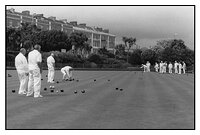
The bowling green

A
The bowling green

  • 0
  • 0
  • 13
Indian ghost pipe plant.

H
Indian ghost pipe plant.

  • 3
  • 1
  • 28

Forum statistics

Threads
202,942
Messages
2,847,849
Members
101,549
Latest member
mennojim
Recent bookmarks
0
The folks at National Geographic seemed to do OK shooting landscapes with a 35mm camera.

A 7x10 inch full page halftone certainly shouldn't tax the capabilities of good 35mm equipment. However, some amateurs can be much more critical. My 4x5 gear would be better for some, but not all, landscape photography. Sometimes the need for the reach of 35mm telephotos is more important than ultimate image quality. Also, the speed of small format lenses can be critical. AT 83 years, small format is much more convenient. I've had as many as 80 rolls of 35mm B&W film to develop after a long photo trip. It is easier to be content with what it delivers than to wrestle with larger equipment for the modest (to me) gain in images.
 
Many years ago, I shot landscapes and other scenic images only with 35mm because 35mm was the only equipment I had and I only needed to print images with an average size of 5x7 inches.

Today, when I shoot, I hope to have an image that is worthy of a 16x20 inch or larger print. Therefore, when I shoot landscapes and other scenic images with film, I prefer to use 6x7 and 6x9cm cameras on a tripod. It would make no sense for me to use 35mm.

Conversely, when I shoot fast action with film, I could use my 6x7 and 6x9cm cameras handheld or on a monopod. However, it makes no sense. I would much rather use my 35mm cameras.


Fuji Medium Format Rangefinders by Narsuitus, on Flickr
 
Mix good camera and darkroom technique with a good eye/sense of composition, and the format becomes less important as far as making stop-you-in-your-tracks prints (which I assume we all aspire to)??

But, one thing missing from this discussion is the power of masking when you want to take your prints to the next level. Sure, unsharp and SCIM aren't 100% necessary, but sometimes they're the difference between a good print and a great one. An SCIM alone seems to be a key to getting that three dimensional depth to a print. (though my experience with masking is fairly recent).

I'd be iffy about doing much masking with anything smaller than 6x6 - is masking even possible with 35?
 
When I started this thread, I probably should have been a tad more specific on my intentions. The question was more towards using 35mm specifically for it's characteristics. I don't mean to compete with the larger formats with the best lenses or 'best' films (lesser grain/higher res typically seem to be the goals). I actually meant choosing, a 35mm camera over a medium or large format to take these pictures regardless of the fact that 35mm is the obvious choice for size, weight, and efficiency. For example, I mostly do use medium format for landscape pictures, but I always carry my 35mm camera because sometimes I want a 400 ISO film pushed to accommodate my taste for the final print. And no, I'm not saying 'don't use low speed/fine grain films for 35mm' just asking why not use films other than these.

The images above from Aaron Lehoux are great examples. The character of those pictures lies within the 35mm format. If shot on a larger neg, they wouldn't have the same feel at all...
 
A 135 format image on Delta 100. Neg scan wasn't great so I've had to play with levels a bit to make it look like the print.
I cropped the bottom off and a little from the top for aesthetic effect and to remove bland grass at bottom.
attachment.php


I think you can use pretty much any film you like in 135 format and make a really good print from it to a decent size.

Does a larger format usng same film look different at same size print? Yes but that doesn't mean its better unless your criteria are for the look of a large format negative.
 
Last edited by a moderator:
"The question was more towards using 35mm specifically for it's characteristics."

"I actually meant choosing, a 35mm camera over a medium or large format to take these pictures regardless of the fact that 35mm is the obvious choice for size, weight, and efficiency."

Which other 35mm characteristics do you mean?

a. More grain?

b. Larger variety of lenses?

c. Less image detail?

d. Easier access to motor drives?

e. Higher number of exposures?

f. Customer needs 2x2 slides
 
Nice print, and very interesting viewpoint. The panoramic crop works very well!

A 135 format image on Delta 100. Neg scan wasn't great so I've had to play with levels a bit to make it look like the print.
I cropped the bottom off and a little from the top for aesthetic effect and to remove bland grass at bottom.
attachment.php


I think you can use pretty much any film you like in 135 format and make a really good print from it to a decent size.

Does a larger format usng same film look different at same size print? Yes but that doesn't mean its better unless your criteria are for the look of a large format negative.
 
Which other 35mm characteristics do you mean?

a. More grain?

b. Larger variety of lenses?

c. Less image detail?

d. Easier access to motor drives?

e. Higher number of exposures?

f. Customer needs 2x2 slides


A. and C. (B. is obviously related to aesthetic quality but I think there are more than enough lenses out there for landscape work in all formats).
 
I sometimes like the more grain aspect.

The main reason I use 35mm for landscape sometimes is that I shoot at night quite a bit. The longer exposures are easier to handle, because with the relatively shorter focal lengths, I can get very good depth of field at comparatively large apertures, drastically reducing exposure times. That is a real advantage.

I think for most purposes there is enough image detail from 35mm, if used well. And finally I very much cherish the challenge that the smaller negatives present when printing. Keeps me on my toes.

Which other 35mm characteristics do you mean?

a. More grain?

b. Larger variety of lenses?

c. Less image detail?

d. Easier access to motor drives?

e. Higher number of exposures?

f. Customer needs 2x2 slides
 
Have you seen the early work of Michael Kenna? Many are grainy 35mm prints, but they exude a wonderfully mysterious quality from the lack of resolution that really grabs me. Some almost look like etchings.
 
another from 135 format delta 100. I think this must have been hand held becasue its not very sharp (I had to sharpen neg more than normal(too much)). But I think it shows that decent tonality can be had from 135 format film.
attachment.php
 
Nice print, and very interesting viewpoint. The panoramic crop works very well!

Thanks for positive feedback. Curious thing is, I thought it was an OK image but other people seem to like it more than I do. It's strange how we are more critical of our own work than other people are.

But I digress, the point is that 135 format can do pretty much anything if you get everything right. Sure it may look a bit different than larger formats but
importantly, if you have you've failed to max out your technique on 135 format you ain't likely to do it on bigger formats but the bigger negative can hide poor technique to a degree.
 
You look at your shots as you intended them to become. Other people look at them with an opened mind.

I don't really like much of what I shoot for the same reasons. Friends and family think otherwise.
 
A 135 format image on Delta 100. Neg scan wasn't great so I've had to play with levels a bit to make it look like the print.
I cropped the bottom off and a little from the top for aesthetic effect and to remove bland grass at bottom.
attachment.php


I think you can use pretty much any film you like in 135 format and make a really good print from it to a decent size.

Does a larger format usng same film look different at same size print? Yes but that doesn't mean its better unless your criteria are for the look of a large format negative.
I agree with, Thomas. This is a really fine image, Rob.

I'm following this thread with interest as I've been shooting a fair amount of 35mm lately, some of it in the landscape.

Sent from my LGL41C using Tapatalk
 
another from 135 format delta 100. I think this must have been hand held becasue its not very sharp (I had to sharpen neg more than normal(too much)). But I think it shows that decent tonality can be had from 135 format film.
attachment.php


Fantastic tonality and grain! Amazing how much this film gives something like water such a metallic feel. Lovely. The textures in this image are superb. Is the film here pushed at all? and what developer please! :]
 
Difficult to answer as this is quite an old image and I haven't got records. It definitely will NOT have been pushed. More likely pulled by 1 stop and probably developed in Perceptol 1+2 to a relatively low neg contrast.

Delta 100 doesn't like high contrast scenes so you need to be very careful with exposure and development. But when you manage that well then it produces beautiful images.
 
Fantastic tonality and grain! Amazing how much this film gives something like water such a metallic feel. Lovely. The textures in this image are superb. Is the film here pushed at all? and what developer please! :]

You really can't make an assessment of the grain from a scan. The image was downsized from the scan and even from an un-downsized scan the scanner fundamentally alters the look of the grain. Having said that, delta 100 is a very fine grained film and will produce very smooth looking print tonality, especially if you use a very fine grain developer such as Perceptol.
The "metallic feel" is achieved as a consequence of that smoothness combined with the large areas of surface reflection which I aim to make look "silvery" when I'm printing. And that is achieved by a very fine balance of contrast and print time which must be spot on otherwise it just doesn't happen. Too long a print time and you will kill the look. To much or too little contrast also kills the look. It is much easier to obtain if your film exposure and development produces an "easy to print" negative. i.e. a negative with slightly softer than normal negative contrast, normal being what the manufacturer recommends for ISO speed.
 
I'm a fairly mediocre amateur photographer. I find it harder to get nice nature/landscape results from 35mm - as Rob said, larger formats "cover(hide) a multitude of sins". So it's not that 35mm isn't up to it. it just means I suck too much.

Really good photographers get better results with the 35mm than I'll ever get with my MF! Same way a pro cyclist riding a BMX will beat me hands down regardless of what I'm riding!

When people are good they don't need much.
 
Last edited by a moderator:
Have a look at "Cottonwoods", a lovely (and inexpensive!) little book by Robert Adams. The pictures are a seamless mix of 35mm, medium format and 4x5.

I ordered a copy on the strength of this. It arrived today. All I can say is thanks for the recommendation. It's a lovely book, and as you go through it you certainly don't think "35mm" , "5x4" etc. The photographs just speak to you as images, which I think is how things should be.

Alan
 
Photrio.com contains affiliate links to products. We may receive a commission for purchases made through these links.
To read our full affiliate disclosure statement please click Here.

PHOTRIO PARTNERS EQUALLY FUNDING OUR COMMUNITY:


Ilford ADOX Freestyle Photographic Stearman Press Weldon Color Lab Blue Moon Camera & Machine
Top Bottom
