• Welcome to Photrio!
    Registration is fast and free. Join today to unlock search, see fewer ads, and access all forum features.
    Click here to sign up

24 or 28 mm?

100 years ...

A
100 years ...

  • 0
  • 0
  • 42
Synchronized pool cleaners

A
Synchronized pool cleaners

  • 1
  • 0
  • 68

Recent Classifieds

Forum statistics

Threads
203,005
Messages
2,848,574
Members
101,595
Latest member
Kellaphoto
Recent bookmarks
5

Steve Mack

Member
Allowing Ads
Joined
Nov 4, 2006
Messages
142
Location
Dillwyn, Vir
Format
35mm
I'm looking to add a wide-angle prime lens to my collection. I've used a 28 mm enough to have a feel for the look. But I am wondering what a 24mm would do. ( BTW, my camera is a Nikon F100.) One problem I am curious about is what do you do with all that context?? It appears to me that if I'm not very careful with composition that I will wind up with a lot of nothing much in the frame. In other words, how much of a challenge to one's composition skills will the 24mm engender? Or would a 20 mm be even more challenging? If you are going to recommend a manual focus lens, please bear in mind that I really, really like the Matrix metering and the other two as well. I already have some FSU rangefinders that require the use of a hand-held light meter.

Thanks to all who reply.

With best regards,

Stephen
 
I don't know much about the autofocus versions so will stay out of that. As I just mentioned in another post, the 24 2.8 Nikkor (manual focus, any version) is a great lens. It is a shame about the the lack of matrix metering with MF lenses (I have an F80).

I don't find the 24 to be more difficult to compose with than 28; I prefer it myself. For some reason, going down to 20mm (or 21 in other systems) really makes a difference in that regard. For me that is the dividing line between wide angle and super wide.
 
Well a 28mm is definitely cheaper than a 24mm and I use a 24mm with a 35 or 40mm combo more than a 28mm, for indoor use with people
 
Well, I have not got a 24 or 28 from my Nikon. The smallest is a 50. However my OM has a 24 and a 28. Frankly, after the fact, it is difficult to tell which one I used. Aside from noticing when you first get them, your eyes adapt and move on. Just go with the highest quality lens you have.
 
My favourite combo is 24mm, 35mm and 85mm.

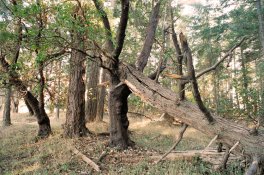
This shot from my APUG gallery was shot using a 24mm f/2.8 Zuiko:
 

Attachments

  • broken_tree_01a.jpg
    broken_tree_01a.jpg
    198.9 KB · Views: 202
having used both--the practical difference between them is never greater than a small step forward or back, sometimes just leaning over a bit is enough. in fact, they were so similar that i eventually got rid of one. looking back at old pictures i have no idea which was taken with which
 
If i understand well you have 28mm, so the different in angle 24-28 is very short, buy instead 20mm.
 
As you have the F100, you could rent the 24mm/1.4 and give it a try. You can replace the 28mm with it and buy something wider.
It is one of these lenses that makes me want to buy the F6. The difference to 28mm is next to non-existant.
 
I use the 24-85mm 1:2.8-4 D as my standard lens on my F100, and I use the 24 mm lens on my Olympus for all my IR work. So I think the 24mm lens is just perfect for my use which is mainly landscape.
 
Mostly agree with the "it's not very different", but sometimes that little bit extra is good. You are right to worry about lots of nothing in the frame and my suggestion is "get in close". The beauty of wides is that they can give you unusual perspectives, not that there's way too much background creeping in. Also suggesting a 20mm...
 
For me there is a categorical difference between 24mm and 28mm. I think of 28mm as the widest lens I'd use where I don't want an exaggeratedly wide look, like for an environmental portrait in a particularly tight space.

24mm starts to have a "wide look," so I'm more likely to use it for big landscape subjects, or photographing tall buildings where I want to keep the camera level and crop out the excess foreground, or for interior architectural shots where I've got a lot to fit into the frame and can't step back far enough.
 
For me there is a categorical difference between 24mm and 28mm. I think of 28mm as the widest lens I'd use where I don't want an exaggeratedly wide look, like for an environmental portrait in a particularly tight space.

24mm starts to have a "wide look," so I'm more likely to use it for big landscape subjects, or photographing tall buildings where I want to keep the camera level and crop out the excess foreground, or for interior architectural shots where I've got a lot to fit into the frame and can't step back far enough.

I was going say the same, I agree 100%.
-
When I had a 24mm back in the late 1970's I found it was often just a bit too wide and switched to a 28mm a decision I've never regretted, I do have a 17mm as well. So I found the 17mm, 28mm, 50mm and 70-210mm (zoom0 combination ideal. Perhaps if the OP had a 35mm WA then the 24mm/35mm.80mm suggestion would also be a good option.

Ian
 
28 and 24 are not very far apart in focal length, but there is a notable difference in "feel."

I use 28 as a wide that doesn't really look all that wide. It is part of my main 3-lens kit, which consists of 28, 50, and 135.

I use 24 when I really want a WIDE look, or when I simply need to cram more into the frame because my rearward movement is limited.

I use the 24 as more of a special-purpose lens. I would not like to have it as my only wide. I have to get too close to subjects to use it, and I find that it can easily create a gimmicky "look! I'm using a wide angle lens" look. A little distracting for most of what I shoot. But using a 28 is as easy and fluid for me as using a 50.
 
It's a case of sensibly spacing your lenses. If I'm photographing in the city, I find a 20mm, 35mm & 85mm the most useful combo. However, if I'm going on a long walk in the countryside, I'll probably take 28mm, 55mm macro, & 105mm. Personally I would find the 24mm a bit of an "in-between" lens. Whatever wide you go for, you must aim for fairly close in foreground interest, otherwise your pictures are likely to be very flat and one-dimensional.
 
I use my 24mm, much more than my 28mm.

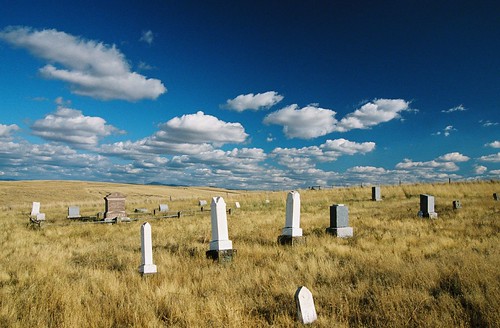
1664913781_1faabd9d38.jpg
 
I will second the "If you already have a 28mm, then get a 20mm" idea...

Compositionally more challenging than a 24mm, but the basic idea is to get close to some sort of foreground.
 
Very true. Love my 20mm.
 
I will second the "If you already have a 28mm, then get a 20mm" idea...

Compositionally more challenging than a 24mm, but the basic idea is to get close to some sort of foreground.

Having a 28mm doesn't mean that's what you really want as I would think many choose a 28mm because a good 24mm is so damn expensive.
 
IMHO, I would go to a 20mm. I love my 20mm when I really want wide. The 28mm is good for moderate wide - groups of people, etc. 35mm doesn't seem enough wider than 50mm, that I don't even own one. But, that's my opinion.
 
Hey folks, Mr. OP doesn't yet have a 28.

I'm in the camp that feels there is a pronounced difference between 28 and 24. Perspective distortion, I've long believed, becomes much more apparent with 24. I'll add the sweeping statement that as one goes wider, say from 35 to 15, an increasing amount of care (skill!) must be used to create a pleasing image. Hand a 35 to anyone and they've got a good chance of making a decent image. Give them a 20 and they'll be quite challenged. I've witnessed the same in highly unscientific field-testing...as in, 'here, take this (my camera) and go make some photos' while attending social functions. I enjoy W-I-D-E more than the average shooter (owning wide, super, ultra, etc.) yet I find 28 to be oh-so-pleasing for a variety of situations. A final, hands-down word on recommended MF models: Nikon 28/2 or 28/2.8 AIS, both of which are superior to Nikon's AF offering.

I also appreciate Matrix Metering but w/ a non-CPU lens such as the two MF models I noted above, only Center Weight and Spot metering are available on the F100. Both metering methods have their attributes, esp spot -metering...may be a good opportunity to refine your metering technique?
 
Last edited by a moderator:
I shoot with the 24mm f/1.4G on my F100's and it is absolutely incredible.


When photographing people, I use it for wedding receptions or environmental portraits. These were shot with the Kodak BW400CN @ ISO 200 and f/1.4:

6275833624_836b95f6d2_b.jpg


But it's not just for people either, it also makes an INSANE landscape lens.
Watch out! it's digital: http://www.flickr.com/photos/mrmeeker/5325018619/in/photostream/lightbox/
 
Have both. I have them in MF and AF. f/2.8 is better than f/2
 
I think Goldfarb is onto something with the 24mm being the beginning of truly wide lenses whist 28mm is a really wide 'normal' focal length.

I have a 24mm, 28mm, 35mm and multiple 50mm's and i *rarely* use the 28mm. If i'm going after landscape i'm using my 24mm. If i'm walking/traveling i choose the 35mm or 50mm. The 28mm just sits in 'nowhere land' (i'd sell it, but for the $30-$50 i'd get it's not worth selling). Yes, i 'foot-zoom' and can change whats in the frame by backing up/getting closer, but the 'look' of the 28mm vs the 35mm is just *different* and i prefer the 35mm.

Between the 24mm and the 28mm - there's no comparison. They have a *very* different FOV and all of what that entails in a given frame - it's not as simple as backing up/getting closer.
 
I shoot with the 24mm f/1.4G on my F100's and it is absolutely incredible.


When photographing people, I use it for wedding receptions or environmental portraits. These were shot with the Kodak BW400CN @ ISO 200 and f/1.4:

6275833624_836b95f6d2_b.jpg


But it's not just for people either, it also makes an INSANE landscape lens.
Watch out! it's digital: http://www.flickr.com/photos/mrmeeker/5325018619/in/photostream/lightbox/

Perfect case in point of why I prefer 28mm. I'd crop all of those pix a bit if they were my own. They are relatively small subjects within the frame, and there is a vast array of interesting lawn chairs and back yard in the background. But get any closer, and the subjects warp even more than they already are. It is a personal choice, obviously, and I don't mean to say that it is anything but, but rather to explain why I would choose 28.
 
Photrio.com contains affiliate links to products. We may receive a commission for purchases made through these links.
To read our full affiliate disclosure statement please click Here.

PHOTRIO PARTNERS EQUALLY FUNDING OUR COMMUNITY:


Ilford ADOX Freestyle Photographic Stearman Press Weldon Color Lab Blue Moon Camera & Machine
Top Bottom