• Welcome to Photrio!
    Registration is fast and free. Join today to unlock search, see fewer ads, and access all forum features.
    Click here to sign up

120 Negatives darker on the edge of frames ? What am I doing wrong ?

Recent Classifieds

Forum statistics

Threads
201,983
Messages
2,833,290
Members
101,048
Latest member
simenswang
Recent bookmarks
0

Jonno888

Member
Allowing Ads
Joined
Jul 9, 2011
Messages
25
Format
Medium Format
Hi all.

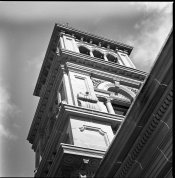
I've been having a problem lately with my 120 Tri-x 400 negatives. It seems that the edge of the frames are more dense and I'm not sure why. I'm assuming it is something to do with my processing procedure. I've attached a couple of examples. Can anyone tell what I am doing wrong here ? Could it be a problem with my film back? I am using a hasselblad 500c/m.

My basic process is as follows:

1. Tri -x 400 in Rodinal 1:50 for 12 mins
2. Tap water rinse for stop bath.
3. Fix for 10 mins in tetenal vario fix
4. Wash for film for 10 mins (running water through pipe into patterson tank)
5. Let film sit in photo-flo for 90 seconds
6. Hang up and dry in dust free area
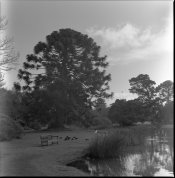
werribee_park_august_2013_trix400@320_rod1-50_12mins001.jpg
werribee_park_august_2013_trix400@320_rod1-50_12mins005.jpg
 

PhotoJim

Member
Allowing Ads
Joined
Oct 9, 2005
Messages
2,314
Location
Regina, SK, CA
Format
35mm
Describe your agitation procedure please.
 
OP
OP

Jonno888

Member
Allowing Ads
Joined
Jul 9, 2011
Messages
25
Format
Medium Format
Describe your agitation procedure please.

I spin the reel in the patterson tank using the little drop-in plastic handle. I twirl it slowly for the first 30 seconds and then 10 seconds every minute there after.

Thanks.
 

PhotoJim

Member
Allowing Ads
Joined
Oct 9, 2005
Messages
2,314
Location
Regina, SK, CA
Format
35mm
Don't do that. Put the soft plastic cap on the lid after you've poured in the developer, rap the tank on the counter firmly to dislodge air bubbles, and then invert once a second until the first minute of development is done. Then let it rest until another minute is up and give it ten agitations in ten seconds (inversion again). Continue doing this once a minute until a minute remains, then begin to pour out the chemistry when about 10-15 seconds remain.
 

clayne

Member
Allowing Ads
Joined
Sep 4, 2008
Messages
2,764
Location
San Francisc
Format
Multi Format
1. Present on every single frame?
2. Present *between* frames?

If the latter, it's the camera.
 

Marc B.

Member
Allowing Ads
Joined
Oct 24, 2010
Messages
357
Location
USA, Pac/NW
Format
Multi Format
I think you have a problem with your back, possibly at the dark slide slot.
Without another back to check or confirm this...use tape on the back you have.

With a fresh roll of film loaded into your existing back, mount the back to your camera,
but don't advance to the first frame.
Next, with the back attached to your body, remove the dark slide.
Now, run a layer of black tape round the interface between the camera and the body,
covering the dark slide slot. Shoot the whole roll. See if the problem has been solved/identified.

This is a quick, cheap and easy method of elimination, or trouble shooting the problem.
Probably time for a light-seal kit.

Marc
 
OP
OP

Jonno888

Member
Allowing Ads
Joined
Jul 9, 2011
Messages
25
Format
Medium Format
Thank you for the suggestions everybody. I will try inverting my tank rather than using the spinner stick thingo and I'll test the film back for light leaks. I'll post back with my results.

Regards,
Jonno
 

George Collier

Subscriber
Allowing Ads
Joined
Feb 23, 2005
Messages
1,374
Location
Richmond, VA
Format
Multi Format
What others have described about agitation is to eliminate "surge", or excessive development in the side areas of the images, parallel to the long edges of the film, which can be troublesome with 120 film, more difficult to avoid than with smaller film.
But the tower image is troubling to me. If this is shot vertically, then the area at the top of the frame would not be surge, and is rather strange looking. Are these straight prints?
 

wombat2go

Member
Allowing Ads
Joined
Jul 21, 2013
Messages
352
Location
Michigan
Format
Medium Format
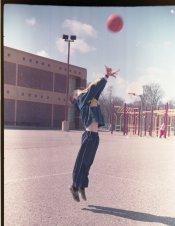
I had a very similar problem, just with one roll of a batch in C41. ( The other rolls did not show this problem)
I use the Rollie C41 kit
Taken with a Nettar folder.
I also use the rotating stick. Maybe next time I will try inversions
On one photo the edges of the frame are light, on the other photo it is on the end between frames.
 

Attachments

  • NettarBasketBallScaled .jpg
    NettarBasketBallScaled .jpg
    611.8 KB · Views: 115
  • Lightship_Huron.jpg
    Lightship_Huron.jpg
    318.6 KB · Views: 108

Vivaldi

Member
Allowing Ads
Joined
Dec 19, 2006
Messages
11
Format
35mm RF
I had this identical problem with 120 roll film with a stainless steel tank and reel. I used 2 inversions every 30 seconds. When I switched to using a Jobo for film development, the problem completely resolved. For those who have had success with 120 roll film and stainless steel reels and tank, I am curious to know what inversion methods have worked for you?
 

Richard S. (rich815)

Member
Allowing Ads
Joined
Jan 14, 2003
Messages
4,924
Location
San Francisco
Format
Multi Format
I had this identical problem with 120 roll film with a stainless steel tank and reel. I used 2 inversions every 30 seconds. When I switched to using a Jobo for film development, the problem completely resolved. For those who have had success with 120 roll film and stainless steel reels and tank, I am curious to know what inversion methods have worked for you?

Slower inversions, load so that the reels do not slosh around inside the tank.
 

Shawn Dougherty

Member
Allowing Ads
Joined
Jul 22, 2004
Messages
4,129
Location
Pittsburgh
Format
Multi Format
For those who have had success with 120 roll film and stainless steel reels and tank, I am curious to know what inversion methods have worked for you?

I had problems with even development of 120 roll film with stainless tanks and reels UNTIL I started doing the following.

I only load the tank to half capacity, both with film and developer. For example: If I am using a two reel tank I only load film in the bottom reel (I keep the 2nd reel on top and empty as a spacer) I use 500ml of developer (or whatever it takes to cover only the bottom reel). I agitate (for the first minute then once a minute there after) by tipping the tank 90degrees left, right, forward, backward and give a few taps at the end to dislodge air bubbles. This way, all of the developer leaves the film and is replaced in a new position. I rotate the tank a quarter turn each time I set it down.

I have never had uneven development of 120 film since I started doing this.

Also, it is a good idea to clean your reels very carefully. Residual photo flow can inhibit development... (although I doubt to the degree we see in these examples).
 

piu58

Member
Allowing Ads
Joined
May 29, 2006
Messages
1,545
Location
Leipzig, Germany
Format
Medium Format
The cure against uneven devlopment is intensive agitation. The reason for the more darkened edges is that the bromide can easier go away from here. Intensive agitation leads to an exchange of developer everywhere.
 

ic-racer

Member
Joined
Feb 25, 2007
Messages
16,745
Location
USA
Format
Multi Format
That pattern is frequently caused by underdevelopment at the center of the negative from not using enough developer. Try 10 ml per 120 roll and see if it improves.
People starting with film tend to skimp on developer and exposure; both are inexpensive:smile:
 
Last edited by a moderator:

Vilk

Member
Allowing Ads
Joined
Jan 15, 2008
Messages
515
Location
hegeso.com
Format
35mm
agitation. kodak's 5 sec every 30 gives me skies much more even around the edges than ilford's 10 sec every 60
 
OP
OP

Jonno888

Member
Allowing Ads
Joined
Jul 9, 2011
Messages
25
Format
Medium Format
Don't do that. Put the soft plastic cap on the lid after you've poured in the developer, rap the tank on the counter firmly to dislodge air bubbles, and then invert once a second until the first minute of development is done. Then let it rest until another minute is up and give it ten agitations in ten seconds (inversion again). Continue doing this once a minute until a minute remains, then begin to pour out the chemistry when about 10-15 seconds remain.

Well, I've done some testing this weeked and it looks like PhotoJim you were right! I followed the Kodak method for intense agitation and now my negatives are evenly developed. I followed this guide:
http://www.kodak.com/global/en/professional/support/techPubs/f4017/f4017.pdf
The plastic reel spinner handle is in the rubbish bin just so I'm never tempted to use it again. Also ordered a seal kit for the film back anyway as I hear your should do it regulary and I'm not sure of the history of my film back's maintenance.

I've only been into film photography for around a year or so now and I've only ever used Rodinal just because it seemed to damn easy and pretty economical when you're learning. For my testing this weekend though I've tried Ilford ID-11 for the first time and I'm much happier with the results from Tri-x 400. It seems to produce a smoother style of grain.
 
Photrio.com contains affiliate links to products. We may receive a commission for purchases made through these links.
To read our full affiliate disclosure statement please click Here.

PHOTRIO PARTNERS EQUALLY FUNDING OUR COMMUNITY:


Ilford ADOX Freestyle Photographic Stearman Press Weldon Color Lab Blue Moon Camera & Machine
Top Bottom