

• Welcome to Photrio!
    Registration is fast and free. Join today to unlock search, see fewer ads, and access all forum features.
    Click here to sign up

Announcement Nikon TW20/Tele Touch 300: A closer look at service and technology

Recent Classifieds

Forum statistics

Threads
204,282
Messages
2,866,583
Members
102,207
Latest member
gustavocf
Recent bookmarks
0

Andreas Thaler

Subscriber
Joined
Nov 19, 2017
Messages
5,151
Location
Vienna/Austria
Format
35mm
Inspired by @ic-racer excellent work on the Nikon L35AF, I will take a closer look at the Nikon TW20/Tele Touch 300, which is a newer member of the family.

The Nikon TW20 (or Tele Touch 300 in America) is a compact auto focus camera released by Nikon in 1989. It was the follow-up model to the TW2. The TW20 could be switched between two focal lengths: 35 mm wide angle and 55 mm normal („tele“) mode. It was Nikon’s first camera with a red-eye reduction mode.

Master Larry Lyells devotes 21 pages to this model in the July/August 1991 issue of the SPT Journal. This will make it possible to carry out this project. I was unable to find a repair manual from Nikon.

We're doing a full CLA (clean, lube, adjust), and I'm especially looking forward to checking out the electronic and mechanical details.

I have ordered two TW20s that are reportedly in working order, and I’m looking forward to an exciting project later this May!


See also

Nikon TW20 5 Frame Review – Two lenses; two perspectives by Iain Paterson

Instruction Manual
 
Last edited:
Idiot me. When I clicked on your link to the TW20 SPT, I found that the L35AF service manual is INDEED on that site. I guess he keeps updating the site. I had looked for it a while back and could not find it.
 
Idiot me. When I clicked on your link to the TW20 SPT, I found that the L35AF service manual is INDEED on that site. I guess he keeps updating the site. I had looked for it a while back and could not find it.

Yes, there are two official Nikon manuals for the Nikon L35AF available there:


The SPT Journal also features additional articles on Nikon's compact cameras from the 1980s:


I see a new goal—to document all of these Nikon compact cameras in terms of their technology and CLA. There isn't much out there.
 
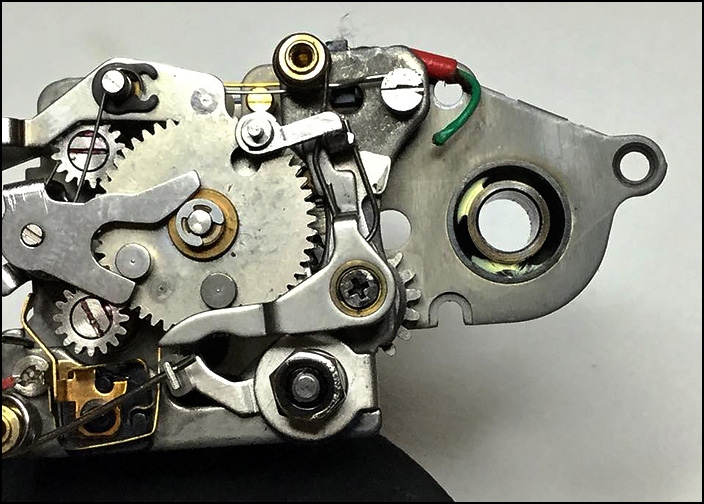
After reviewing the SPT Journal, I realize that this camera is mechanically and electronically more complex than some SLRs. It’s incredible what the designer/team has achieved here—and likely with all cameras in this line. From the outside, it looks harmless.

We will also properly discharge the flash capacitor so that the inspection can be carried out safely.

Not all colleagues take this issue so seriously, but I believe there can be no compromises here. The charge and voltage in these capacitors are sufficient to cause accidents, especially if the current flows through the heart.

IMG_6162.jpeg


Here are a few flash capacitors from my collection with their electrical specifications.
 
I’ve been thinking about the topic of safely discharging flash capacitors.

The principle is simple:

The electrolytic capacitor is short-circuited via a high-current resistor, which allows the voltage potential to be equalized in a controlled manner until the voltage approaches zero volts.

If the capacitor were short-circuited without a resistor, this would result in an immediate potential equalization, causing a massive current to flow that could destroy the capacitor—an explosion cannot be ruled out.

There are significant forces at play here that are not to be taken lightly. A current flow from a flash capacitor through the heart is potentially fatal.


What do you think? How do you handle this issue during repairs, for example, when working on cameras with built-in electronic flash units like the Nikon TW20?


You know how safety-conscious I am, so here’s a safety tip:

⚠️ A word of caution ⚡

What we as DIY repairers WITHOUT electronics training should definitely not do is work on devices with high voltage.

This includes all electronic flash units, cameras with built-in electronic flash units (like this Nikon TW20) and devices that are powered by mains voltage.

This poses a potential risk to health and life.

Please do not NOT tamper with this; the built-in flash capacitor, when charged, reaches a high voltage, several times that of the inserted AA batteries, and is dangerous. This high voltage can persist long after charging.
 
What do you think? How do you handle this issue during repairs, for example, when working on cameras with built-in electronic flash units like the Nikon TW20?

Didn't come across this problem during camera repair yet since my cameras are pre-"built-in flash". However, I also do HiFi repairs there a similar problem exists with the buffer capacitors of power amplifiers. The voltage is lower than for flash capacitors (<100V) but the capacity is much higher (10+mF). That is, they hold much more energy than the capacitor of a built-in flash. Until now, I discharged these capacitors the DIY way using an appropriate resistor. However, if I would do it more often I would probably buy a professional capacitor discharger. They come in different forms: The cheapest ones have the form of a large tweezer (with an LED on top), the more expensive ones are small boxes with leads attached (and a digital display). The advantage of these dischargers compared to the DIY "just a resistor" solutions is that they indicate when the voltage in the capacitor has dropped below the critical level. When just using a resistor, it depends on several factors (capacity, voltage, resistance, time of discharge) when you drop below this level. Might be harder to eyeball this. In the worst case, you discharge the capacitor not long enough and it still keeps a dangerous voltage afterwards.
 
Thanks!

Do you work on the capacitors with one hand while keeping the other off the table? To prevent an unwanted current from flowing through your body in case of a short circuit?
 
Thanks!

Do you work on the capacitors with one hand while keeping the other off the table? To prevent an unwanted current from flowing through your body in case of a short circuit?

No, life has to be an adventure 😁. Over time, you get used to not touch certain things unintentionally. However, when repairing a HiFi device and I have to keep it powered up (for error analysis or adjustment), I always use an isolation transformer. This way, you would need to touch high voltage with both hands to get electrocuted. Also, it keeps your oscilloscope from blowing up. None of this is needed for camera repair 😉.

You can get the box-shaped capacitor dischargers with digital display and leads for €15-20 at Aliexpress. However, personally I wouldn't trust them before I had a look at the schematics and/or the interior of the device. Unfortunately, I couldn't find both yet. Maybe, I will just build one by myself. My favorite HiFi repair YouTuber presented the one he built and it looks legit:

 
I bought a discharge device a while back—a small circuit. I prefer to rely on things I understand, and of course, a single high-power resistor is unbeatable for that 😝

Let's see what I have in stock and what I can build with it.

I’m not entirely comfortable with this; I try to avoid high voltage. But if I open up the TW20 and need to make any adjustments, I have to discharge the flash capacitor.

I could also release the camera triggering the flash and immediately removing the battery. That way, the capacitor shouldn’t be fully charged, so nothing should go wrong.
 
After opening the camera, measure the voltage across the capacitor using one hand. To do this, I use a spring clip as a test probe, which I attach to one electrode. Only then do I touch the other test probe to the second electrode. This should be safe.
 
After opening the camera, measure the voltage across the capacitor using one hand. To do this, I use a spring clip as a test probe, which I attach to one electrode. Only then do I touch the other test probe to the second electrode. This should be safe.

With this approach, you are definitely on the safe side. However, test probs are designed to be safe also in "both-hands mode" according to their safety class. I mainly use CAT III 1000V test probes. Beside other things, they are designed in a way that your hands cannot slip easily from their handles.
 
With this approach, you are definitely on the safe side. However, test probs are designed to be safe also in "both-hands mode" according to their safety class. I mainly use CAT III 1000V test probes. Beside other things, they are designed in a way that your hands cannot slip easily from their handles.

That’s how I see it, too.

I just realized that if you’re holding one probe in each hand, you’re actually creating a circuit with the capacitor IF something goes wrong.

But you’d have to think about that every time you plug in a power cord (230 VAC/50 Hz in Austria/EU).
 
I’m still thinking about how to safely discharge high-voltage electrolytic capacitors.

I understand the principle and how to do it. But I’m wondering if this should be demonstrated publicly here in the forum.

We’re not talking about a small amount of current flowing here, but about energy that could be life-threatening. That’s something entirely different and must be clearly identified as such.

Anyone who opens an electronic flash unit or a camera with a built-in electronic flash unit must know exactly what they are doing. They must understand the risks involved, how the electrolytic capacitor is wired, and where high voltage may still be present in the circuit.

This requires solid knowledge of electronics and experience in disassembling flash units and cameras. Such knowledge and experience are assumed in the technical documentation.

I don’t want to be held responsible if anyone tries to copy what I’m doing. I’m not a certified electronics technician, which is why I always include a disclaimer at the end of my technical posts.

For that reason, I won’t be demonstrating how to discharge a high-voltage electrolytic capacitor in this repair report; I’m doing that for myself at my own risk.

Anyone interested in this should seek information from reputable sources. I strongly advise against it if you don’t have a solid understanding of electrical engineering.

⚠️ ⚡️ Stay away from high voltage unless you know exactly what you're doing—this isn't something to tinker with.
 
Last edited:
Photrio.com contains affiliate links to products. We may receive a commission for purchases made through these links.
To read our full affiliate disclosure statement please click Here.

PHOTRIO PARTNERS EQUALLY FUNDING OUR COMMUNITY:


Ilford ADOX Freestyle Photographic Stearman Press Weldon Color Lab Blue Moon Camera & Machine
Top Bottom