• Welcome to Photrio!
    Registration is fast and free. Join today to unlock search, see fewer ads, and access all forum features.
    Click here to sign up

Procedures To Shooting Portraits on 8x10

The Hot Waters

A
The Hot Waters

  • 0
  • 0
  • 22
Dump Truck Hat Trick

D
Dump Truck Hat Trick

  • 1
  • 0
  • 78

Recent Classifieds

Forum statistics

Threads
204,313
Messages
2,867,031
Members
102,221
Latest member
GarMc
Recent bookmarks
0
A 300mm lens on 4x5 is great for head shots but I think you'll find the same lens on 8x10 surprisingly wide. At least that was my experience.
Certainly for long-term, I would look for something around 450mm+.

Due to the large negative size, 400 film works very well, especially for slower lenses, bellows extension, faster shutter speed etc.

👍 Using the short dimension of the image vs. FL as the comparator on the 8x10 short frame dimension of 203.2mm with 300mm FL would prove the same angle of view as 135 format with 36mm FL, which is wide angle. On a head shot that would certainly start to invoke some perspective distortion.
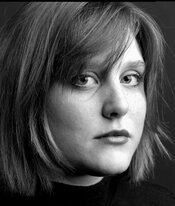
 
You’re right and those could look pretty similar to the head and shoulders shot op shared.

They will. For amusement's sake, I've done a portrait like that a few years ago of a friend who I found photogenic, but moreover, he had a considerable collection of 1-5kW hot lights with fresnels, barn doors etc. That was one HOT room by the time we were done, LOL! He had (probably still does) all this kit because he used to work as a lighting technician for a motion picture production house in the UK, where they did a lot of commercials as well as work for the BBC. Over the years, he built a personal collection of similar hardware that he was used to using on the job, which for him was the benchmark and epitome of cinematic lighting. I've always been more of a strobe guy. Much less sweaty...

I think I saw the full body shot on the big white background and went straight to thinking about a big 10k
Yeah, likely. The group shot would also have been something like 100+kW dumped onto the scene with all sources combined.

Btw, more to the point, I notice how @braxus is referring to head shots, but none of the examples shown is that. This may sound pedantic, but what I'm trying to say is that we may have something in mind that's more of a feeling than a concrete image, so it's worthwhile to critically assess that vision and break it down into concrete aspects and then verify if they do really add up to the feeling you have about the project.
 
Will you be contact printing? If not you might want to try stopping down and backing off a bit. You can then crop in as needed. That also gives the model a little grace for moving a bit. I did quite a bit with 4x5 and a 210mm lens. Backing off a little also make direction a little easier. I find standing to the side of the camera and directing the model to be a completely different vibe than the typical shoot. I miss having access to a studio and darkroom!

Oh, and strobes are the way to go! Back then I had the luxury of using Polaroids to get the exposure just right. Now you’ll have to be diligent about bellows factor etc.

kathybrown1.jpegIMG_0146.jpeg
 
You’re right and those could look pretty similar to the head and shoulders shot op shared.

I think I saw the full body shot on the big white background and went straight to thinking about a big 10k, but that’s not necessary for op’s idea

Oh, 10k! You would need to rent the jenny too.
Completely off the subject, for some reason I came across a video of one of the Mole-Richardson principles demonstrating striking a carbon arc. The light came with its own power supply- a cargo van containing the generator.
 
People have alluded to this a couple of times in this thread: perspective is about camera location i.e. distance to the subject, not strictly focal length. And with a format as large as 8x10, you can get into reproduction ratios that sound like "macro" before you expect it.

For example, suppose a headshot or tight head-and-shoulder framing is about an area of 16x20" at the subject. On a 4x5, this is a repro ratio of 1:4, so you need some bellows extension (1/4, so 75mm if your lens is 300mm) and have a little bellows-factor exposure compensation, about 1/2 stop, and your lens-to-subject distance is 4 * 375mm = 1.5 meters. These are at least somewhat manageable (if you have 375mm of bellows).

If you want to take an image of 16x20" subject on 8x10", that's a repro ratio of 1:2. Again with a 300mm lens, now you need 150mm of extension (450mm total bellows), your bellows factor is about 1.1 stops, and your lens to subject distance is 0.9 meters. That's a little too close, so it would be nice to have a longer lens, but then you need an enormous amount of bellows - I looked it up, the Intrepid 8x10 has "only" 510mm of bellows.

So the direct angle of view comparison where a 300mm is a semi-wide about like a 40mm lens on 35mm film doesn't apply very well here; its viewing angle on film gets smaller as you crank out the bellows. IOW if you have 375mm of bellows extension, you have the perspective of a 375mm lens, not a 300mm lens. But the problem remains that for perspective, it would be better to stand further back and take an image of a larger subject area.
 
You don't need any special lighting equipment. Though you may need a Rolleiflex TLR to hold your background paper roll down...

img_0186.jpg
 
This Photrio post includes a reference that apparently will help you understand how George Hurrell worked: The Hurrell Style
 
I like to do portrait photography in 8x10. It is my favorite media. I mainly use either a 300mm or a 360mm. I have a bunch of them. At close distances, they give very different perspectives, but both work. I don't think that anything longer will work on 8x10, because bellows extension will be too long. With respect to apertures, it is just a question of taste. However, in 8x10, at portrait distances the depth of field is very very shallow (nothing in smaller formats is comparable in practice, even in 4x5). This fact is challenging but can be used to your advantage. However, a portable 600ws strobe will get you easily to f22, which is forgiving enough even at close distances.
 
I like to do portrait photography in 8x10. It is my favorite media. I mainly use either a 300mm or a 360mm. I have a bunch of them. At close distances, they give very different perspectives, but both work. I don't think that anything longer will work on 8x10, because bellows extension will be too long. With respect to apertures, it is just a question of taste. However, in 8x10, at portrait distances the depth of field is very very shallow (nothing in smaller formats is comparable in practice, even in 4x5). This fact is challenging but can be used to your advantage. However, a portable 600ws strobe will get you easily to f22, which is forgiving enough even at close distances.

Well, remember that f/22 at full power is going to turn into something like f/11 and a half, maybe f/16 if you're lucky, due to bellows extension. I like shooting with at least 1200 ws power when using 8x10, to make sure I have enough headroom.
 
Well, remember that f/22 at full power is going to turn into something like f/11 and a half, maybe f/16 if you're lucky, due to bellows extension. I like shooting with at least 1200 ws power when using 8x10, to make sure I have enough headroom.

f22 with bellows factor accounted for. The strobe has to be close to the subject, though.
 
I shot a few 4x5 portraits some years ago outdoors and focus was a concern, especially wide open. But It was a full body shot, not close. I can see focus being an issue once you set the camera for shooting, and the model moves.
 
I like to do portrait photography in 8x10. It is my favorite media. I mainly use either a 300mm or a 360mm. I have a bunch of them. At close distances, they give very different perspectives, but both work. I don't think that anything longer will work on 8x10, because bellows extension will be too long. With respect to apertures, it is just a question of taste. However, in 8x10, at portrait distances the depth of field is very very shallow (nothing in smaller formats is comparable in practice, even in 4x5). This fact is challenging but can be used to your advantage. However, a portable 600ws strobe will get you easily to f22, which is forgiving enough even at close distances.
Cambridge Color flexible DOF calculator says 360mm lens set to f/22 at a shooting distance of 8' will yield DOF detected by someone with 20/20 vision of a mere 0.45' when viewing a contact print at 10" viewing distance !
 
3722.jpg
3723.jpg
3733.jpg


These images were taken back in 2021 with my Intrepid 8x10 mk.2, and a Symmar-S 300mm. The film was Agfa APX 100, expired 1995. Sadly I don't recall exactly how I shot and processed it, but I would've overexposed it by at least a stop. No modifiers were used.

Natural light is definitely possible, it was golden hour-ish on a clear day. The closer portrait is about as close as I'd be comfortable getting with the Intrepid and a 300mm, especially outdoors. Hopefully their cameras are better than they used to be, my mk.2 is a very unstable device.

I don't do as much 8x10 these days, especially since my 4x5 is a Chamonix. The Chamonix's front standard handles the massive 300mm lens better than the Intrepid.

Here's a Drive link with higher resolution images if anyone is interested: https://drive.google.com/drive/folders/1tgVjhZcxrO7yZp4A9G-taEfZaPZdtw3K
 
Last edited:
Here's a re-post from some time ago:

A while back I shot six full face portraits with a 8x10 Tachihara 810HD view camera and the process went smoothly because almost all the work had been done before the sitter arrived.

I used a stand-in seated in a posing chair to set exact focus. Then I ran a string ending in a small bead from the camera to the stand-in. String length was adjusted so that when the bead was between the subjects eyes and the string was taut the subjects eyes are in exact focus. Camera focus was then locked down because the string and bead would guarantee image focus and I would not have to look again at the ground glass or get under a focussing cloth.

Then I checked light meter readings, adjusted for bellows extension, set the aperture, the shutter speed, and cocked the shutter. Since the session was only going to take a few minutes and my sunny-day light wasn't going to change so I would not have to meter again. Next a film holder was put into the camera and the dark-slide was pulled. The film was now waiting inside the darkness of the camera for the first exposure.

Finally the sitter arrived, took their place in the chair, did the bead and string routine, held their head still, turned their eyes to the lens, dropped the bead, and I fired the shutter with a long cable release.

The fastest portrait in photography comes from a preset view camera with a big sheet of film waiting behind the lens - but only for the first shot!

After that there is a bit of work: changing film holders, cocking and firing the shutter, and bantering with the sitter until the end of the session. I'm in control because the string and bead delivers focus, the light is constant, the sitter's chair stops them wandering out of frame, and the long cable release lets me fire the shutter with my hand behind my back. The sitter doesn't know when to flinch.
 
While it's true that many of the old Hollywood publicity portraits were taken with 8x10 cameras, very few of them--including the examples you posted--were actually tight head shots. And if you're going for that look, as others have said the lighting is key, no pun intended.

Here's what you need: this book is pretty fascinating. I've got a copy of it myself, and refer to it frequently.
 
Consider the Nikon M 450/9 which might be a good compromise between weight and price. I use it and like it - not too bulky on 8x10.
 
Consider the Nikon M 450/9 which might be a good compromise between weight and price. I use it and like it - not too bulky on 8x10.

Another similar size/price would be a Rodenstock Apo Ronar 480mm Ć’9 or Ć’11. Jumping to the Fujinon-A 450mm Ć’12.5 is lighter (Copal 1) but usually a significant jump in price.
 
Photrio.com contains affiliate links to products. We may receive a commission for purchases made through these links.
To read our full affiliate disclosure statement please click Here.

PHOTRIO PARTNERS EQUALLY FUNDING OUR COMMUNITY:


Ilford ADOX Freestyle Photographic Stearman Press Weldon Color Lab Blue Moon Camera & Machine
Top Bottom