• Welcome to Photrio!
    Registration is fast and free. Join today to unlock search, see fewer ads, and access all forum features.
    Click here to sign up

3D Printed one-shot Trichrome Camera

Recent Classifieds

Forum statistics

Threads
204,282
Messages
2,866,583
Members
102,207
Latest member
gustavocf
Recent bookmarks
0

Crimeo

Member
Joined
Apr 21, 2026
Messages
47
Location
Canada
Format
35mm
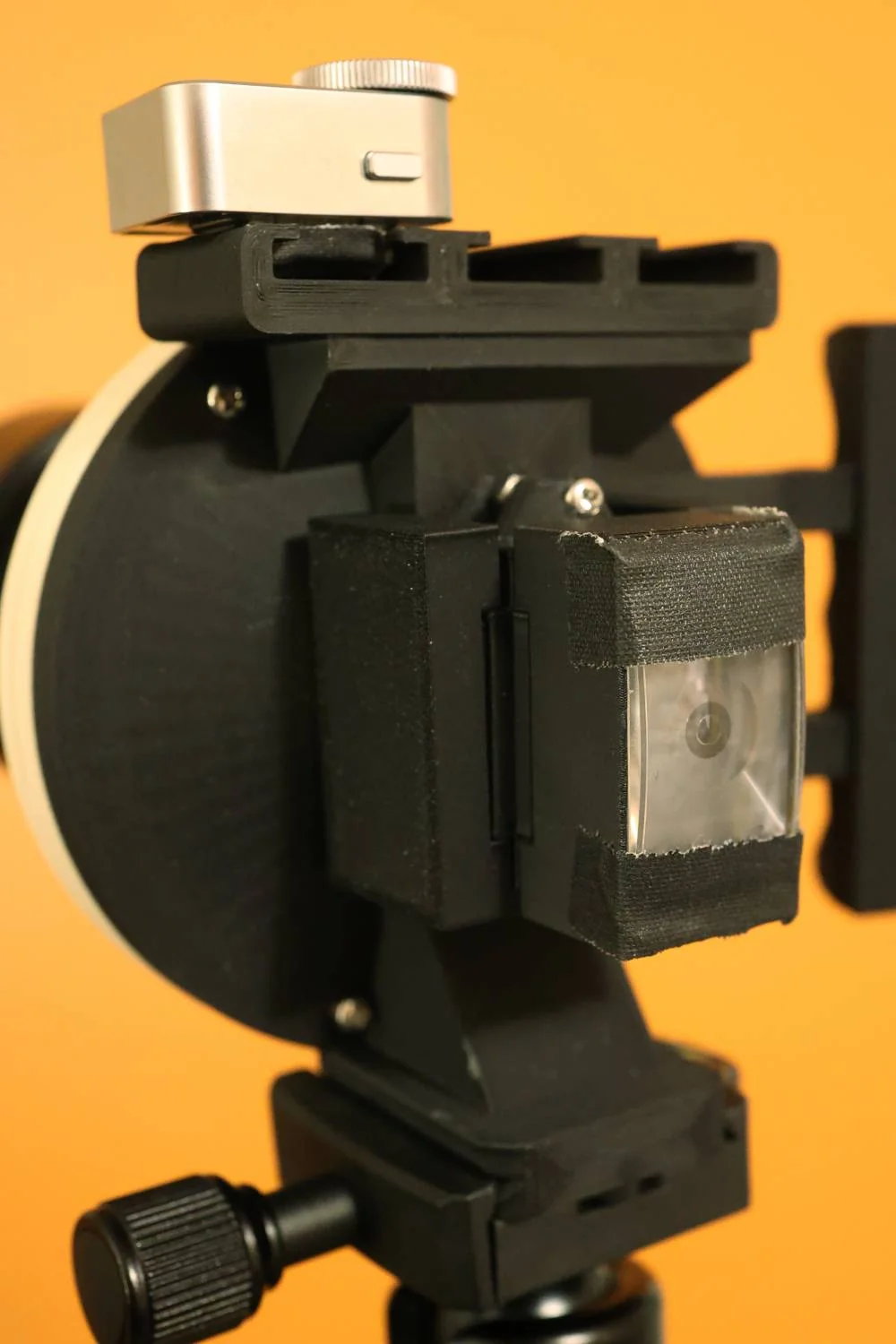
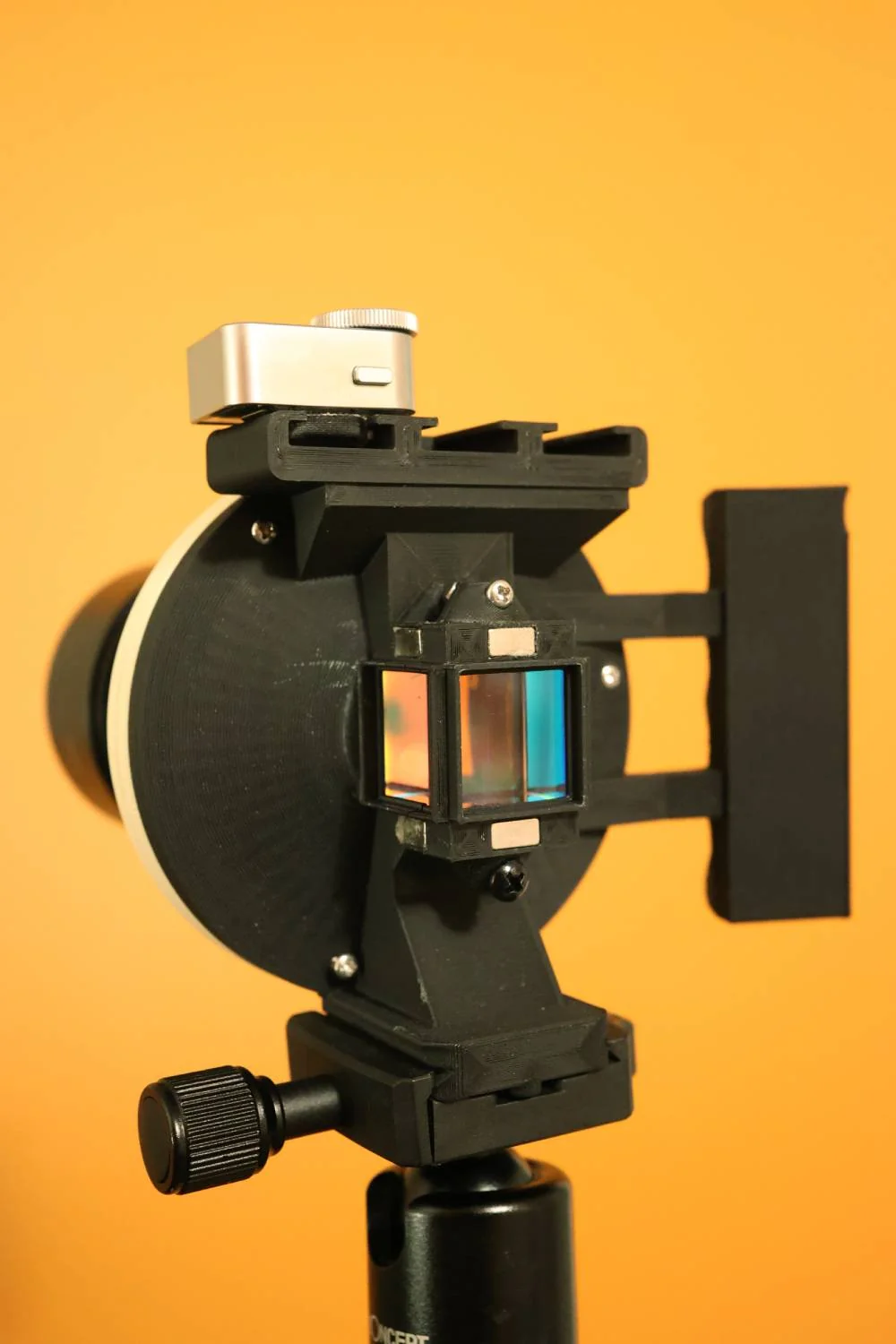
This was built around a "dichroic X cube" meant for projector systems. it's supposed to combine RGB into white, I'm using it in reverse to split white light into RGB, then record the image simultaneously on 3 pieces of film.

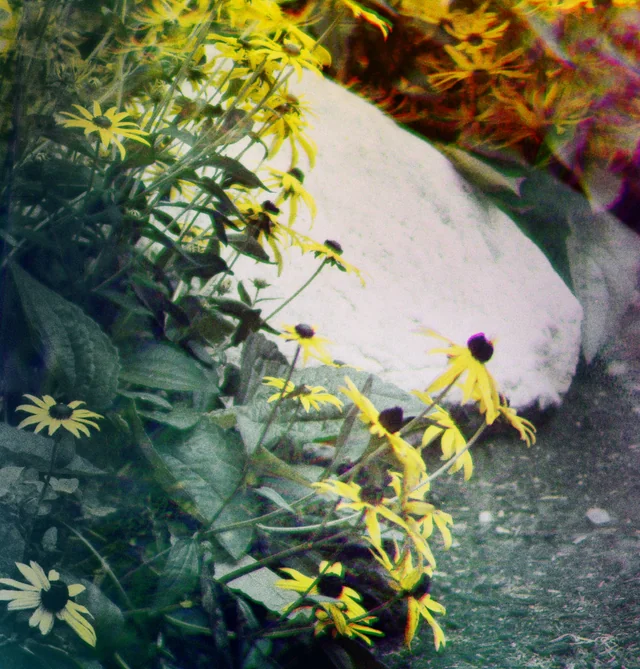
Compared to normal trichromes, this has no ghosting and artifacts from things moving in between 3 successive shots.

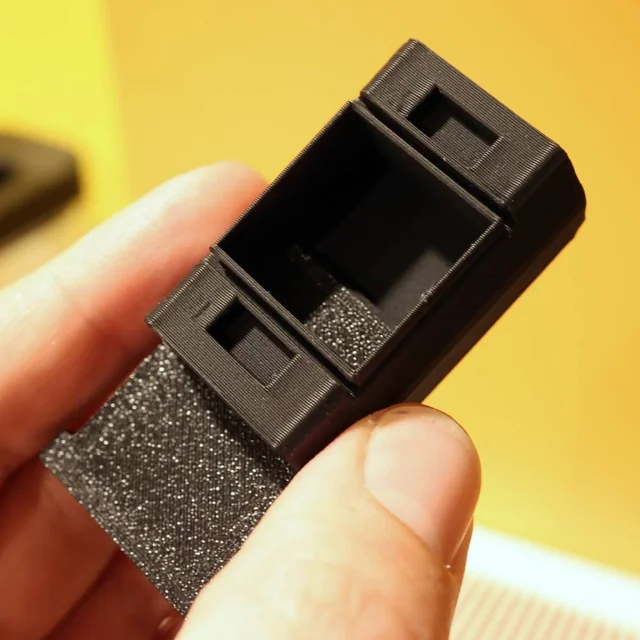
I printed individual 35mm (well I guess more like 24x24mm) film holders, which snap onto the frame using 2 magnets + a labyrinthine light seal. Each has it's own little darkslide. One of them has the focosing screen from an old Praktica on it which you use as a ground glass to focus before replacing it with the 3rd film holder and then pulling all the slides.

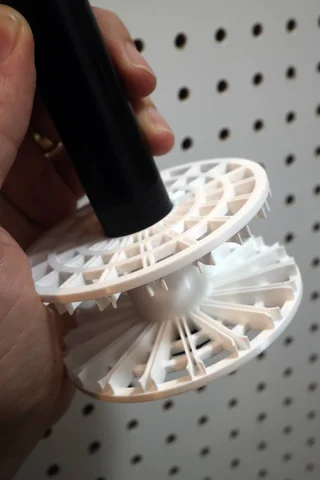
I also designed a custom developing rack for Paterson tanks which takes individual film bits from these and holds them radially for processing.

The front is just a Mamiya press lens

----------

I have since abandoned this after taking like 1 successful shot, because it's an incredible pain in the ass to work with, and results are not very good. But it was fun. The main quality issue is that the cube is letting in light from the other channels and there's not much I can do about it. So the edges get all crazy. I'm working instead now on a new design that uses normal (non-chromatic) half mirrors, and uses normal color filters near each piece of film instead for RGB (+ ND filters to match all their light requirements to each other)
1777063860173.png
1777064085995.png
1777063880521.png
1777063900242.png
1777064032896.png
 
Interesting concept. In this idea, what about the trichrome capture appeals to you? Moet people who presently do this seems to embrace or even seek out the color artifacts arising from the consecutive captures. Of course in the old days of photography, this approach was used because it was one of the only feasible ways to do color acquisition in the first place. Rationally speaking, there are currently easier and arguably better ways to capture color, whether film or digital, so logically the rationale for you must be in one of the less rational aspects of the process. Which is it that floats your boat?
 
Nicely done! But I can see how much of a pain it would be to use. The Devin one-shot trichrome (1938) used pellicle mirrors with RBG tricolor filters in front of the (sheet) film holders. I think they rob 5 stops of exposure from the two mirrors and filters.

@koraks good trichromes can give really attractive colours. Better than colour film and digital, IMHO. I believe the tricolour filters have better spectral separation than the dyes or Bayer array.
 
Interesting concept. In this idea, what about the trichrome capture appeals to you? Moet people who presently do this seems to embrace or even seek out the color artifacts arising from the consecutive captures. Of course in the old days of photography, this approach was used because it was one of the only feasible ways to do color acquisition in the first place. Rationally speaking, there are currently easier and arguably better ways to capture color, whether film or digital, so logically the rationale for you must be in one of the less rational aspects of the process. Which is it that floats your boat?

Mostly just because it's a thing nobody seems to have made in decades or almost 100 years (I think? Lots of sequential trichromes but no simultaneous ones i've seen). That said, it can theoretically have numerous technical benefits anyway.

  • Higher maximum resolution for example since B&W films are sold much slower and finer than color stocks available (kodachrome used to sell at ISO 10 but no more) and this is also that x3. At the expense of very long exposure of course.
  • You can also modify each color channel with perfect isolation and no crosstalk/slop.
  • You can modify your own desired spectral sensitivity by changing out the filters--for example you could do actual proper aerochrome not a facsimile. You can (and people have) done this with sequential trichromes, but it can't be used for many serious straight laced types of photos most people would want to take with aerochrome, because foliage (the cool part of aerochrome) almost always moves in the wind and thus screws up non-simultaneous trichromes. This can do the requires spectral profile AND synchronized or no motion blur.\
    • A less extreme version of this is just "using a lower wavelength selecting green filter + using a dark orange instead of red filter for red, keep blue the same = very warm toned film" for example.
  • Likely unique character in the images that (once discovered) can be leaned into.
  • Another idea is you could use 3 different film stocks for the channels, you can't do that any other way. Like different speeds for varying grain chunkiness or whatever. I already have to have ND filters on 2 of the channels to align the different filter factors, so those could just be adjusted further to account for film speed as well. If you make the chunkier ones the slower channels, you could even speed up the whole shot this way as a practical matter not just an artsy one.
 
Last edited:
I think some of the benefits you’re hoping to see are based on a bit of a misconception and some would fail to materialize in practice. But it is definitely possible to achieve a unique look.

For one, the relationship between iso and resolution is not so simple as you imply. It is possible for a higher iso film to have a higher resolution than a lower iso film. And although the highest resolution film available has a relatively low iso there are emulsions with much lower isos that have much lower resolution.

There’s also a limit to how much resolution is available to be recorded by the film so in practice there’s only so much benefit to be had from using a higher resolution film.

I think if higher resolution color images is actually a goal, the way to get there is simply to use normal color film in a larger format. Or even a high resolution digital camera. You could even have the sensor modified for full spectrum capture and use various filters and post processing to change the look with similar fidelity and much greater ease of operation.

I also don’t think you will be able to achieve better crosstalk performance than an off the shelf color emulsion. I see why you would think that, but in reality doing so would require idealized hardware that doesn’t actually exist in reality. Honestly it could be an expensive challenge to achieve equivalent cross talk to a color emulsion.

I still think it’s a very cool idea and I’m excited to see what you come up with. I’m already very impressed by your first design and hope to see more of your results as your project progresses.
 
It is possible for a higher iso film to have a higher resolution than a lower iso film.

Yes, sure, but there is some film which is finest, and whatever that is (probably Agfa Copex Rapid microfilm), I can get 3x more grains than you can using that exact same film, because I have 3 sheets being blended together. So long as I give it 3x more light overall.

I actually like grain (I'm more interested in the "variable grain by channel" part), I was just listing possible advantages.

I also don’t think you will be able to achieve better crosstalk performance than an off the shelf color emulsion.

This one I'm not following what you mean at all. The channels are completely air-gapped and don't interact at all. How could you possibly have ANY cross talk? You can have overlap if you choose to use filter colors that share wavelengths passed (which you should do, since otherwise yellow things in between or whatever might weirdly be black, but you don't HAVE to do this), but the channels are completely separate.
 
Please correct me if I’m wrong but readily available off the shelf filters would generally not be as capable of passing wavelengths to the same degree of specificity as the filter layers coated onto a piece of film. Meaning they generally pass more frequencies outside of their intended range than the purpose designed filtration of a piece of film.

As far as I’m aware it’s gets more difficult and expensive to produce filters that pass a particular band with steeper cutoffs and less bleed outside of the intended range of frequencies.

It’s been a while since I looked into trichromes but it was mostly people repurposing R B and G filters designed for other purposes and that the intention in choice of filter was to include some significant amount of overlap between the channels so that colors would appear somewhat normal. So you would get some red response in the green image and some green response in the blue image and so on.

As far as I’m aware this would be necessary to produce normal(ish) colors.
 
Please correct me if I’m wrong but readily available off the shelf filters would generally not be as capable of passing wavelengths to the same degree of specificity as the filter layers coated onto a piece of film.

No this is definitely not the case. Glass filters are a lot more precise and effective. They can use a lot better materials and tolerances due to the low volume you have to pay for and the less demanding requirements (don't have to be flexible for example). And they are a lot thicker to brute force it as well (if filtration power per micron is lower, for example, so what? you have 100x more of them so your filtration is still way better actually). They can be more selective, have sharper cutoffs, let less unwanted leaking through, and be more thorough. If film were just as good, a roll of film would either cost like $400, or filters would all cost $1.

As far as I’m aware it’s gets more difficult and expensive to produce filters that pass a particular band with steeper cutoffs and less bleed outside of the intended range of frequencies.
Sure, but not nearly as much more expensive or impossible as doing the same in a way thinner section of material, in much larger quantities, and that has to be flexible and compatible with gelatin, etc. but yeah a mroe selective glass filter is more expensive than a sloppy glass filter. You can get mostly whatever you want though for like $30-100 for 77mm ones (suitable for placing in front of 645 film, which is what I'm aiming for)

The only insanely expensive spectral filters I've seen are for UV pass, which I'm not intending to mess with (hard to fine lenses that will even allow the UV to get into the camera)
 
Pretty cool, I have one of those cubes as I used to work in the development of lcd projectors, never thought it could be used to do trichrome photography (but then, I'd like to try IR trichromes, and these cubes wouldn't work for that :smile: ).
Regardless, cool project!
 
Pretty cool, I have one of those cubes as I used to work in the development of lcd projectors, never thought it could be used to do trichrome photography (but then, I'd like to try IR trichromes, and these cubes wouldn't work for that :smile: ).
Regardless, cool project!

It MIGHT work! I just took a photo of my cube oriented so that the red side is facing me from the light in the bright window to the side out of frame. And then photographed it with my dedicated infrared only Rebel t2i. Looks like infrared is passing just fine through the red side.

Probably way way less than visible green and blue through the other sides. But if you have a 400 ISO or something infrared sensitive film for that side,, and a 25 or 50 ISO panchromatic film to use for the other two channels, maybe it could work.

1777320078085.png
 
No this is definitely not the case. Glass filters are a lot more precise and effective. They can use a lot better materials and tolerances due to the low volume you have to pay for and the less demanding requirements (don't have to be flexible for example). And they are a lot thicker to brute force it as well (if filtration power per micron is lower, for example, so what? you have 100x more of them so your filtration is still way better actually). They can be more selective, have sharper cutoffs, let less unwanted leaking through, and be more thorough. If film were just as good, a roll of film would either cost like $400, or filters would all cost $1.

Well thank you for correcting me :smile:
 
I would love to make something like this, except instead of an R-G-B trichrome, use it to make an IR-R-G trichrome. I would also have used a single roll of film that is exposed multiple times instead of individual pieces. Unfortunately these cubes aren’t good for making Aerochrome-like trichrones. I had considered partially transmissive mirrors, but by that time I had thought of that I realized the idea would present a lot of challenges in not sure how I could deal with. Not only do you have to ensure that all the films are the exact same distance from the lens so that the focus is correct, requiring a complex film path that would waste a lot of film (or require separate rolls for each exposure) and requiring very tight tolerance, but the mirrors themselves will eat a ton of light, which will require decently long exposures to work well.

If you did get a design that works, I would be extremely interested to see it!
 
Photrio.com contains affiliate links to products. We may receive a commission for purchases made through these links.
To read our full affiliate disclosure statement please click Here.

PHOTRIO PARTNERS EQUALLY FUNDING OUR COMMUNITY:


Ilford ADOX Freestyle Photographic Stearman Press Weldon Color Lab Blue Moon Camera & Machine
Top Bottom