
• Welcome to Photrio!
    Registration is fast and free. Join today to unlock search, see fewer ads, and access all forum features.
    Click here to sign up

Still Crazy After All These Years: Revisiting PMK Pyro

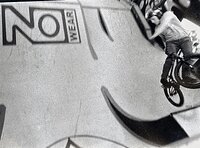
Lowlight freestyle

A
Lowlight freestyle

  • 5
  • 1
  • 105
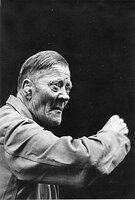
man arguing 1972

A
man arguing 1972

  • 8
  • 4
  • 176

Recent Classifieds

Forum statistics

Threads
203,034
Messages
2,848,864
Members
101,607
Latest member
rxdsales
Recent bookmarks
3

chuckroast

Subscriber
Joined
Jun 2, 2023
Messages
3,424
Location
All Over The Place
Format
Multi Format
(What follows are my observations. They are subjective. They are the result of looking at finished prints. They have not been verified by 12 digit precision densitometers, electron microscopy, spectrum analysis, or corrected for quantum mechanical effects ...)

For the past 5 years or so,I have almost exclusively been using Pyrocat-HD/HDC developer mostly using stand/EMA agitation. I worked extensively on this to achieve best mid tone local contrast, best sharpness, controlled highlights, and emphasize edge effects. It worked pretty well, albeit the path to getting there was strewn with many failures.

But, as I've been proceeding with my workbook catch up project, I am coming into contact with negatives I have not looked at for decades. A good many of these - mostly various 120 or 4x5 films - were developed in PMK Pyro with agitation very 15 sec (to avoid streaking from PMK because it oxidizes so fast).

I was struck by how easy it was to print those old PMK negatives with a modern VC light source like my new Heiland. So... I decided to revisit PMK with Fomapan 200, 400TX, and FP4+ but this time in 35mm. I wanted to see how PMK did with the smaller negative since it is primarily thought of as MF/LF developer and has a reputation for being grainy. This was done with standard 1:2:100 dilution, again agitating every 15 sec.

As a point of comparison, I also ran some 400TX through Pyrocat-HDC but using conventional dilution of 1:1:100 and standard agitation and time.

The negatives in question were all silver printed on 8x10 Fomapan Variant 111 fiber paper. The results were ... not shocking, but surprising. PMK not only delivered consistently great negatives that were easy to print, they were consistently of low apparent grain. Even 400TX looks very good.

Most surprisingly, though, was that the PMK negatives were sharper overall than Pyrocat in any dilution or agitation scheme. It's not night and day, but it's noticeable. These negatives begin to approach the sharpness I've only every seen with D-23 1+9+ lye - something I would be unlikely to use with 35mm.

I am thus increasingly of the opinion that Pyrocat or D-23 stand/EMA make sense when you have a very short Subject Brightness Range and/or you need to punch up the midtones a bunch. But for pretty much everything else, it looks like I am going back to PMK, the results are that good. Even big SBRs are well handled by PMK because of the stain color and intensity holding back the highlight contrast.

I also did a small bit of HP5+ testing in PMK albeit in 2x3 not 35mm. This is a film I have never liked and have been unable to tame to my satisfaction with HDC. But in PMK? Amazing, great contrast across the dynamic range with stellar sharpness.

Perhaps a similar test of 100TMAX and 400TMAX is indicated next.
 
Last edited:
PMK works great for TMax films. But here's the caveat : TMX100 has relatively poor edge acutance compared to its 400-speed cousin. So I use a different developer with it, which specifically grows the grain just enough more to also perceptibly improve the edge effect.
(I shoot both speeds of TMax in multiple formats, all the way from 35mm to 8x10.)

HP5 is an unusual film. PMK lends it a unique "watercolor grain" effect, yet with outstanding
edge effect which can look almost etched in magnifications up to 3X. Therefore, I never shoot HP5 except in 8x10 sheets, to get exceptional results up to 20X24 inch print size. People also apparently have reasons to shoot it in small formats, but those reasons must be different than mine.
 
I have been using PMK since the day I met Gordon Hutchings here in Toronto at a local photo event. I still use his original formula with stain, the only
difference is I divide the dev sequence into two separate runs by mixing more chems at the start, I have found this to be critical when working with this developer.
 
Bob, do you mean using a split quantity of developer...mix 2x what you need, develop for half the total time, dump and then use remaining developer for the second half? I'm thinking this would be best for continuous processing, like JOBO, or Uniroller to reduce aerial oxidation?
 
Last edited:
Bob, do you mean using a split quantity of developer...mix 2x what you need, develop for half the total time, dump and then use fresh developer for the second half? I'm thinking this would be best for continuous processing, like JOBO, or Uniroller?

I have done exactly that with open tank processing, but only when I am trying to get N+ development with short SBR subjects and the development time runs much beyond 13 min or so.

As noted in the original post, these days, I would handle such subjects (mostly) with Pyrocat-HD semistand or EMA development.
 
I realize that Pyrocat-HD is quite popular, but it never did quite the same thing for grain structure as PMK did for me. Somewhat different stain too. I'm not interested in getting into any debate analogous to which brand of craft beer or organic coffee is best; people have their preferences, and PMK has been my standard "go-to" film developer for many years now, but certainly not the only option I keep on hand.

I only developed sheet film in drums briefly; get better result with dimple-bottom SS trays.
I do use basic Jobo hand inversion drums for roll films. One of the fussiest films to develop evenly is Pan F. Hutchings recommended a special dilution of PMK for that, along with adding a tiny amount of EDTA to reduce streaking risk. I found that advice useful, though I seldom shoot Pan F anymore. Jim Galvin, the monorail camera maker and friendly machinist, was quite fond of 120 Pan F in his roll film backs.
 
I realize that Pyrocat-HD is quite popular, but it never did quite the same thing for grain structure as PMK did for me. Somewhat different stain too. I'm not interested in getting into any debate analogous to which brand of craft beer or organic coffee is best; people have their preferences, and PMK has been my standard "go-to" film developer for many years now, but certainly not the only option I keep on hand.

I only developed sheet film in drums briefly; get better result with dimple-bottom SS trays.
I do use basic Jobo hand inversion drums for roll films. One of the fussiest films to develop evenly is Pan F. Hutchings recommended a special dilution of PMK for that, along with adding a tiny amount of EDTA to reduce streaking risk. I found that advice useful, though I seldom shoot Pan F anymore. Jim Galvin, the monorail camera maker and friendly machinist, was quite fond of 120 Pan F in his roll film backs.

@DREW WILEY How do you use PMK for N+ extended developer? Just being curious, not argumentative.

I have extensively used PMK, Pyrocat, HC-110, D-76, and D-23. I've even still got a large stash of DK-50 sitting here :wink: They all have their place, but for most everything these days it's one of the Pyros.
 
N+ for PMK is no different than any other developer - an extra minute or two of development, depending on the specific film. For example, my "normal" for FP4 sheet film, PMK 20C, is 10 min; plus 1 would be 12 min. 90% of the time, my exposures fall into the normal category anyway. Once in awhile, I need extra development; I almost never do minus development.

With roll film instead, it seems like there is inevitably a frame or two on the roll with different contrast than the balance of the shots. So then it becomes a matter of which shots are the most important, and of then accommodating any contrast anomalies via VC paper controls, or perhaps through unsharp masking.
 
It should be fine. While PMK is a little less "vigorous" in highlight development than say your average catechol developer (pyrocat etc.) this is balanced by the relatively high degree of imagewise stain density.

Alternatively John Wimberley's WD2H (a more dilute variant of his earlier WD2D which was essentially the basis for PMK) was aimed at getting maximum contrast out of a metol-pyrogallol developer for low contrast subjects.

@DREW WILEY How do you use PMK for N+ extended developer? Just being curious, not argumentative.

I have extensively used PMK, Pyrocat, HC-110, D-76, and D-23. I've even still got a large stash of DK-50 sitting here :wink: They all have their place, but for most everything these days it's one of the Pyros.

 
Funny, I never liked PMK when I was doing mainly gel/silver/VC printing... with HP5. Once I tried Pyrocat-HD, I dumped PMK. But recently I have considered giving it another go, since I am older and wiser. It's like when I first tried Tri-X back in '93, and HATED it. Then tried it again a couple years ago and LOVED it... probably down to the changes that were made to it a few years ago. I just can't see HP5 and PMK being a good combination for the printing that I do...
 
Funny, I never liked PMK when I was doing mainly gel/silver/VC printing... with HP5. Once I tried Pyrocat-HD, I dumped PMK. But recently I have considered giving it another go, since I am older and wiser. It's like when I first tried Tri-X back in '93, and HATED it. Then tried it again a couple years ago and LOVED it... probably down to the changes that were made to it a few years ago. I just can't see HP5 and PMK being a good combination for the printing that I do...

I suspect it would not be great for alt processes (but that's a guess) but it rocks with silver printing. Here is 2x3 HP5+ in PMK silver printed and print scanned:

1774565276008.png


Put it in any other developer and it gives me the icks ...
 
I suspect it would not be great for alt processes (but that's a guess) but it rocks with silver printing. Here is 2x3 HP5+ in PMK silver printed and print scanned:

View attachment 421024

Put it in any other developer and it gives me the icks ...

Looks great! Standard dilution and agitation?
 
It should be fine. While PMK is a little less "vigorous" in highlight development than say your average catechol developer (pyrocat etc.) this is balanced by the relatively high degree of imagewise stain density.

Alternatively John Wimberley's WD2H (a more dilute variant of his earlier WD2D which was essentially the basis for PMK) was aimed at getting maximum contrast out of a metol-pyrogallol developer for low contrast subjects.

Funny you should bring up John's WD2H+ developer since I just made a fresh new batch to try with a couple of films that I have never used it with. My old batch is from 2017, but surprisingly it's still works perfect, but was running low. I used Wimberley's WD2D and then the H version before I switched to Pyrocat developers. His developers are actually very good pyro developers.
 
I'm too old to keep mucking about vacillating over developers. I'm happy with Pyrocat.

When I used PMK, using inversion of standard tanks, I observed that oxidation depended on the amount of developer (I always used standard dilution) and, possibly, to the amount of air left in the tank. Best results were a generous amount of developer, nearly filling the tank. Only then could I get a bit more contrast. (This was with 1 roll in a two or three roll tank)

Using a single roll tank gave only lowish contrast, independent of time. The worst was a single roll of 35 film in a 250mL tank (which is contrary to G.H.'s instructions of course)
 
I started using PMK with 4x5 Tri-X in the early 1990s, after Gordon Hutchings (may he rest in peace) published his article in "View Camera" magazine. Once I figured it out (and it did help me make better photographs) it became my standard until 2011.
At that time, I made a test of FP4+ in Pyrocat-HD. I immediately decided to use that combination permanently. I am very happy with it, and I don't plan to change it.
 
I used PMK for a long time then drank the Kook-Aid and used Pyrocat-P for a long time. About a decade ago I did a deep dive and realized PMK delivered better prints, especially in the highlights. I use PMK for 120 and 4x5, and Rodinal for smaller negs (35mm and Minox) but I do use PMK occasionally for those as well. Minox negs look great in PMK believe it or not. I don't know where the "PMK is grainy" thing came from frankly.
 
Bob, do you mean using a split quantity of developer...mix 2x what you need, develop for half the total time, dump and then use remaining developer for the second half? I'm thinking this would be best for continuous processing, like JOBO, or Uniroller to reduce aerial oxidation?

Yes that is exactly what I mean, PMK developer for trix is 14 min in my world at my mixture, I mix 2 litrers , 1st liter 7 min save for stain, second litre finishes off the development. We found that we were getting weak results with a continuous 14min, this was in tank by hand and then jobo
 
All this talk of PMK has me itching to try it, again. I used it years ago, and have Gordon's book, but its been a long time. Curiously, in checking about the webs I see that it's out of stock or, in the case of Bostick & Sullivan, not even listed on their website anymore. Anybody know what's up with the supply of this developer?

In the past, I've always mixed it myself, but have had some trouble getting part B fully into solution. And, part B seems to crystalize over time. I typically store 1 lt in an amber glass bottle. Looking at the bottle I've had stored for awhile, there's about 1/2 inch deep layer of crystals on the bottom. I'll try to get it back into solution, but past experience tells me this ain't gonna happen. :wink:
 
All this talk of PMK has me itching to try it, again. I used it years ago, and have Gordon's book, but its been a long time. Curiously, in checking about the webs I see that it's out of stock or, in the case of Bostick & Sullivan, not even listed on their website anymore. Anybody know what's up with the supply of this developer?

In the past, I've always mixed it myself, but have had some trouble getting part B fully into solution. And, part B seems to crystalize over time. I typically store 1 lt in an amber glass bottle. Looking at the bottle I've had stored for awhile, there's about 1/2 inch deep layer of crystals on the bottom. I'll try to get it back into solution, but past experience tells me this ain't gonna happen. :wink:

Photographer's Formulary typically has it.

I have not had problems with Part b crystalizing, at least the part B I bought from them.
 
There was a tweak called Rollo Pyro to help with over-oxidation in rotary drum usage. I never tried it. Others, including Hutchings, experimented with a feed tube of argon gas into the drum, to displace the free air. Other folks simply switched to pyrocat. My own rotation device has a substantial gearmotor capable of significantly lower RPM's than Jobo devices, which helped. But that's all ancient history for me. I still use rotational drums for color print processing, but no longer for film processing.

I get PMK is pre-mixed A&B concentrates from Formulary. I transfer the solutions to glass bottles. It keeps exceptionally well. No problems with sediment.
 
Alternatively instead of making a stock B solution you can simply mix as you go. Suppose you need a liter of working developer solution. Dissolve 6g sodium metaborate into 990ml water, add the 10ml of part A. Done.
All this talk of PMK has me itching to try it, again. I used it years ago, and have Gordon's book, but it’s been a long time. Curiously, in checking about the webs I see that it's out of stock or, in the case of Bostick & Sullivan, not even listed on their website anymore. Anybody know what's up with the supply of this developer?

In the past, I've always mixed it myself, but have had some trouble getting part B fully into solution. And, part B seems to crystalize over time. I typically store 1 lt in an amber glass bottle. Looking at the bottle I've had stored for awhile, there's about 1/2 inch deep layer of crystals on the bottom. I'll try to get it back into solution, but past experience tells me this ain't gonna happen. :wink:
 
Photrio.com contains affiliate links to products. We may receive a commission for purchases made through these links.
To read our full affiliate disclosure statement please click Here.

PHOTRIO PARTNERS EQUALLY FUNDING OUR COMMUNITY:


Ilford ADOX Freestyle Photographic Stearman Press Weldon Color Lab Blue Moon Camera & Machine
Top Bottom