• Welcome to Photrio!
    Registration is fast and free. Join today to unlock search, see fewer ads, and access all forum features.
    Click here to sign up

Developing old Ilford Pan F

Moment of Spin

A
Moment of Spin

  • 2
  • 0
  • 71
Bad patch

H
Bad patch

  • 1
  • 1
  • 45

Recent Classifieds

Forum statistics

Threads
203,101
Messages
2,849,859
Members
101,669
Latest member
JeremiahPeterson
Recent bookmarks
1
Can I ask: Why dilute it and have you had success with this age of Pan F and your recommendation?

Thanks

pentaxuser

Generally diluting D-76 to 1:1 gives you reasonably long processing times which helps avoid mottling that can happen with four minutes development time.

I could test old Pan F with fresh exposure, but it’s going to take me a few years to test it to demonstrate whether it deserves the criticism of its fabled latent image loss.

I suspect it is not worse than other film. Maybe it just has a bad rep. Maybe just the same as other film but being a 50 speed film people tend to underexpose. I used to think Panatomic-X was very good at keeping latent image, but the recent evidence shows it’s vulnerable.
 
I suspect it is not worse than other film. Maybe it just has a bad rep. Maybe just the same as other film but being a 50 speed film people tend to underexpose. I used to think Panatomic-X was very good at keeping latent image, but the recent evidence shows it’s vulnerable.

Read Ilford's own comments, it is far worse than any other film. They make Pan F, so they know for sure, and make it very clear in the Datasheet, that's quite different to all their other films.

It is time to get facts right, it is a superb film but needs swift processing, after exposure. If you don't believe the film manufacturer, then go shoot beer cans like Kid Rock, and forget shooting film.

It's a fact, not a myth, that Pan F has very poor Latent image stability. But what is worse is many here are trying to contradict the manufacturer, and also many of us who have first-hand experience of the issue,

I'm sorry Bill, but get your facts right. Read the Pan F datasheet.

Ian
 
Can I ask: Why dilute it and have you had success with this age of Pan F and your recommendation?

Thanks

pentaxuser

I normally process Pan F at 14 minutes in D76 at 1:1 and at 20C. As the OP post has quite old Pan F, I'm suggesting an extra minute to compensate. I could be wrong, but until it is developed we will never know.
 
I normally process Pan F at 14 minutes in D76 at 1:1 and at 20C. As the OP post has quite old Pan F, I'm suggesting an extra minute to compensate. I could be wrong, but until it is developed we will never know.

OK and thanks I just wondered if you were basing what you said on actual experience and you have cleared that up for me

pentaxuser
 
Read Ilford's own comments, it is far worse than any other film. They make Pan F, so they know for sure, and make it very clear in the Datasheet, that's quite different to all their other films.

It is time to get facts right, it is a superb film but needs swift processing, after exposure. If you don't believe the film manufacturer, then go shoot beer cans like Kid Rock, and forget shooting film.

It's a fact, not a myth, that Pan F has very poor Latent image stability. But what is worse is many here are trying to contradict the manufacturer, and also many of us who have first-hand experience of the issue,

I'm sorry Bill, but get your facts right. Read the Pan F datasheet.

Ian

I know the anecdotes. But I was surprised by Panatomic-X and 5222. So now I want to see graphs.

I want to see a family of sensitometry curves where the latent image has been held for time spans leading up to a year or more.

Data sheet for Pan F does mention it’s important to process promptly. Within 3 months.

I’m starting to believe this is universally good advice.
 
Data sheet for Pan F does mention it’s important to process promptly. Within 3 months.

And their other sheets say develop "as soon as practical". They mention the "within three months" only on the Pan F.

Some guy asked Ilford and they said the image loss is:

a compromise with some other desirable characteristics. The basic formulation is probably the closest to the original of all our film emulsions even though it was updated several years ago. We have customers who are very attached to its particular curve shape and any emulsion redesign would inevitably change that so we are reluctant to touch it at the moment.​
Anyway, for the purposes of this thread, it makes the most sense to assume there has been significant degradation and just develop the film for a few minutes in Dektol. There won't be any significant fog. Other developers could be used - but err on the aggressive side. Even sooty photos are better than no photos.

On another webpage, another guy actually tested the film by shooting a roll of it (all exposures of the same scene) and developing snips of it over a year. He did find some degradation. However, his choice of scene wasn't ideal (sunlit and shadowed) and his developer was exactly wrong (highly dilute Rodinal).

 
I had a good test case. A while back I realized that I had left a half exposed roll of PanF in one of my F2 cameras. I’m not sure how long it had been in there but I’d estimate 1 year, but it could have been as much as 2 years. I finished the roll and developed it. The new exposures looked normal, but the original exposures were very very light. So the rep is earned.
 
I know the anecdotes.

I suppose it depends on your definition of the word "anecdote" but I'd have thought that the clarity of Ilford's statement on PanF kind of distances the usual definition of anecdote from the description of Pan F's poor latent image retention

pentaxuser
 
And their other sheets say develop "as soon as practical". They mention the "within three months" only on the Pan F.

Some guy asked Ilford and they said the image loss is:

a compromise with some other desirable characteristics. The basic formulation is probably the closest to the original of all our film emulsions even though it was updated several years ago. We have customers who are very attached to its particular curve shape and any emulsion redesign would inevitably change that so we are reluctant to touch it at the moment.​
Anyway, for the purposes of this thread, it makes the most sense to assume there has been significant degradation and just develop the film for a few minutes in Dektol. There won't be any significant fog. Other developers could be used - but err on the aggressive side. Even sooty photos are better than no photos.

On another webpage, another guy actually tested the film by shooting a roll of it (all exposures of the same scene) and developing snips of it over a year. He did find some degradation. However, his choice of scene wasn't ideal (sunlit and shadowed) and his developer was exactly wrong (highly dilute Rodinal).

Thanks! These are great.

Erik Gould gives a great example of the kind of data I want to see. He’s on the right track.

Now I know what I has to be done.

Ideally graphs showing Time-CI curves over Latent Image Ages. For TMAX-100, Panatomic-X, Pan F+ and Delta 100.

And this entails not just developing one sensitometry exposure per age interval, but a half dozen strips (a full Time-CI workup per age).

I think for @Melvin J Bramley my first stab guess 20 minutes in D-76 1:1 20°C might yield an acceptably “poor” 0.4 CI which could be enough to retrieve images but not for excellent prints.

If you feel like developing longer it’s probably a good idea.

People talk about snip tests. I think it’s entirely justified to cut this 20-year exposure aged roll in half and give the first half a good guess development. Then look at it and if it’s good finish the roll at the same, or increase/decrease accordingly.

You’re going to cut one picture in half. I did that once and ended up with a pair of portraits because the cut was right between two friends talking. Just cut it!
 
I know the anecdotes. But I was surprised by Panatomic-X and 5222. So now I want to see graphs.

I want to see a family of sensitometry curves where the latent image has been held for time spans leading up to a year or more.

Data sheet for Pan F does mention it’s important to process promptly. Within 3 months.

I’m starting to believe this is universally good advice.

I've not shot many rolls of 120 Pan F, but the results were always superb, however back then in the 1970s & early 80s I always shot MF hand held, and Pan F was just too slow, except on Sunny days.

Around 1987/8 I switched from FP4 to Agfa AP100, and switched to mainly LF, with AP25 for 120 in a roll film back, within a tear or so Agfa upgraded their emulsions to APX100 & APX25. AP & APX 100 were on a par with Tmax 100, in terms of fine grain, sharpness, & tonality, but had a stop higher effective Exposure Index (EI).

I have late 1970s data sheets for Pan F and don't remember mention of Latent image issues, that's more recent, I will dig them out and check.

The reason for mentioning the Agfa films is AP & APX 25 were truly amazing, so fine-grained, exceptional sharpness, (so definition), and normal contrast. So I was shooting AP & later APX100 in 5x4, and then if running short AP or APX25 in a roll film back.

APX25 was discontinued after a chemical used in the emulsion was banned, sales were too low to warrant research into reformulating the emulsion.

I really miss Agfa APX25, I have brick of 120 Pan F, and I will get some more, it's ideal for my 6x17 camera with its 75mm lens.

Ian
 
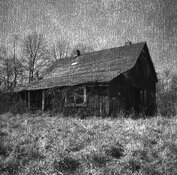
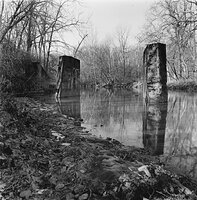
This was FP-4+ after only a couple years stored in my camera pelican case in a controlled environment . . .
 

Attachments

  • Missouri Mill Spring 2021007 Resized.jpg
    Missouri Mill Spring 2021007 Resized.jpg
    581.2 KB · Views: 62
Do you regard the pic of FP4+ in #37 as an example of poor latent image retention or is this an example of something else such as it having poor storage ability if left in the camera compared to other films?

Thanks

pentaxuser
 
Cases like Pelican contain foam padding that isn't entirely stable. In other words, the inside of the case is NOT a stable environment.
 
Cases like Pelican contain foam padding that isn't entirely stable. In other words, the inside of the case is NOT a stable environment.

So what's the advice or rules about using Pelican in order to make it safe as a case and what other cased have the this kind of padding or is it all case with foam padding need to be avoided?

Thanks

pentaxuser
 
This was FP-4+ after only a couple years stored in my camera pelican case in a controlled environment . . .

That seems excessive , but I will test my incoming Pan F when the film arrives.
I am considering cutting the film in half and developing in ID11 1:1 and adding 15% .
My results will dictate where I should go from from there!
 
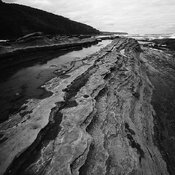
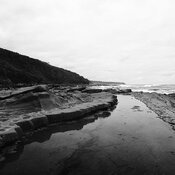
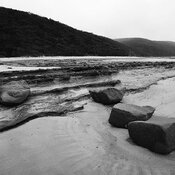
From a 2014 shoot with Pan-F...

One 35mm roll exposed on the day, processed next day with excellent results, printing and framing a few, three of which were sold.

Blanket Bay on a Cloudy Day I, II, III.
___________________________________
Canon EOS1N + EF17-40mm f3.5L
 

Attachments

  • 28435792_445989259151444_413191118188969984_n.jpg
    28435792_445989259151444_413191118188969984_n.jpg
    86.7 KB · Views: 51
  • 28157815_354604315022330_4111996638308859904_n.jpg
    28157815_354604315022330_4111996638308859904_n.jpg
    48.3 KB · Views: 41
  • 28428340_300540677140647_2112014717147938816_n.jpg
    28428340_300540677140647_2112014717147938816_n.jpg
    70.2 KB · Views: 54
So what's the advice or rules about using Pelican in order to make it safe as a case and what other cased have the this kind of padding or is it all case with foam padding need to be avoided?

It's better to remove the foam and replace it with concrete.
 
It can be good expired if it's 35mm and you shoot it recently and develop it promptly. Not good for a 20 year old latent image, also not necessarily good in 120 due to backing paper issues. I'm not sure OP specified if this is 35mm or 120. My 35mm expired Pan F experiment went much better than my 120 one.

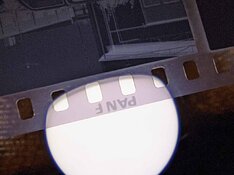
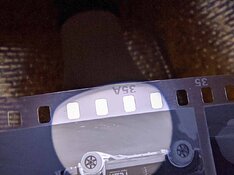
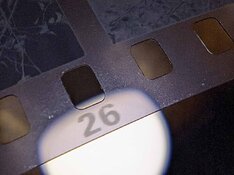
I found some older shots of the edge markings from my Pan F. It's 35mm, left in a bulk loader labeled 1992. Not refrigerated. I don't recall the developer, but development was definitely within normal times. That's why I wouldn't dismiss the latent image outright. Sure, it's faint and won't be great, but there's probably still something there to recover.
 

Attachments

  • 1700214537439.jpg
    1700214537439.jpg
    74.1 KB · Views: 24
  • 1700214552084.jpg
    1700214552084.jpg
    79.6 KB · Views: 23
  • 1700214579515.jpg
    1700214579515.jpg
    85.9 KB · Views: 25
Open-cell foam is infamous for breaking down. Wrap your cameras and lenses in thin polyethylene liner or sandwich bags first, and don't leave film in the camera for long periods of time under those kinds of conditions.

Don - That was an old road crew work place trick up in the hills - pouring rapid-set concrete into someone's work boots while they were removed, when they were napping during lunch break. They did it to someone's metal lunch box too. The "apology" if caught was to allow the boot victim to shoot a cigarette out of the offenders mouth with a .22 rifle. Fortunately, they were all really good shots. But quite a fuss was raised when one of them starting shooting rats running around in the dynamite storage shed. Cats were invented for a reason.
 
I still have most of a 100 foot roll of 35mm Pan F motion picture film. It has what I think are called Bell & Howell sprockets. It works better in some cameras than in others. The last time I tried it I rated it at 25 and developed it in D-76 for twice the regular time. The results were acceptable. Some years ago I got nice results with Pan F+ at box speed in Amaloco AM-74. The Amaloco is no longer available in the U.S., as far as I know.
My old favorite slow film + developer combination was Panatomic-X @ 64 in Edwal FG-7 1:15 in water (no added SS). Both were eventually discontinued. When Falcon Safety Products took over Edwal, FG-7 went from coming in a dark brown glass bottle to coming in a white plastic container. This ruined its excellent keeping qualities. I also miss Verichrome Pan. What general purpose film had the best keeping qualities and the best latent image keeping qualities. The Agfapan 400 version available in 1995. I found a partially shot roll in a camera which had been sitting for years. The results were fine. Why do I mention the words general purpose? I have lots of old Kodak Imagelink and TP, which will probably still be usable when we reach the next ice age.
 
It's hard to say when TechPan was actually last coated, perhaps 20 years before the last master rolls were finally fully cut and boxed. When I sold off the last of my 8X10 boxes, some of it had been stored on a shelf for a long time, maybe 40 years old at the point from the time of coating, and a full 50-sheet box still in the freezer. I tested a few sheets from the open box, and they still responded like new - densitometer tested, and with no fog. But Tech Pan was just that - a specialty technical film, and not very versatile when it comes to general shooting. I had my own technical applications for it, like art fraud sleuthing, also for use in pan highlight color printing masks.
 
Open-cell foam is infamous for breaking down. Wrap your cameras and lenses in thin polyethylene liner or sandwich bags first, and don't leave film in the camera for long periods of time under those kinds of conditions.
So is that all foam in all camera bags and what might constitute a safe period for the camera with film in it to be left in such foam bags? I presume this a cumulative effect i.e. If the safe period is X hours then this is equally dangerous is exceeded in 1 or 2 long spells or in more but shorter spells?

Thanks
 
Photrio.com contains affiliate links to products. We may receive a commission for purchases made through these links.
To read our full affiliate disclosure statement please click Here.

PHOTRIO PARTNERS EQUALLY FUNDING OUR COMMUNITY:


Ilford ADOX Freestyle Photographic Stearman Press Weldon Color Lab Blue Moon Camera & Machine
Top Bottom