• Welcome to Photrio!
    Registration is fast and free. Join today to unlock search, see fewer ads, and access all forum features.
    Click here to sign up

Effective film speed (as in Lambrecht's method)

shrub shrub sun

H
shrub shrub sun

  • 1
  • 0
  • 17
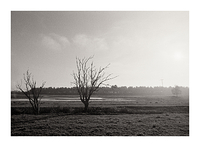
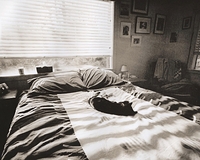
Winter Sun, Sleeping Cat

A
Winter Sun, Sleeping Cat

  • sly
  • Feb 12, 2026
  • 5
  • 0
  • 54

Forum statistics

Threads
202,214
Messages
2,837,335
Members
101,201
Latest member
Noise
Recent bookmarks
0

tih

Subscriber
Joined
Sep 12, 2006
Messages
192
Location
Norway
Format
Multi Format
Can you insert a file corrected in the old version of the .xls spreadsheet?
I've been hesitant to make available a modified copy of Ralph's spreadsheet, because of the risk that I've made a mistake, and problems resulting from that could end up being blamed on him. That's why I chose to just describe the changes I made to fix the bug I found.

I've now modified a new copy of the old spreadsheet with those formula changes, and made it available on my own web site, with text explaining what changes I've made, and why. The copy also has a prominent statement on the first page saying that it has been modified, and pointing at the web page.

The page is at https://hamartun.priv.no/filmtest.html.

Ralph: I hope this is OK - let me know if you have any objections!
 

Evan_Mathis

Member
Joined
Jan 8, 2026
Messages
26
Location
Los Angeles, CA
Format
Medium Format
This is super interesting to me, and thank you all for for the info, and it seems like I'm tapped in to the actual source here.... (I wish I had found this thread like 6 months ago)

I was working on my own way to log / graph / compare my film processes and it started pretty simply.
I had shared what I was working on with a couple of my nerdier photo friends, and a they had asked if it was possible to actually develop this into an app that they could use, and I've been working on it for the last few months.

So the app is called ZoneLab, (currently in beta and available to test for free, but MacOS only for now) and in my initial digging for resources I hadn't seen the "Way Beyond Monochrome" methodology until yesterday. When I finally saw it and poked around the spreadsheet and the chapter on film testing, I realized I was close but missing some crucial nuances.

Full disclosure, I'm basing the EI on the Zone V grey card exposure, which i realize isn't the scientific way of doing it (based on the toe), and I'm also only using 11 steps (mostly because I primarily shoot medium format and i can get b+f then zones I-X on a single roll for testing).

While I've been getting some good results, after seeing this thread yesterday, I've made some changes.

How ZoneLab used to work (prior to me reading this thread)

I was calculating EI using a fixed number: 0.3 density units per stop of exposure. So if someone's Zone V grey card came out at 0.80D instead of the expected 0.72D, I'd calculate:

Density difference: 0.80 - 0.72 = 0.08D
Stops = 0.08 / 0.3 = 0.267 stops
Effective ISO = Metered ISO × 2^0.267

The problem that I saw after seeing this thread was t hat 0.3 factor only holds true for "normal" contrast films. It kind of ignores that a high-contrast combination like TMax in Rodinal behaves differently than, say, HP5 in dilute D-76.

How it works now:

Now I calculate the actual gradient for each film/developer combination by measuring the slope over the working range (Zones II-VIII), just like the spreadsheet does:

Gradient = (Density at Zone VIII - Density at Zone II) / 1.8 log H

Then I use that gradient to adjust the density-per-stop factor:
Density per stop = 0.3 × (actual gradient / 0.57)

Where 0.57 is your "normal" gradient target. So for that same Zone V reading with a high-contrast film showing gradient of 0.68:
Adjusted density per stop = 0.3 × (0.68 / 0.57) = 0.358D
Stops = 0.08 / 0.358 = 0.224 stops
Effective ISO = Metered ISO × 2^0.224


The difference might seem small (EI 117 vs 120 in this example), but it should be accurate to that specific film's actual behavior rather than assuming everyone's film responds identically.

Would love to hear some thoughts especially if I've misunderstood anything from the spreadsheet or the book.

My goal is to make this methodology accessible to photographers who want to have a better understanding of how their particular film / development processes affect their film characteristics, but don't want to be data scientists as a side job.


I just updated all of my current math and methods on the user guide portion of the web site:

https://www.zonelab.app/guide.html#understanding-results

and I've added "Way Beyond Monochrome" as a source (just below the "understanding results" section) to give credit where credit is due. If you have a specific link to your book that you'd prefer I use, please let me know.

 
Last edited:

spookyphoto

Member
Allowing Ads
Joined
Jan 14, 2026
Messages
50
Location
Dayton, OHIO
Format
Sub 35mm
One thing that needs to be mentioned is that film speed no matter how we want to determine it is of course dependent on what material we are outputting to. Most of the work in this area was done in the late 30s and early 40s by Jones, Condit, Nelson et al. They were outputting the negative directly to photographic paper optically. Now we are in the 21st century and have access to high speed scanners and digital printers and photo editing software with the ability to completely modify the reproduction curves especially in the toe area. This can dramatically change the numbers we want to assign to film speed.
 

RalphLambrecht

Subscriber
Allowing Ads
Joined
Sep 19, 2003
Messages
14,980
Location
K,Germany
Format
Medium Format
I am a little confused as to the meaning of "effective film speed" in Lambrecht's method of film testing. He uses box speed in testing for development times. Once these have been established, he tests for EI by using the typical grey card method until he gets a density of 0.17 (Zone 1.5). This is his Normal EI.

I noticed that when I plug different EI's into his spreadsheet, it has a dramatic effect on "effective film speed" for the various develop times. Without arguing about whether he is correct (I REALLY REALLY don't want another zone system donnybrook), what does one do with this in the field? If I find a subject that requires N-1 development, do I meter the scene using the corresponding effective film speed? Or do I just shoot at the Normal EI? If so, what is the purpose of the other effective film speeds.

IIRC, Adams' method first determines the EI and then finds development times using that EI. Lambrecht establishes development time using box speed, the other way around.

I have an APUG friend who has been trying to explain all this to me but when it comes to math and curves, I am a little thick. I am hoping that another explanation may open up my understanding. It may just confuse me more, but then I will be no worse off.

Once again, please, no zone system wars.

still thinking but quick answer is:if your subjectrequires N-1 development, you expose with the effective filmspeed for N-1(more exposure because dev will be shorter).
 

Evan_Mathis

Member
Joined
Jan 8, 2026
Messages
26
Location
Los Angeles, CA
Format
Medium Format
One thing that needs to be mentioned is that film speed no matter how we want to determine it is of course dependent on what material we are outputting to. Most of the work in this area was done in the late 30s and early 40s by Jones, Condit, Nelson et al. They were outputting the negative directly to photographic paper optically. Now we are in the 21st century and have access to high speed scanners and digital printers and photo editing software with the ability to completely modify the reproduction curves especially in the toe area. This can dramatically change the numbers we want to assign to film speed.

Totally agree. I jump between silver paper and platinum and scans of course, so for myself, i want the closest EI to what my meter read and what the result is in my developing process. That way it * should * work for pretty much whatever im. doing, but then I can adjust my process if i know beforehand what my final output is going to be, rather than just shootin' stuff and figuring out the final media when i get there.
 

Bill Burk

Subscriber
Allowing Ads
Joined
Feb 9, 2010
Messages
9,494
Format
4x5 Format
One thing that needs to be mentioned is that film speed no matter how we want to determine it is of course dependent on what material we are outputting to. Most of the work in this area was done in the late 30s and early 40s by Jones, Condit, Nelson et al. They were outputting the negative directly to photographic paper optically. Now we are in the 21st century and have access to high speed scanners and digital printers and photo editing software with the ability to completely modify the reproduction curves especially in the toe area. This can dramatically change the numbers we want to assign to film speed.

This sounds preachy and severe, please interpret with a tone of lively excitement ..

No scanner or digital curve shaping can recover a useful picture, much less an excellent one, from seriously underexposed/underdeveloped negatives. The film speed good for use is pretty close to the speed one would arrive at using aims similar to what we know make good negatives for silver gelatin printing in a darkroom.

Now you can push the limits a little more than before these tools were available but not a whole lot.
 

spookyphoto

Member
Allowing Ads
Joined
Jan 14, 2026
Messages
50
Location
Dayton, OHIO
Format
Sub 35mm
Bill - Having done a lot of work in extreme low gamma film developer formulation and low gamma film processing techniques mostly for high altitude aerial recon fiims and some consumer products (ie 2415) I can tell you the the amount of usable information to the left of the speed point is massive. Plenty of ways to increase toe gradient whether it be a super proportional bleach process, bleach redelopement, polyethylene glycol treatment etc. the same can now be done easily with basic editing software i.e Photoshop etc. Great pictorial photographs developed with a gamma of .3 can easily be made.
 

Bill Burk

Subscriber
Allowing Ads
Joined
Feb 9, 2010
Messages
9,494
Format
4x5 Format
Of course POTA allows a lower reach but what? 1 1/3 stop?

And aerial has only five stops subject luminance range so you can work lower another 2 1/3 stops?
 

RalphLambrecht

Subscriber
Allowing Ads
Joined
Sep 19, 2003
Messages
14,980
Location
K,Germany
Format
Medium Format
For those of you doing zone system testing, how do you produce the first negatives? Here is what I do for the first set of negatives.

With my spot meter set at box speed, I measure the light from my light table (which is at a colour temperature close to that of daylight) until it is stable. It always settles on EV 13. I open up five stops from that reading. I load a film holder with both a negative and the step wedge. I focus on infinity and shoot five negatives and develop them at five different times to supply data to Ralph's spreadsheet.

I do it this way because the light table is a constant and consistent light source. Taping the step to a window does not work for me because there is no window in my house that will give me consistent light. Furthermore, to get close enough so that the step wedge will be large enough on the negative would probably require bellows extension. Ralph says to use either an "average reading" or "a spot meter for the medium gray bars." I am not sure what he means in either case. Ralph?

What do you folks do to get this initial data?

Getting some control over contrast has been driving me crazy for ages.

bars #15 and 16
 
Photrio.com contains affiliate links to products. We may receive a commission for purchases made through these links.
To read our full affiliate disclosure statement please click Here.

PHOTRIO PARTNERS EQUALLY FUNDING OUR COMMUNITY:


Ilford ADOX Freestyle Photographic Stearman Press Weldon Color Lab Blue Moon Camera & Machine
Top Bottom