
• Welcome to Photrio!
    Registration is fast and free. Join today to unlock search, see fewer ads, and access all forum features.
    Click here to sign up

Delta 3200 developed by lab - question

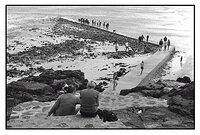
St Ives - UK

A
St Ives - UK

  • 2
  • 0
  • 54
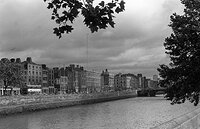
Across the Liffey

H
Across the Liffey

  • Tel
  • Feb 25, 2026
  • 1
  • 2
  • 49

Recent Classifieds

Forum statistics

Threads
202,439
Messages
2,840,887
Members
101,333
Latest member
HalH509
Recent bookmarks
14
Good suggestions. I do keep notes about what I do but have not done such extensive tests as you have done.

My FP4, HP5, and Tmax 400 developed at this lab have been turning out fine as I have been exposing them and how they develop.

It's just that I have never used Delta 3200 before, so I need to figure out what's going on re my exposures and their developing for that film.

I may not even use Delta 3200 much in the future. I have a couple more rolls here, so I want to do my best with those. But, unless I really fall in love with the Delta 3200 look, I'd probably be better off just pushing HP5 if I need ISO 800 (for example), because of the extra cost of the Delta 3200 and extra developing cost.

Thanks for typing such a long response! You are so right about the many variables when shooting film.

Delta 3200 is a weird film stock, honestly. I love it because there are no alternatives in 120. I end up shooting it about 1/3 to half of the time. I agree about pushing HP5 to 800 instead of D3200. I just find that nothing compares for night shooting or in harshly lit interiors. It's flexible.

But I choose TMX3200 10 times out of 10 when shooting 35mm.
 
Delta 3200 is a weird film stock, honestly. I love it because there are no alternatives in 120. I end up shooting it about 1/3 to half of the time. I agree about pushing HP5 to 800 instead of D3200. I just find that nothing compares for night shooting or in harshly lit interiors. It's flexible.

But I choose TMX3200 10 times out of 10 when shooting 35mm.

As you use Tmax 3200 with 35mm, I am guessing it is less grainy than Delta 3200?

I'm looking forward to scanning the Delta 3200. Maybe I will end up loving it, as you do!
 
As you use Tmax 3200 with 35mm, I am guessing it is less grainy than Delta 3200?

I'm looking forward to scanning the Delta 3200. Maybe I will end up loving it, as you do!

Eh, not exactly. The Tmax version just has nicer looking grain, while Delta 3200 is sort of mushy. So if grain is going to show, then I want clean looking grain. I can't say off of the top of my head which is grainier in general, probably the Kodak if I had to guess. I don't think there is a critical diffrence. But Kodak p3200 looks better to my eye when the grain shows up. I think it creates a sharper looking image in general. It's arguably a tiny bit faster too. For big pushes, I would choose p3200 every time. They're both great films.

I mostly shoot portraits with 120 Delta 3200, so it works out. I'm plenty happy with the results. The softer grain works for these images.
 
Last edited:
Eh, not exactly. The Tmax version just has nicer looking grain, while Delta 3200 is sort of mushy. So if grain is going to show, then I want clean looking grain. I can't say off of the top of my head which is grainier in general, probably the Kodak if I had to guess. But Kodak p3200 looks better to my eye when the grain shows up. I think it creates a sharper looking image in general.

Interesting, thanks. Maybe I will try the Tmax 3200, too.

It's funny, re grain.....sometimes the grain in HP5 annoys me, then I lurch to Tmax 400 and am relieved. But then another day, the Tmax 400 looks too clinical, and I lurch back to HP5. Depends on my mood, I guess, or maybe the subject of photo.
 
Interesting, thanks. Maybe I will try the Tmax 3200, too.

It's funny, re grain.....sometimes the grain in HP5 annoys me, then I lurch to Tmax 400 and am relieved. But then another day, the Tmax 400 looks too clinical, and I lurch back to HP5. Depends on my mood, I guess, or maybe the subject of photo.

Yeah, I definitely get that. I did a huge amount of experimentation when I started out. I could imagine a situation where where any film/developer combination would be suitable, but it's just too crazy making. Some combination looks amazing one day, I hate it the next.

I ended up just shooting Tri-X or TMZ, usually with XTOL f1:1 for 35mm. And then HP5 with Pyrocat HD or Delta 3200 and XTOL for 120. This has worked for me and doesn't require too much fuss.
 
Last edited:
UPDATE:

Talked to my contact at my lab. He was extremely nice and eager to talk about their developing process.

For Delta 3200, he said if you ask for "normal" processing, they develop for 15 minutes and 45 seconds in Ilfotec DD at 71 degrees. They use dip and dunk machines.

He said exposing at ISO 1000 is best for this development, though a lot of people have been happy at up to ISO 1600.

As he said exposing at ISO 1000 is best for their "normal" developing, my shooting at ISO 1250 and feeling my negs were slightly underexposed makes sense. He said I might even want to go down to 800 ISO next time.

On the Ilford 3200 tech sheet, for 3200 ISO, they suggest 10.5 minutes at 75 degrees in DD for dip and dunk machines. So, according to my math, even if you account for the about 5% lower temp my lab uses (which I assume would require 5% more development time), my lab's 15 min + 45 seconds is giving the film even more development time than Iflord suggests.

My lab contact said they are always doing test strips and figuring out best development time for all films, not just following a chart -- and their goal is consistency which makes sense. I have been happy with how all my other b&w films have been developed by them.

Someone above suggested they might be ganging different b&w films together, which I didn't think they would be doing. They don't. They don't even gang films with same ISO. For example, they develop Trix 400 with different time than Tmax 400, because they require different times.

The talk made me feel confident in and grateful for them.
 
Last edited:
That sounds like a good lab.
Their development targets may very well be influenced by the preferences of their customers, so the target contrast they aim for may be slightly lower or, more likely, higher than those used for the Ilford datasheet. That is entirely normal.
 
That sounds like a good lab.

Yes. I should name them in case anyone looking for a good lab. LTI Lightside in NYC.
Their development targets may very well be influenced by the preferences of their customers, so the target contrast they aim for may be slightly lower or, more likely, higher than those used for the Ilford datasheet. That is entirely normal.
Interesting.
 
UPDATE:

Talked to my contact at my lab. He was extremely nice and eager to talk about their developing process.

For Delta 3200, he said if you ask for "normal" processing, they develop for 15 minutes and 45 seconds in Ilfotec DD at 71 degrees. They use dip and dunk machines.

He said exposing at ISO 1000 is best for this development, though a lot of people have been happy at up to ISO 1600.

As he said exposing at ISO 1000 is best for their "normal" developing, my shooting at ISO 1250 and feeling my negs were slightly underexposed makes sense. He said I might even want to go down to 800 ISO next time.


The talk made me feel confident in and grateful for them.

Some of the lab's comments suggest that it might be best if you expose at 1000( probably the true speed in the likes of D76) or even 800

I won't attempt to dissuade you from taking this advice but would say that if you do rate D3200 at 1000 or 800 then you might want to give serious consideration to TMax 400, D400 or HP5 depending on your mood unless there is no premium on D3200 in the U.S. compared to the prices of TMax400 and D400

If it were me then I'd see no advantage with D3200 at the above speeds of 1000 or 800

pentaxuser
 
Some of the lab's comments suggest that it might be best if you expose at 1000( probably the true speed in the likes of D76) or even 800

I won't attempt to dissuade you from taking this advice but would say that if you do rate D3200 at 1000 or 800 then you might want to give serious consideration to TMax 400, D400 or HP5 depending on your mood unless there is no premium on D3200 in the U.S. compared to the prices of TMax400 and D400

If it were me then I'd see no advantage with D3200 at the above speeds of 1000 or 800

pentaxuser
That is correct, the lab suggests 800 or 1000 ISO.

Agree, if I'm shooting at 800, I may as well just push a 400 ISO film to 800 and avoid higher cost of Delta 3200 as well as the higher cost of developing it (my lab charges extra for it).

Since I posted originally, I scanned some of the Delta 3200. I'm not crazy about it. But I have a couple more rolls here which I'll use. Maybe there are situations where that really grainy look would be okay. And now I know how to expose it.
 
That is correct, the lab suggests 800 or 1000 ISO.

Agree, if I'm shooting at 800, I may as well just push a 400 ISO film to 800 and avoid higher cost of Delta 3200 as well as the higher cost of developing it (my lab charges extra for it).

Since I posted originally, I scanned some of the Delta 3200. I'm not crazy about it. But I have a couple more rolls here which I'll use. Maybe there are situations where that really grainy look would be okay. And now I know how to expose it.

I can’t remember if you said you were shooting medium format or 35 mm, but if you are shooting medium format, delta 3200 is a wonderful film once you get it dialed in. You just need to understand its use case and for those occasions it is the only choice in medium format. it’s expensive to purchase and also expensive to develop if you have someone else do that for you, but sometimes it’s worth it. Lovely film.
 
I can’t remember if you said you were shooting medium format or 35 mm, but if you are shooting medium format, delta 3200 is a wonderful film once you get it dialed in. You just need to understand its use case and for those occasions it is the only choice in medium format. it’s expensive to purchase and also expensive to develop if you have someone else do that for you, but sometimes it’s worth it. Lovely film.

Okay, I'll keep an open mind!

I am using it in medium format.

It didn't work well for how I used it this time, because I really needed more detail in my cat who was pretty small in the frame. But, yes, I can imagine some situations where the film might be nice. I have seen some Delta 3200 photos online which were nice, that's why I wanted to try it out.
 
Yes. I should name them in case anyone looking for a good lab. LTI Lightside in NYC.

Interesting.

Good to know. They sound like a great lab.

And apparently I had some misconceptions about batch processing in dip and dunk labs. Good thread. I learned a few thing.
 
That looks normal to me for Delta 3200. Natively, it is about 800-1000 but designed to be pushed to 3200. If I ever shoot it at 3200, then I push it two stops in development, as Ilford intended.
 
I assume that the lab batch process all films with similar dev times, otherwise why use dip and dunk.
 
That looks normal to me for Delta 3200. Natively, it is about 800-1000 but designed to be pushed to 3200. If I ever shoot it at 3200, then I push it two stops in development, as Ilford intended.

So strange to me that a film labelled 3200 requires a two-stop push to be exposed at 3200. Getting a grip on what is "normal" exposure and processing for this film has been very confusing. I get it now, but it took a while : )
 
So strange to me that a film labelled 3200 requires a two-stop push to be exposed at 3200. Getting a grip on what is "normal" exposure and processing for this film has been very confusing. I get it now, but it took a while : )

There would have been far less confusion for new users if Ilford had labeled the front of the box Delta 1000+, or maybe Delta1000P (P for push). The 3200 is aspirational marketing for an 800-1000 speed film that then requires explaining on the back of the box.
 
They were in competition with Kodak the fast B&W market. Few people would buy Delta 1000P when they could get Neopan 1600 or Kodak P3200, even though those films were around 640 and 1000, respectively.
 
There would have been far less confusion for new users if Ilford had labeled the front of the box Delta 1000+, or maybe Delta1000P (P for push). The 3200 is aspirational marketing for an 800-1000 speed film that then requires explaining on the back of the box.

Agree!
 
They were in competition with Kodak the fast B&W market. Few people would buy Delta 1000P when they could get Neopan 1600 or Kodak P3200, even though those films were around 640 and 1000, respectively.

it’s just a matter of approach from the marketing department. Ilford’s product is as good as the competition and I think their customers could have benefited from a more straightforward marketing approach. Kodak and Fuji could have done so as well, but since they didn’t, that could have been a positive differentiator for Ilford: honesty without exaggeration.

Or they could have gone all in and just called it Delta 6400 to screw with Fuji and Kodak, but that’s even more lame than what we have now. Just my opinion of course.
 
Personally, I think the 3200 films are at their best when they are exposed at an EI of 3200 and developed for that.
For those of us who value shadow exposure a bit more than the average photographer, I support exposing them at an EI of 1600 and developing them for 3200.
When I say "at their best" I mean that they provide the best value for the purpose they are designed for.
In addition, I think they give lousy results when they are exposed to their 800 - 1000 ISO speeds and developed for that.
So if they were labelled as "1000" films, they would be poorly labelled.
Users rarely use film for the purpose of meeting ISO standards. They use film to take photos that meet their needs in the circumstances and result in good looking images.
Marking them as "1000" ISO films would mislead potential users who just wanted good photos.
 
On the Ilford 3200 tech sheet, for 3200 ISO, they suggest 10.5 minutes at 75 degrees in DD for dip and dunk machines. So, according to my math, even if you account for the about 5% lower temp my lab uses (which I assume would require 5% more development time), my lab's 15 min + 45 seconds is giving the film even more development time than Iflord suggests.
Looking at the time -temp correction chart on the datasheet, I read it as 10.5 min @75F = approx 13 min @71F. I'd suggest 15"45' is overdeveloped.
 
Looking at the time -temp correction chart on the datasheet, I read it as 10.5 min @75F = approx 13 min @71F. I'd suggest 15"45' is overdeveloped.

Yes, that is what I said -- the lab "is giving the film even more development time than Ilford suggests."

But, as I said earlier, they do what they feel is best, based on their testing. Their saying their development time works for exposing at 1000 ISO makes sense to me, as my film exposed at 1250 (and developed as described above) was slightly underexposed.

Weird film re exposure and developing, in my opinion!
 
So strange to me that a film labelled 3200 requires a two-stop push to be exposed at 3200. Getting a grip on what is "normal" exposure and processing for this film has been very confusing. I get it now, but it took a while : )

I think it’s just marketing: “Here’s a film that can be pushed to 3200.” My understanding is that you push the processing when you do that too. I’m not sure a true 3200 emulsion is possible really.
 
I’m not sure a true 3200 emulsion is possible really.
I think @Photo Engineer commented on that a few times, and that these comments boiled down to it being possible (and even much faster), but the shelf life would be so limited that it would make no sense as a commercial product. The film would always be fogged once it made it to the end user.
 
Photrio.com contains affiliate links to products. We may receive a commission for purchases made through these links.
To read our full affiliate disclosure statement please click Here.

PHOTRIO PARTNERS EQUALLY FUNDING OUR COMMUNITY:


Ilford ADOX Freestyle Photographic Stearman Press Weldon Color Lab Blue Moon Camera & Machine
Top Bottom
