• Welcome to Photrio!
    Registration is fast and free. Join today to unlock search, see fewer ads, and access all forum features.
    Click here to sign up

Did photographer John Free use aperture priority mode?

On The Mound

A
On The Mound

  • 0
  • 1
  • 75
On The Mound

A
On The Mound

  • 2
  • 2
  • 82

Forum statistics

Threads
204,425
Messages
2,868,407
Members
102,266
Latest member
Linhtran
Recent bookmarks
0
Procedure 2) is the long way and more operations required. He's making the shutter speed the priority, but using aperture priority afterwards to get to that setting. He should set it on shutter priority at a 1/500. And then the aperture automatically sets to the correct exposure with no further adjustments.

The F3 does not have Shutter-Priority automation; it offers Aperture-priority and full manual control.
Fee apparently was using his camera in a manner which suited his thinking, Shutter priority,
 
I select the Aperture, and with the shutter speed set to A, I then change selected aperture until 1/500 is the automatically selected speed that is indicated by the meter

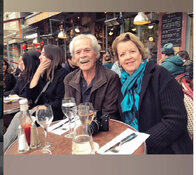
The camera is clearly set to 'A' in the footage I mentioned above.
the long way and more operations required. He's making the shutter speed the priority, but using aperture priority afterwards to get to that setting. He should set it on shutter priority at a 1/500. And then the aperture automatically sets to the correct exposure with no further adjustments.

The F3 displays the shutter speed in the finder. For some people it may feel faster to work that way. It also eliminates fiddling with the shutter dial which is not terribly well located.
 
All Nikons with any coupled meter had "A" ("many said it was 'automatic', but it stood for f-stop, or as some would say, 'aperture'") until the FA. So, unless he was using a meterless F or F2 the Nikon body had aperture-priority mode.
The Nikon FM and FM2 did not have aperture-priority mode.
 
And they did not have a coupled meter...FM=manual.

They have fully coupled TTL metering that indexes aperture to shutter speed, just no auto exposure mode (that would require electronic shutter control). Same deal with most of the Photomic metering heads (there were two that were coupled between lens and shutter but not TTL) on the F/F2.
 
As I said, it takes seconds to find in this reel.

QED, I'd suggest.
 

Attachments

  • jfp_01.jpg
    jfp_01.jpg
    614 KB · Views: 34
  • jfp_02.jpg
    jfp_02.jpg
    310.8 KB · Views: 33
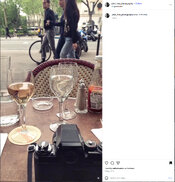
No. Because there's nothing to transcribe. The picture shows you that his F3 is on 'A' on the shutter dial. End of story as far as I am concerned.

It would have been helpful if you had told us that in your first post instead of directing us to Instagram, which no one can open if they're not a member. The picture in your post is fuzzy plus I didn't know it showed the "answer".
 
Why is it so important what he did? Why not use what you find comfortable? Cameras today are so advanced that exposure and focus could mainly be left on auto. That gives us more time on the subject and composition, which are not automatic and require our involvement.

Oh the shame of it all. I usually use auto focus and "P" (program) mode when on the street with my Nikon F6. I find working quickly is best in this situation.
 
It does make one wonder why does it matter whether aperture priority (or any auto feature) was used for any photograph. Knowing the answer does not make one a better photographer, nor does it take away anything from the photograph itself.
 
It does make one wonder why does it matter whether aperture priority (or any auto feature) was used for any photograph. Knowing the answer does not make one a better photographer, nor does it take away anything from the photograph itself.

It doesn't matter one jot in the real world. How you get there is often as much about personal preference coinciding with a suitable exposure as 'correct' technique.

The issue is that there are those who want to make a big deal out of whatever exposure mode was used, yet apparently both lack the basic research skills to find the most likely correct answer, nor have the slightest experience of the camera in question to understand why it's one (of many) ways to achieve a pragmatic solution to how you may prefer to work within the ergonomic practicalities/ realities of the F3.
 
It does make one wonder why does it matter whether aperture priority (or any auto feature) was used for any photograph. Knowing the answer does not make one a better photographer, nor does it take away anything from the photograph itself.

I follow my curiousity wherever it goes. Sometimes it leads to treasure.

Thanks to this detour I learned that John Free prioritized shooting at 1/500th. Coincidentally, this is something that I started to experiment with over the last few weeks because I was reflecting on things I wanted to change about own work. I spent a decent amount of time flipping through ILL photobooks and comparing my favorites in them to my favorites in The End Of The Line.

I find it interesting that photographers choose to police each other's questions this way. It has not been my experience in other niche arts communities I am involved in.
 
I follow my curiousity wherever it goes. Sometimes it leads to treasure.

Thanks to this detour I learned that John Free prioritized shooting at 1/500th. Coincidentally, this is something that I started to experiment with over the last few weeks because I was reflecting on things I wanted to change about own work. I spent a decent amount of time flipping through ILL photobooks and comparing my favorites in them to my favorites in The End Of The Line.

I find it interesting that photographers choose to police each other's questions this way. It has not been my experience in other niche arts communities I am involved in.

I was fine with your question, because I guessed that originated from an "I'm curious" motivation, rather than an "Is this how I should do things?" motivation.
But I also understand why people might assume you meant it the other way - that you were looking for the answer to a problem, with the intention that you apply that to your own photography.
A few years of acting as a Moderator has taught me the lesson that it is the assumptions that often lead discussions astray.
 
I was fine with your question, because I guessed that originated from an "I'm curious" motivation, rather than an "Is this how I should do things?" motivation.
But I also understand why people might assume you meant it the other way - that you were looking for the answer to a problem, with the intention that you apply that to your own photography.
A few years of acting as a Moderator has taught me the lesson that it is the assumptions that often lead discussions astray.

Agree, when thread originator does not make clear why a question is being asked, it naturally leads to assumptions.

And there are countless of this kind who actually do think that using a shooting mode used for making an image may lead them to same level of success.

And this still remains a question of whether using a specific shooting mode makes a difference in how a photograph comes out in the end.
 
I follow my curiousity wherever it goes. Sometimes it leads to treasure.

Thanks to this detour I learned that John Free prioritized shooting at 1/500th. Coincidentally, this is something that I started to experiment with over the last few weeks because I was reflecting on things I wanted to change about own work. I spent a decent amount of time flipping through ILL photobooks and comparing my favorites in them to my favorites in The End Of The Line.

I find it interesting that photographers choose to police each other's questions this way. It has not been my experience in other niche arts communities I am involved in.

1/500 is pretty fast. You may find shooting at let;s say 1/125th gains two stops on your aperture so you can increase depth of field. This is especially important if you;re shooting slower film. 1/125th may be fast enough for street shots. Check it out to see what works for you.
 
You should get a F3. Then you'd have the finest 35mm camera ever made as well as know how to quickly interpret the picture. :smile:

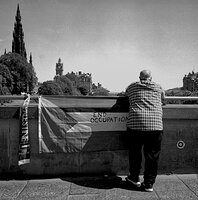
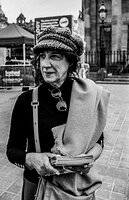
My Nikon N6006 electronic film camera works great after 35 years. PASM, bracketing, perfect shutter speeds (I checked them), flash, etc. Here's some shots taken with Tmax 400:
 
1/500 is pretty fast. You may find shooting at let;s say 1/125th gains two stops on your aperture so you can increase depth of field. This is especially important if you;re shooting slower film. 1/125th may be fast enough for street shots. Check it out to see what works for you.

Lately, I have been experimenting with Kodak Ektacolor 800 to solve that DOF challenge. I have been disappointed by 1/125th because I find it is often not crisp enough (or perhaps my hands are not still enough) to freeze quick gestures on the street with zero presence of motion blur. I enjoy looking at frozen gestures with hard edges - like statues. That is why I enjoyed coming across John's comment so much.

Coincidentally, I also watched a Winogrand interview where he talked about pushing his film to increase his shutter speed for similar reasons. I keep finding there are subtle things that street photographers did or didn't do that influenced how their work looked or changed the way they approached taking a frame (which influenced how their work looked).
 
Photrio.com contains affiliate links to products. We may receive a commission for purchases made through these links.
To read our full affiliate disclosure statement please click Here.

PHOTRIO PARTNERS EQUALLY FUNDING OUR COMMUNITY:


Ilford ADOX Freestyle Photographic Stearman Press Weldon Color Lab Blue Moon Camera & Machine
Top Bottom