
• Welcome to Photrio!
    Registration is fast and free. Join today to unlock search, see fewer ads, and access all forum features.
    Click here to sign up

About the possible use of Kodak Technidol

Junk it

A
Junk it

  • 1
  • 1
  • 9
Dawes 2

A
Dawes 2

  • 1
  • 0
  • 11

Recent Classifieds

Forum statistics

Threads
204,342
Messages
2,867,315
Members
102,229
Latest member
chicanorico
Recent bookmarks
0

AgBr_Jarm

Member
Joined
Dec 23, 2010
Messages
8
Format
35mm
A few years ago, in 2011, I happened to find some Kodak Technidol for sale at the store where I regularly shopped and, of course, I couldn't resist and bought what they had. Even knowing that I didn't have the right film, it was an opportunity to experiment and learn, or at least I would know if it still worked.

After looking for some information and after a lot of extrapolation, I did my experiments with what I had on hand at the time: Rollei 80s; APX 100; Acros 100; Neopan 1600. With the Rollei @80 I only liked the results in photos of scenes with low contrast, in photos of scenes with a lot of contrast the detail in the shadows was insufficient (in my eyes). The APX @100 and the Acros @ 80 presented similar results that I liked very, very much, with details in the shadows and highlights (the prints made great gifts for family and friends). The madness with Neopan @800 resulted in better results compared to Rollei, which surprised me... or maybe I could have done a better job with Rollei.
Having finished the experiment, I put away the Technidol and moved on to other experiments.

I can share the details for each film, I only developed one of each, but I would like to draw on your experience because I'm thinking of going back to Technidol (I still have 12 bottles and faith that it still works).
What I have available at the moment... still the Rollei 80s and the APX 100, maybe a couple of Adox CMS 20, Fomapan 200 and Rollei SUPERPAN 200. Naturally, I'm open to other suggestions, provided they can be obtained without too much difficulty.
My main motivation is to have the opportunity to build upon the experience you can share!

Considering how I've used Technidol and the film, and how I plan to use it in the future, a slap on the wrist is also acceptable 🤣, preferably accompanied your experience.
 
Technidol was invented as a low-contrast developer, for use with the inherently high-contrast Technical Pan film. Careful use of that film and developer would yield negatives of "normal" contrast for pictorial photography.
Using Technidol to develop standard pictorial films is likely to give low-contrast, flat results, and who knows, perhaps a speed loss too. I don't know of anyone (before you) who has used Technidol successfully that way. Not least because it is long discontinued.
That developer would be best used to process any of the repurposed microfilms out there, which are all inherently high contrast. But careful testing of exposure and development may give you a usable answer.
 
I've never used technidol, but I have a box of tech pan in the freezer.
So I'm eager to hear about this developer.
 
Rollei 80S isn't even close to ISO 80, which is why you had insufficient shadow detail. I rate it at 25, and get good results. (The same film is sold as RPX25, which is more honest than the 80S branding.)
 
A few years ago, in 2011, I happened to find some Kodak Technidol for sale at the store where I regularly shopped and, of course, I couldn't resist and bought what they had. Even knowing that I didn't have the right film, it was an opportunity to experiment and learn, or at least I would know if it still worked.

After looking for some information and after a lot of extrapolation, I did my experiments with what I had on hand at the time: Rollei 80s; APX 100; Acros 100; Neopan 1600. With the Rollei @80 I only liked the results in photos of scenes with low contrast, in photos of scenes with a lot of contrast the detail in the shadows was insufficient (in my eyes). The APX @100 and the Acros @ 80 presented similar results that I liked very, very much, with details in the shadows and highlights (the prints made great gifts for family and friends). The madness with Neopan @800 resulted in better results compared to Rollei, which surprised me... or maybe I could have done a better job with Rollei.
Having finished the experiment, I put away the Technidol and moved on to other experiments.

I can share the details for each film, I only developed one of each, but I would like to draw on your experience because I'm thinking of going back to Technidol (I still have 12 bottles and faith that it still works).
What I have available at the moment... still the Rollei 80s and the APX 100, maybe a couple of Adox CMS 20, Fomapan 200 and Rollei SUPERPAN 200. Naturally, I'm open to other suggestions, provided they can be obtained without too much difficulty.
My main motivation is to have the opportunity to build upon the experience you can share!

Considering how I've used Technidol and the film, and how I plan to use it in the future, a slap on the wrist is also acceptable 🤣, preferably accompanied your experience.

1. That developer is discontinued.
2. The high-contrast copy film for which it was designed is discontinued.
3. It will produce extremely flat results with "regular" films.
4. FX-39 II is probably better than any other developer with "regular" films.

In other words, there is nothing worth seeing here.
 
Oof, this thread made me hurt, I have a bunch of TechPan that I’d love to get the right dev for, but can’t justify the cost (it costs a lot on eBay). Using it with regular film is definitely not gonna give you the best results,
 
Use it on that high contrast infrared film Ive seen in the discussions. I have used it on Konica 750 with great results, a stop or two gain in iso and better shadow detail.
 
Technidol was invented as a low-contrast developer, for use with the inherently high-contrast Technical Pan film. Careful use of that film and developer would yield negatives of "normal" contrast for pictorial photography.
Using Technidol to develop standard pictorial films is likely to give low-contrast, flat results, and who knows, perhaps a speed loss too. I don't know of anyone (before you) who has used Technidol successfully that way. Not least because it is long discontinued.
That developer would be best used to process any of the repurposed microfilms out there, which are all inherently high contrast. But careful testing of exposure and development may give you a usable answer.

Thank you for your insight. Perhaps it's time to look for a more suitable film! If you could identify a few, that would be excellent!
 
I've never used technidol, but I have a box of tech pan in the freezer.
So I'm eager to hear about this developer.

I will gladly share whatever else I do with Technidol, and I wish I had some tech pan here.
Thank you for your interest!
 
Rollei 80S isn't even close to ISO 80, which is why you had insufficient shadow detail. I rate it at 25, and get good results. (The same film is sold as RPX25, which is more honest than the 80S branding.)

Thank you very much for such relevant information. I've never gone below 64 with the Rollei 80s. I will certainly revisit it with a fresh perspective, regardless of which developers I end up using with it.
 
1. That developer is discontinued.
2. The high-contrast copy film for which it was designed is discontinued.
3. It will produce extremely flat results with "regular" films.
4. FX-39 II is probably better than any other developer with "regular" films.

In other words, there is nothing worth seeing here.

I've already had the opportunity to try the FX-39 and, in fact, I really liked the results with "regular" films, but thank you for your perspective!

However, I believe there's always something to see and room for improvement.

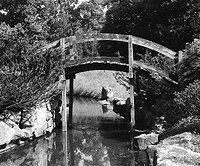
I leave a sample of the result from the acros 100@80 with Technidol...nothing is perfect, but it's reasonably good in my eyes and it printed very well.
1000024670.jpg
 
Oof, this thread made me hurt, I have a bunch of TechPan that I’d love to get the right dev for, but can’t justify the cost (it costs a lot on eBay). Using it with regular film is definitely not gonna give you the best results,

I understand you perfectly! I'd like to have some tech pan to try that combination.
Could the Adox 20 be a reasonable choice? If so, any ideas for a starting point?

Thank you!
 
Use it on that high contrast infrared film Ive seen in the discussions. I have used it on Konica 750 with great results, a stop or two gain in iso and better shadow detail.

Thank you so much for the idea! I don't know if I'll ever get my hands on that film, but I just looked up some information and it's definitely on my list of films to try!
 
Rollei 80S isn't even close to ISO 80, which is why you had insufficient shadow detail. I rate it at 25, and get good results. (The same film is sold as RPX25, which is more honest than the 80S branding.)
From the testing I’ve seen it’s around ISO 64, but you can certainly overexpose and pull to get less contrasty results. I personally like the high contrast so I shoot 64z

Thank you so much for the idea! I don't know if I'll ever get my hands on that film, but I just looked up some information and it's definitely on my list of films to try!
I’d be happy to send you some if you want, feel free to message me!
 
Tech pan developer is POTA with a preservative added. It was originally intended to have a shelf life of 3 years, so who knows how good any of it would be now.

Attached is a information sheet published by Kodak in 1980, it includes the developer formula.
 

Attachments

  • Tech pan.pdf
    238 KB · Views: 14
For Tech Pan itself, I preferred TD-3 to Technidol. And I believe TD-3 is still available from Formulary. Tech Pan hasn't actually been coated for decades; but it seems to keep a very long time. I sold off a significant quantity of 8x10 a few years ago, but carefully tested a few sheets first, to make sure it was still good. It performed perfectly, as if still brand new, with not even a hint of fog, even though it was at least 30 years old in boxed fashion, and probably coated a decade earlier than that.
 
Technidol was related to POTA (as are all true low contrast developers) but a crucial difference is it also contained hydroquinone. The addition of HQ to a Phenidone developer (in a much lower lower HQ : Phenidone ratio than in a normal developer) increases overall contrast a little, improves emulsion speed and shadow contrast, lowers fog and decreases graininess - offset by a reduction in edge effects though they are particularly strong in the case of POTA.
Tech pan developer is POTA with a preservative added. It was originally intended to have a shelf life of 3 years, so who knows how good any of it would be now.

Attached is a information sheet published by Kodak in 1980, it includes the developer formula.
 
Adox CMS20 II is discontinued but the remaining stock is still available in some locations. The closest replacement I have found was FPP Hi-Con 2369 which is a re-rolled Eastman film.

The King Mono 50 is another high resolution option:

It was suggested to develop CMS20 in Technidol at EI=12 for 7min in post 13 here:
 
Last edited:
Photrio.com contains affiliate links to products. We may receive a commission for purchases made through these links.
To read our full affiliate disclosure statement please click Here.

PHOTRIO PARTNERS EQUALLY FUNDING OUR COMMUNITY:


Ilford ADOX Freestyle Photographic Stearman Press Weldon Color Lab Blue Moon Camera & Machine
Top Bottom