


By the way, those ORWO NC400/NC500 films are ECN-2 films. In fact, NC400 is basically Agfa XT-320, while NC500 just has slightly tweaked colors. There's far too much marketing coming from Filmotec/InovisCoat - they can't really sell their films to production companies anymore, so they pivoted toward still photography, but with marketing rather than actual solutions. Their claims that the process is C-41 are simply because the remjet layer has been removed.
-
Welcome to Photrio!Registration is fast and free. Join today to unlock search, see fewer ads, and access all forum features.Click here to sign up
- Home
- Forums
- Analog Workflow Forums (100% Analog/Traditional)
- Darkroom
- Color: Film, Paper, and Chemistry
You are using an out of date browser. It may not display this or other websites correctly.
You should upgrade or use an alternative browser.
You should upgrade or use an alternative browser.
Why so much hate towards the Orwo NC500 and Orwo NC400?
-
A
- Thread starter Pedroga
- Start date

Recent Classifieds
-
For Sale Voigtländer Nokton Classic 35mm/1.4 with Leica M-mount
- Started by Klaus Mähring
-
For Sale Voigtländer Bessa R2 Special Edition Olive Green
- Started by Klaus Mähring
-
For Sale FS: Horseman Cable Release
- Started by B.S.Kumar
-
Sold SOLD!
- Started by B.S.Kumar
-
For Sale Synchro-Compur shutter, Ektar 4.7/127 lens
- Started by OAPOli
Forum statistics

By the way, those ORWO NC400/NC500 films are ECN-2 films. In fact, NC400 is basically Agfa XT-320, while NC500 just has slightly tweaked colors. There's far too much marketing coming from Filmotec/InovisCoat - they can't really sell their films to production companies anymore, so they pivoted toward still photography, but with marketing rather than actual solutions. Their claims that the process is C-41 are simply because the remjet layer has been removed.
Some people have already told me that developing it in ECN-2 can sometimes cause issues and that you may need to correct or adjust the images afterward and things like that. So I still think the best option for my first roll will probably be standard C-41.
But honestly, with every new comment I read, I get even more undecided about which chemistry I should choose lol.
At the same time, I feel like I’m learning more every single day, and I think I’m going to learn a lot from this roll of film specifically. It feels like every roll I buy will come with new questions, and with that, I’ll keep learning more and more.
Why not just try both processes and decide for yourself which look you prefer?
These films have a somewhat unusual mask, and I suspect that can sometimes cause problems with lab scans. Also, ECN-2 is a process designed to produce lower contrast - that's necessary for motion picture work. It's not really an issue for digital post-processing. C-41 chemistry is more active and produces higher contrast.
These films have a somewhat unusual mask, and I suspect that can sometimes cause problems with lab scans. Also, ECN-2 is a process designed to produce lower contrast - that's necessary for motion picture work. It's not really an issue for digital post-processing. C-41 chemistry is more active and produces higher contrast.

[...]I was searching online for a new film stock to try and ended up coming across the Orwo NC500 and the Orwo NC400. Even after doing a lot of research, I noticed there really isn’t that much information about them online, and most of what I found was pretty negative. I saw a lot of people saying the colors are bad, the saturation is terrible, the sharpness is lacking… and so on.
At the end of the day, does this film really deserve all the hate it gets? lol
Hi Pedroga. It's a fantastic film - I love using it whenever I can find it locally. It gives a unique rendition that I am unable to approximate (nor I have the time or interest in learning how to approximate) by endlessly fiddling with sliders in Photoshop. That's just me: I like to minimise time wasted in front of a computer after scanning and like to maximise the time spent behind a camera with a film roll loaded and ready to shoot.
I personally expose it at 200 ISO and develop it in Bellini C41 myself, I am very careful with temperature and time control during development, and scan it and invert it using a standardised, controlled workflow using a dedicated film scanner and a calibrated Eizo monitor. This means that I factor out the dreaded 'scanner black magic' that some people believe will render any differences across films impossible to discern. In my own workflow, I can pick scans from Orwo NC500 apart from scans of e.g. Ultramax 400 100% of time, and that's what I find interesting: exploiting the relative weaknesses and strengths of these products for creative purposes with minimal post-processing (I still set the black point and crop as I like, mind you!).
Put it another way: If I wanted to get a 'neutral' look, I would definitely not work my NC500 scans to death to make them look like Ultramax 400: I would buy Ultramax 400 and spend my mental energy concentrating on the actual photography instead.
Now, as for the hate you mention - I've seen it too, but I don't think it's specific to Orwo NC500. It's there on social media and affects many let's say 'experimental' products that do not conform. Think Harman Phoenix, think the dreaded 'Lomo' type of film, but also Foma Retropan 320 or anything else that doesn't 'fit'.
My own personal working explanation for this hate: it comes from a significant proportion of the amateur film photography community on the Web being composed of older users - people who were around when film was the only way to make pictures. What I've noticed is that these users, who are often very active/vocal on forums, demand or expect 'photorealism' from colour negative film. They still judge a film by how likely it is to give 'photorealistic' results, because that would have been the aim of film for an advanced amateur in the -say- 1960s, or 70s or 80s. No other way to make colour pictures back then, so the products on offer would have probably been judged by how 'accurate' the colours were according to some quantitative metric.
So when you read these comments going on about film X being a 'high quality' film (QC considerations aside) what they really mean I think is "this film is capable of giving me, consistently and reliably, results that match with my memory of the scene/expectation of colour/what my eyes can see or saw" and have absolutely no relationship with the 'quality' that particular film stock has to 'unlock' or 'tickle' your creative potential, your desire to take pictures or to create something unique with this medium.
But the latter is what many modern users approaching film photography are after: many current film photography enthusiasts, especially in the youngest cohort, often approach film differently from the 'older' cohort: for many, photorealism is not a goal anymore: satisfactory, 'correct to the eye' colour rendition, in 2026, is within easy reach by anyone with any 100$ mobile phone, and any 500-800$ mobile phone will give results that pros in the 80s could have only dreamed of. When you think of that, Orwo NC500 and Phoenix or expired Fuji NP160 can become fascinating tools for creative discovery that don't require starting from an 'exact' colour shot on the phone and fiddling with pre-canned digital filters to achieve.
When you realise that, it's easy to sort out helpful comments from 'gatekeeping' comments, such as the silly: 'this is how we used to do it, this is what we did with film and what we expected from it, your Orwo NC500 doesn't achieve this, which means it sucks'. Just ignore, move on, and do what is creatively interesting or fascinating for you.
Last edited:
Pedroga, I wouldn't overthink it, just do C41 for now so you'll have a baseline of what to compare ECN2 to at least  Good reason to buy a second roll!
As for photos, the photos I shared in my last post are C41 and EI 200. The majority of difference in rendition comes from the different camera I used; the C41 shots are with a Voskhod, a 60s fixed triplet lens Soviet camera that gives very soft, somewhat desaturated color images by default, and the ECN2 shots are with my much more modern, high performance, Contax C/Y Zeiss glass. I also have ECN-2/EI 200 shots on my Voskhod, and I think they look a little better, but it isn't as gigantic of a difference as you might be expecting:


Both are ECN-2, EI 200, and LOMO Voskhod.
@albireo, well said. Shooting film in 2026 is entirely about artistic sensibility. In that case, the ORWO films have their own merit for being used. Doesn't mean people have to like them - just as I don't particularly like Harman Phoenix - but it's great to have this variety of film stocks available for us.
Good reason to buy a second roll!As for photos, the photos I shared in my last post are C41 and EI 200. The majority of difference in rendition comes from the different camera I used; the C41 shots are with a Voskhod, a 60s fixed triplet lens Soviet camera that gives very soft, somewhat desaturated color images by default, and the ECN2 shots are with my much more modern, high performance, Contax C/Y Zeiss glass. I also have ECN-2/EI 200 shots on my Voskhod, and I think they look a little better, but it isn't as gigantic of a difference as you might be expecting:
Both are ECN-2, EI 200, and LOMO Voskhod.
@albireo, well said. Shooting film in 2026 is entirely about artistic sensibility. In that case, the ORWO films have their own merit for being used. Doesn't mean people have to like them - just as I don't particularly like Harman Phoenix - but it's great to have this variety of film stocks available for us.

NC500 shot @whoKnowsWhatISOIt'sNegativeFilmAfterall, C-41 process (I don't know why people obsess with ECN-2 when it comes to this film, Orwo merely said that this film can also be processed in ECN-2 (as every other C-41 film), but they provided two facilities for C-41 processing for movie productions, so they obviously think this is a C-41 film):


Last edited:
hey @Pedroga i just wanted to add that most of the labs in the country aren't using actual ECN-2 chemistry, the vast majority uses C-41 for everything and just charge more for cinema film.
i don't know if they'd charge you more if you asked for ECN-2 but they also won't explicitly tell you that they use C-41 for everything, as far as my knowledge goes.
i don't know if they'd charge you more if you asked for ECN-2 but they also won't explicitly tell you that they use C-41 for everything, as far as my knowledge goes.
hey @Pedroga i just wanted to add that most of the labs in the country aren't using actual ECN-2 chemistry, the vast majority uses C-41 for everything and just charge more for cinema film.
i don't know if they'd charge you more if you asked for ECN-2 but they also won't explicitly tell you that they use C-41 for everything, as far as my knowledge goes.
I actually know a lab here in Brazil that genuinely does real ECN-2 processing — it’s called LAB:LAB
NC500 shot @whoKnowsWhatISOIt'sNegativeFilmAfterall, C-41 process (I don't know why people obsess with ECN-2 when it comes to this film, Orwo merely said that this film can also be processed in ECN-2 (as every other C-41 film), but they provided two facilities for C-41 processing for movie productions, so they obviously think this is a C-41 film):
Those photos you took are really beautiful. One thing I noticed about your results is that they don’t have that heavy green cast that I’ve seen in some other examples online. And to be honest, the colors of this film actually appeal to me a lot.
So it’s decided, my friend — I’m going with the standard C-41 process for this first roll.
Pedroga, I wouldn't overthink it, just do C41 for now so you'll have a baseline of what to compare ECN2 to at least
As for photos, the photos I shared in my last post are C41 and EI 200. The majority of difference in rendition comes from the different camera I used; the C41 shots are with a Voskhod, a 60s fixed triplet lens Soviet camera that gives very soft, somewhat desaturated color images by default, and the ECN2 shots are with my much more modern, high performance, Contax C/Y Zeiss glass. I also have ECN-2/EI 200 shots on my Voskhod, and I think they look a little better, but it isn't as gigantic of a difference as you might be expecting:
View attachment 424630View attachment 424629
Both are ECN-2, EI 200, and LOMO Voskhod.
@albireo, well said. Shooting film in 2026 is entirely about artistic sensibility. In that case, the ORWO films have their own merit for being used. Doesn't mean people have to like them - just as I don't particularly like Harman Phoenix - but it's great to have this variety of film stocks available for us.
I thought both photos looked really beautiful. I use Yashica C/Y lenses myself — one macro lens and another 50mm f/1.2, I think. The last photos I shot with them turned out really well, at least to my own taste, although I obviously still have a lot to learn about composition.
Why not just try both processes and decide for yourself which look you prefer?
These films have a somewhat unusual mask, and I suspect that can sometimes cause problems with lab scans. Also, ECN-2 is a process designed to produce lower contrast - that's necessary for motion picture work. It's not really an issue for digital post-processing. C-41 chemistry is more active and produces higher contrast.
Unfortunately, I only bought one roll of NC500 because I also had to buy some Kodak film for a trip I’ll be taking soon. But my next NC500 roll will definitely be developed in ECN-2 just out of curiosity and to compare the results.
[...]
Hi Pedroga. It's a fantastic film - I love using it whenever I can find it locally. It gives a unique rendition that I am unable to approximate (nor I have the time or interest in learning how to approximate) by endlessly fiddling with sliders in Photoshop. That's just me: I like to minimise time wasted in front of a computer after scanning and like to maximise the time spent behind a camera with a film roll loaded and ready to shoot.
I personally expose it at 200 ISO and develop it in Bellini C41 myself, I am very careful with temperature and time control during development, and scan it and invert it using a standardised, controlled workflow using a dedicated film scanner and a calibrated Eizo monitor. This means that I factor out the dreaded 'scanner black magic' that some people believe will render any differences across films impossible to discern. In my own workflow, I can pick scans from Orwo NC500 apart from scans of e.g. Ultramax 400 100% of time, and that's what I find interesting: exploiting the relative weaknesses and strengths of these products for creative purposes with minimal post-processing (I still set the black point and crop as I like, mind you!).
Put it another way: If I wanted to get a 'neutral' look, I would definitely not work my NC500 scans to death to make them look like Ultramax 400: I would buy Ultramax 400 and spend my mental energy concentrating on the actual photography instead.
Now, as for the hate you mention - I've seen it too, but I don't think it's specific to Orwo NC500. It's there on social media and affects many let's say 'experimental' products that do not conform. Think Harman Phoenix, think the dreaded 'Lomo' type of film, but also Foma Retropan 320 or anything else that doesn't 'fit'.
My own personal working explanation for this hate: it comes from a significant proportion of the amateur film photography community on the Web being composed of older users - people who were around when film was the only way to make pictures. What I've noticed is that these users, who are often very active/vocal on forums, demand or expect 'photorealism' from colour negative film. They still judge a film by how likely it is to give 'photorealistic' results, because that would have been the aim of film for an advanced amateur in the -say- 1960s, or 70s or 80s. No other way to make colour pictures back then, so the products on offer would have probably been judged by how 'accurate' the colours were according to some quantitative metric.
So when you read these comments going on about film X being a 'high quality' film (QC considerations aside) what they really mean I think is "this film is capable of giving me, consistently and reliably, results that match with my memory of the scene/expectation of colour/what my eyes can see or saw" and have absolutely no relationship with the 'quality' that particular film stock has to 'unlock' or 'tickle' your creative potential, your desire to take pictures or to create something unique with this medium.
But the latter is what many modern users approaching film photography are after: many current film photography enthusiasts, especially in the youngest cohort, often approach film differently from the 'older' cohort: for many, photorealism is not a goal anymore: satisfactory, 'correct to the eye' colour rendition, in 2026, is within easy reach by anyone with any 100$ mobile phone, and any 500-800$ mobile phone will give results that pros in the 80s could have only dreamed of. When you think of that, Orwo NC500 and Phoenix or expired Fuji NP160 can become fascinating tools for creative discovery that don't require starting from an 'exact' colour shot on the phone and fiddling with pre-canned digital filters to achieve.
When you realise that, it's easy to sort out helpful comments from 'gatekeeping' comments, such as the silly: 'this is how we used to do it, this is what we did with film and what we expected from it, your Orwo NC500 doesn't achieve this, which means it sucks'. Just ignore, move on, and do what is creatively interesting or fascinating for you.
Also, I really appreciate how didactic and clear your explanation was. You were honestly the reason I finally felt confident enough to shoot and develop this first roll in C-41. And I completely agree with your philosophy about simplifying the process — choosing a film that already gives you the look you want, spending as little time as possible behind a computer, and as much time as possible behind a camera.
Yeah, it's one of the few. They are the biggest but i prefer Nanni Lab in São Paulo due to some process differences, personally. (i'm in Rio so it's not my own lab lol)I actually know a lab here in Brazil that genuinely does real ECN-2 processing — it’s called LAB:LAB
counting my own i'd say i know of 5 labs countrywide that do it, maybe 6. rest is all C-41.

My own personal working explanation for this hate: it comes from a significant proportion of the amateur film photography community on the Web being composed of older users - people who were around when film was the only way to make pictures. What I've noticed is that these users, who are often very active/vocal on forums, demand or expect 'photorealism' from colour negative film. They still judge a film by how likely it is to give 'photorealistic' results, because that would have been the aim of film for an advanced amateur in the -say- 1960s, or 70s or 80s. No other way to make colour pictures back then, so the products on offer would have probably been judged by how 'accurate' the colours were according to some quantitative metric.
In a way it’s lovely to hear “there are too many old people on the internet”

But add in the ‘90s!
I can only speak for the ‘80s forward. Amateurs and pros primarily would aim for a “look”, only with work of a highly technical nature would there be formal color measurements (matching trademark Pantone shades, etc). Portrait, wedding, editorial, advertising etc were highly scrutinized but not necessarily measured.
BUT, everyone, pretty much, would want to know that this month’s roll of Fantacolor would look like last month’s. I would never have thought of that as excessively picky.
So when you read these comments going on about film X being a 'high quality' film (QC considerations aside) what they really mean I think is "this film is capable of giving me, consistently and reliably, results that match with my memory of the scene/expectation of colour/what my eyes can see or saw" and have absolutely no relationship with the 'quality' that particular film stock has to 'unlock' or 'tickle' your creative potential, your desire to take pictures or to create something unique with this medium.
Exactly! Like a wine vintage, tell us that 2025 Cheapochrome has bright notes of purple on a patchy yellow background” instead of just having the same label and leaving the surprise for later.
the silly: 'this is how we used to do it, this is what we did with film and what we expected from it, your Orwo NC500 doesn't achieve this, which means it sucks'. Just ignore, move on, and do what is creatively interesting or fascinating for you.
Sure, like a restaurant review saying “they were so rude, like they expected all the customers to wear shoes and use utensils”, you can still use it as an indicator of what you’re looking for. Advertise as “you’ll never guess what you’re going to get!” And we can give you high marks. And some do say this! But if not, consistency is expected with any mass manufactured product.
In a way it’s lovely to hear “there are too many old people on the internet”
But add in the ‘90s!
I can only speak for the ‘80s forward. Amateurs and pros primarily would aim for a “look”, only with work of a highly technical nature would there be formal color measurements (matching trademark Pantone shades, etc). Portrait, wedding, editorial, advertising etc were highly scrutinized but not necessarily measured.
BUT, everyone, pretty much, would want to know that this month’s roll of Fantacolor would look like last month’s. I would never have thought of that as excessively picky.
Exactly! Like a wine vintage, tell us that 2025 Cheapochrome has bright notes of purple on a patchy yellow background” instead of just having the same label and leaving the surprise for later.
Sure, like a restaurant review saying “they were so rude, like they expected all the customers to wear shoes and use utensils”, you can still use it as an indicator of what you’re looking for. Advertise as “you’ll never guess what you’re going to get!” And we can give you high marks. And some do say this! But if not, consistency is expected with any mass manufactured product.
But, all those words that absolutely needed to be written here aside, how did you like the NC500 and NC400?
Also, I really appreciate how didactic and clear your explanation was. You were honestly the reason I finally felt confident enough to shoot and develop this first roll in C-41.
I'm glad to hear. Enjoy it! I've just found, and purchased, a couple of rolls of 'Agfaphoto 400' in a local drug store, I've never tried it - based on what I'm reading I'm assuming it's NC400?
I'm really curious to see if I like it as much as NC500.
But, all those words that absolutely needed to be written here aside, how did you like the NC500 and NC400?
And thank you for reposting them

I’m waiting for my order to come in…since they took my Kodachrome away I’m happy to try other things (But I’ll complain if batches are very different!)
Just to muddy the waters a bit, I have some photos from the other side...
I recently did an impromptu professional event shoot on NC400. Since my lab only does rush processing on C41 and B&W, and I wanted to get these photos to the event organizer, I ended up going with C41 instead of ECN-2. Lighting was at its harshest, and I didn't have any flash with me, but I think these give a good summary of how NC400 performs when processed normally and shot at EI 200:






Strong reds of course, but also, really lovely greens. Not sure if it comes through here or not, but IMO NC400 has really pleasant skin tones in C41.
These couple of photos are from the same roll, to finish it up before sending it for dev:


All shot on a Contax RX with a Zeiss 35-70/3.4 Vario-Sonnar.
I recently did an impromptu professional event shoot on NC400. Since my lab only does rush processing on C41 and B&W, and I wanted to get these photos to the event organizer, I ended up going with C41 instead of ECN-2. Lighting was at its harshest, and I didn't have any flash with me, but I think these give a good summary of how NC400 performs when processed normally and shot at EI 200:
Strong reds of course, but also, really lovely greens. Not sure if it comes through here or not, but IMO NC400 has really pleasant skin tones in C41.
These couple of photos are from the same roll, to finish it up before sending it for dev:
All shot on a Contax RX with a Zeiss 35-70/3.4 Vario-Sonnar.
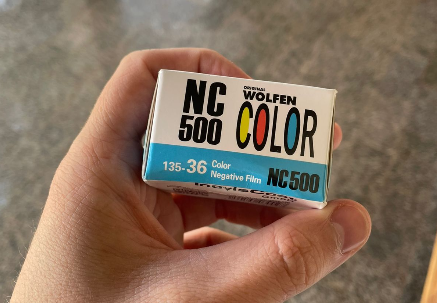
The film just arrived, and I’m really excited to start shooting with it. The funny thing is that I still have no idea where I’m going to go or what I’m going to photograph yet!
One question came to mind while reading through this whole discussion:
If I shoot the film at ISO 200, should I tell the lab to develop it as ISO 200 or as ISO 400? Even knowing that its nominal speed may not truly behave like a typical ISO 400 film.
From what I understand, if I meter and expose the film at ISO 200 simply to give it one extra stop of light, I would normally still ask the lab to process it normally, without any push or pull adjustments. In other words, I would shoot at ISO 200 and develop it as normal.
But I’m not entirely sure if that’s the best approach for the Orwo films specifically.
@koraks @brbo @polaromar @lamerko
One question came to mind while reading through this whole discussion:
If I shoot the film at ISO 200, should I tell the lab to develop it as ISO 200 or as ISO 400? Even knowing that its nominal speed may not truly behave like a typical ISO 400 film.
From what I understand, if I meter and expose the film at ISO 200 simply to give it one extra stop of light, I would normally still ask the lab to process it normally, without any push or pull adjustments. In other words, I would shoot at ISO 200 and develop it as normal.
But I’m not entirely sure if that’s the best approach for the Orwo films specifically.
@koraks @brbo @polaromar @lamerko

| Photrio.com contains affiliate links to products. We may receive a commission for purchases made through these links. To read our full affiliate disclosure statement please click Here. |
PHOTRIO PARTNERS EQUALLY FUNDING OUR COMMUNITY:  |