• Welcome to Photrio!
    Registration is fast and free. Join today to unlock search, see fewer ads, and access all forum features.
    Click here to sign up

Can photography be altruistic, and contribute to the greater good?

The Hot Waters

A
The Hot Waters

  • 0
  • 0
  • 3
Dump Truck Hat Trick

D
Dump Truck Hat Trick

  • 1
  • 0
  • 68

Recent Classifieds

Forum statistics

Threads
204,313
Messages
2,866,998
Members
102,220
Latest member
iDavidoff
Recent bookmarks
0

IpseLux

Member
Joined
Apr 17, 2026
Messages
175
Location
East Tennessee
Format
35mm
As I was going thru the drive thru, I decided to take a snap of my buddy Carlos, working this am. Nice young man. Tough gig. Particularly under appreciated here in the US.
The image itself is modest at best, normal lens, shot from the driver seat of a coupe, at a driving window…. You could imagine.
But what I did not expect, was Carlos’ reaction: a serious pose. By serious I mean serious, an image for posterity serious.
I handed him my camera so he could see it. He was surprised by the weight of my camera, a D2. All this time he’s known me, he’s known me as someone other than a photographer. At that instant, the camera, and the image changed that.
I promised him a print from Walmart, about 19 cents and he seemed genuinely pleased. I’ll print him two, one for himself, and one for a significant other that might appreciate.
Which brings me to another tale…. Years ago I knew this Mayan photographer Pedro. He made his living selling photos, one by one. Camera and flash in hand, Rural Mayan Guatemala, in the days of film, and this young man took exceptional portraits. Flash exposure was always perfect. One classic pose: for posterity. And Mayans did not smile. This was no selfie. This was history, part of their historical record. Along with their birth and baptism records in the Church, and possible mandatory military service (young men were often abducted into military service during this period of Civil War, it proved they existed. Given the ethnic abuses and violence of the times, this mattered.
So I ask, can photography contribute to the greater good. I’m not speaking of Pirlitzer images, and big marketing projects, but of every day images.
Do your images contribute to this common good?
Who are photographers you admire, who do this?
 
I think ultimately the question is whether human behavior as such can be altruistic. I guess the answer depends a bit in which direction you lean in a very old and ongoing debate.

Mayan photographer
They've been gone for centuries, haven't they?

PS: I've photographed plenty of people and things for the benefit of others and without direct return. I think it kind of goes without saying you sometimes do this in the same way you go out of your way in general for others, from time to time. In my mind it's normal human behavior.
 
Of course it can, and it can also do the complete opposite.
 
I don't know that "photography" can do anything of the sort, but photographers certainly can.
One uses the tools and skills available to them, and as a communicative tool, photography can certainly be used as to help accomplish all sorts of things - good, bad and indifferent.
 
I think ultimately the question is whether human behavior as such can be altruistic. I guess the answer depends a bit in which direction you lean in a very old and ongoing debate.


They've been gone for centuries, haven't they?

PS: I've photographed plenty of people and things for the benefit of others and without direct return. I think it kind of goes without saying you sometimes do this in the same way you go out of your way in general for others, from time to time. In my mind it's normal human behavior.

No. There’s a universal misconception that the Spanish Conquest wiped out native indigenous peoples in the New World. The Tainos of my native land did not survive, though their blood line continues. In Cuba and La Hispaniola, it is believed some populations survived, I think.
But the Mayas survive and thrive in modernity. I guess about 22 ethnic groups still exist in Guatemala, all speaking their unique indigenous languages, wearing their traditional clothes, and living in many ways as their ancestors did, particularly since the Conquista.
A little known fact, even though the Mayan languages are very different, the word for chicken is generally shared by many groups: kaxlan, pronounced kashlán. In Kekchí, the word also indicates new or foreign. Two examples: Kwa is tortilla. Kaxlan Kwa is bread. Kantík is snake. Kaxlan kantík is a train.
Yes, individual acts can be altruistic. Certainly occasionally. But I get the feeling that some photographers and some disciplines could and sometimes do exhibit more altruistic qualities than normal. I’m thinking of Robert Capa’s war images. Or Tank Man by S Franklin. Another favorite Nikon image is Mountain Light by G Rowell.
And the images of W. Eugene Smith also come to mind, especially the Mercury Poisoning in Japan.
Sebastian Salgao is another….
If I may, everything that is partakes in the transcendentals: oneness, goodness, beauty, and truth to a lesser of greater degree. Photography especially deals in the mindful awareness of these.
Mindfulness is the practice of photography. Good photography, I think. At least to me.
By the way, gifting of photographs to others is a great blessing, a great opportunity, isn’t it?
I was taught that true wealth is a measure of what one gives, not takes.
Kind regards, K.
If you ever meet some Mayans, surprise them by saying Kaxlan to them. They’ll flip!!!
 
The capture of an image...inherently is not 'good' or 'bad', although the photograph can be done well or done badly!

The image itself can be interpreted as 'doing good' or 'doing harm' based upon its usage...in one context it can be contributing to someone's well being, or used differently the exact same image might be 'harmful' to someone else.
 
So I ask, can photography contribute to the greater good. I’m not speaking of Pirlitzer images, and big marketing projects, but of every day images.
Do your images contribute to this common good?
Who are photographers you admire, who do this?
Of course. Art and technology contribute to the greater good in many ways. I would think most photographers on Photrio are trying to achieve this. Examples of photography harming people would be harder to find and uncommon here.
 
An act of art is an act of altrusim.
 
Photography is an activity and it can be directed in any number of ways. But keep in mind that, socially, what one group views as altruistic, another may view as diminutive (or worse). "Altruism" has often been a form of lording over others - showing superiority. It's always been more of a shaded ideal than a reality.

everything that is partakes in the transcendentals: oneness, goodness, beauty, and truth to a lesser of greater degree

That is pretty basically vapid, by the way.
 
Photography is an activity and it can be directed in any number of ways. But keep in mind that, socially, what one group views as altruistic, another may view as diminutive (or worse). "Altruism" has often been a form of lording over others - showing superiority. It's always been more of a shaded ideal than a reality.


That is pretty basically vapid, by the way.

Lording over others??? I disagree. If that were the case, the word would loose all of its logical meaning.
But hey, language is at the service of the speaker. I respect your opinion.
 
The capture of an image...inherently is not 'good' or 'bad', although the photograph can be done well or done badly!

The image itself can be interpreted as 'doing good' or 'doing harm' based upon its usage...in one context it can be contributing to someone's well being, or used differently the exact same image might be 'harmful' to someone else.

I subscribe to an old world view, from Medieval times. Even way before then actually, from Aristotle: all acts are directed towards the good.
A criminal may commit a crime which benefits him, and harms others. In doing so, his so called good, is far, far less than the common and greater good to others, if that makes any sense.
But in my reference to altruism, I think in terms of the image serving a greater purpose, than just serving the photographer.
Photos sell. Photos bring forth fame. Some do.
But do they give more in return?
I’d like to think than all great photography does.
 
Lording over others??? I disagree. If that were the case, the word would loose all of its logical meaning.
But hey, language is at the service of the speaker. I respect your opinion.

Altruism is not an act that is done in isolation. You can't be particularly altruistic if you are the only person on a deserted island, for example. So, whatever actions you perform that you believe are "altruistic" may be seen by others as you asserting your moral or social superiority.

Altruism on the part of a photographer makes sense. Photos cannot be altruistic.

language is at the service of the speaker

You have that backwards.

But in my reference to altruism, I think in terms of the image serving a greater purpose, than just serving the photographer.

You are confusing "altruism" for "significance". Photos often do far more than serve the purposes of the photographer. Many photos have come to be significant to a great many people that have no connection to the photographer. That's not altruism. That's a consequence of the photo's independent existence.
 
You can take a photo with the primary motivation of making someone else happy, and not accept payment for it. That would seem to fit the definition of altruism.

"Greater good" is a trickier concept.
 
As I was going thru the drive thru, I decided to take a snap of my buddy Carlos, working this am. Nice young man. Tough gig. Particularly under appreciated here in the US.
The image itself is modest at best, normal lens, shot from the driver seat of a coupe, at a driving window…. You could imagine.
But what I did not expect, was Carlos’ reaction: a serious pose. By serious I mean serious, an image for posterity serious.
I handed him my camera so he could see it. He was surprised by the weight of my camera, a D2. All this time he’s known me, he’s known me as someone other than a photographer. At that instant, the camera, and the image changed that.
I promised him a print from Walmart, about 19 cents and he seemed genuinely pleased. I’ll print him two, one for himself, and one for a significant other that might appreciate.
Which brings me to another tale…. Years ago I knew this Mayan photographer Pedro. He made his living selling photos, one by one. Camera and flash in hand, Rural Mayan Guatemala, in the days of film, and this young man took exceptional portraits. Flash exposure was always perfect. One classic pose: for posterity. And Mayans did not smile. This was no selfie. This was history, part of their historical record. Along with their birth and baptism records in the Church, and possible mandatory military service (young men were often abducted into military service during this period of Civil War, it proved they existed. Given the ethnic abuses and violence of the times, this mattered.
So I ask, can photography contribute to the greater good. I’m not speaking of Pirlitzer images, and big marketing projects, but of every day images.
Do your images contribute to this common good?
Who are photographers you admire, who do this?

Some people feel that photographs of them are a sin or improper for various reasons and would decline if you ask them if it's OK to take their picture. It wouldn't be altruistic if you shot their picture.
 
I think ultimately the question is whether human behavior as such can be altruistic. I guess the answer depends a bit in which direction you lean in a very old and ongoing debate.


They've been gone for centuries, haven't they?

PS: I've photographed plenty of people and things for the benefit of others and without direct return. I think it kind of goes without saying you sometimes do this in the same way you go out of your way in general for others, from time to time. In my mind it's normal human behavior.

The Maya empire may have been destroyed by 1530, but there are still millions of Maya people living in Mexico, Guatemala, Honduras and Belize today, many of whom still speak Mayan or other indigenous dialects.
 
If you're talking about photographs having a positive impact on the world, then yes. Probably the clearest examples are relatively modern, The burning monk in Saigon, the Viet-Cong prisoner execution, "Napalm Girl", the starving child being watched by a vulture, the lone man standing up to a tank in Tiananmen Square, concentration camp victims in Germany ...
I think that the reason the clearest examples come from photojournalism from the second half of the 20th century to now is that prior to the Vietnam War, most photojournalism (especially war photography) was being carefully curated in the service of the state message about the events unfolding far from home. With Vietnam, you had the first war where journalists were embedded with the soldiers, and were able to report back directly to their news agencies without going through a censorship office, and their work became decidedly political and anti-war.
 
prior to the Vietnam War, most photojournalism (especially war photography) was being carefully curated in the service of the state message about the events unfolding far from home

A good example of this is when Dorothea Lange was working with the War Relocation Authority during the ”internment” of Japanese and Japanese-American families in the US during WW2. She was assigned to document the event and took many photos of the camp at Manzanar in California. Most were not released until much, much later.

She knew her work would be censored due to her official role, so she wrote a letter to Ansel Adams encouraging him to come and use his independence and clout to document it. He did, producing one of his very few works ever to consist of mainly portraits, titled “Born Free and Equal: The Story of Loyal Japanese-Americans”. Later in life he called it the most important thing he had ever done or could do, from a social standpoint.
 
Some people feel that photographs of them are a sin or improper for various reasons and would decline if you ask them if it's OK to take their picture. It wouldn't be altruistic if you shot their picture.

Sure. I can think of the Amish, and some indigenous communities that share that view.
The Mayans I speak of, are somewhat like that. But here’s the key, once they get to know you, and once they understand your intent is noble and good, and you mean them no harm, they were ok with it. As a matter of fact, at the time I took their images, they considered an honor.
You must remember, because of persistent racism and hate, many considered them and others like them sort of animals. They were victimized, discriminated against, abused, denied many services…. And exploited.
Buses would not stop to give them transport.
I speak of a time of civil war. Things are different now.
 
A good example of this is when Dorothea Lange was working with the War Relocation Authority during the ”internment” of Japanese and Japanese-American families in the US during WW2. She was assigned to document the event and took many photos of the camp at Manzanar in California. Most were not released until much, much later.

She knew her work would be censored due to her official role, so she wrote a letter to Ansel Adams encouraging him to come and use his independence and clout to document it. He did, producing one of his very few works ever to consist of mainly portraits, titled “Born Free and Equal: The Story of Loyal Japanese-Americans”. Later in life he called it the most important thing he had ever done or could do, from a social standpoint.

Yes. Dorothea Lange is a photographer who deserves much more praise and recognition for her life’s work.
I agree with your comment 100%. I also find it inspiring.
Thanks.
 
...You are confusing "altruism" for "significance". Photos often do far more than serve the purposes of the photographer. Many photos have come to be significant to a great many people that have no connection to the photographer. That's not altruism. That's a consequence of the photo's independent existence.

I believe the question is about photography. Photography is an act...if done with the goal of bettering the world without direct money compensation or accolades, then it is done purely as an altruistic act. It may or may not be successful as are all attempts. It may be a vain attempt. The image may not sustain the power it once had. The image may serve humanity is a different way that the photographer intended.

The altruistic goal of the photographer might just be to inspire others...which means the image can be successful if just one other person sees the image and as a results sees the world in a different way. It does not need to have political or world significance. It just needs to touch someone else.

The other aspect is education...what can be more altruistic than freely educating (by proving the opportuntity) others? Or of sharing beauty?
 
Altruism is not an act that is done in isolation. You can't be particularly altruistic if you are the only person on a deserted island, for example. So, whatever actions you perform that you believe are "altruistic" may be seen by others as you asserting your moral or social superiority.

Altruism on the part of a photographer makes sense. Photos cannot be altruistic.


You have that backwards.


You are confusing "altruism" for "significance". Photos often do far more than serve the purposes of the photographer. Many photos have come to be significant to a great many people that have no connection to the photographer. That's not altruism. That's a consequence of the photo's independent existence.

Altruism in isolation? I didn’t say nor I believe that. Quite the opposite.
Do you have a definition of justice? Here’s one: the only virtue dependent on others.
Altruism is an expression of justice. It is an act in full accord with our humanity. It defines us, and our humanity. By this I don’t mean other sentient beings are not altruists also. But that’s a different argument best addressed at another time.
It appears to me that you and I are speaking of two very different things when we refer to altruism.
Careful, accusing others of not making sense. Comes out as arrogant and conceited.
True. All can reason. But not all can reason well.
Be well D!
 
If you're talking about photographs having a positive impact on the world, then yes. Probably the clearest examples are relatively modern, The burning monk in Saigon, the Viet-Cong prisoner execution, "Napalm Girl", the starving child being watched by a vulture, the lone man standing up to a tank in Tiananmen Square, concentration camp victims in Germany ...
I think that the reason the clearest examples come from photojournalism from the second half of the 20th century to now is that prior to the Vietnam War, most photojournalism (especially war photography) was being carefully curated in the service of the state message about the events unfolding far from home. With Vietnam, you had the first war where journalists were embedded with the soldiers, and were able to report back directly to their news agencies without going through a censorship office, and their work became decidedly political and anti-war.

A good example of this is when Dorothea Lange was working with the War Relocation Authority during the ”internment” of Japanese and Japanese-American families in the US during WW2. She was assigned to document the event and took many photos of the camp at Manzanar in California. Most were not released until much, much later.

She knew her work would be censored due to her official role, so she wrote a letter to Ansel Adams encouraging him to come and use his independence and clout to document it. He did, producing one of his very few works ever to consist of mainly portraits, titled “Born Free and Equal: The Story of Loyal Japanese-Americans”. Later in life he called it the most important thing he had ever done or could do, from a social standpoint.
We have to be careful when we decide which pictures have a positive or negative impact since we view them from our political perspective and experience. What another country considers a terrorist could be our patriot and vice versa.

A number of years ago, my wife and I visited the Arizona Memorial and museum in Pearl Harbor, Hawaii. The USS Arizona was one of the battleships sunk by the Imperial Japanese Navy at the beginning of WWII in a sneak attack, drowning over a thousand Americans in that ship alone. Before we got on the ferry to take us out to the memorial on the still-sunk ship in the harbor, there were many photos and displays in the museum portion explaining the attack and the subsequent winning of the war by America. Interestingly, I was surprised to see the many Japanese nationals there beside me visiting from Japan on vacation who went to the memorial and through the museum. I couldn't help but wonder what they were thinking, looking at this all from their perspective?
 
We have to be careful when we decide which pictures have a positive or negative impact since we view them from our political perspective and experience. What another country considers a terrorist could be our patriot and vice versa.

A number of years ago, my wife and I visited the Arizona Memorial and museum in Pearl Harbor, Hawaii. The USS Arizona was one of the battleships sunk by the Imperial Japanese Navy at the beginning of WWII in a sneak attack, drowning over a thousand Americans in that ship alone. Before we got on the ferry to take us out to the memorial on the still-sunk ship in the harbor, there were many photos and displays in the museum portion explaining the attack and the subsequent winning of the war by America. Interestingly, I was surprised to see the many Japanese nationals there beside me visiting from Japan on vacation who went to the memorial and through the museum. I couldn't help but wonder what they were thinking, looking at this all from their perspective?

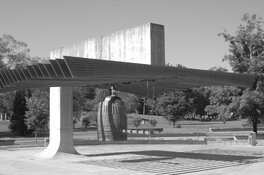
Yes. I agree. If I may, and since this a photography forum, let me share my thoughts with an image I took yesterday.
Peace Bell. Oak Ridge Tennessee.
Thanks for chiming in.
Kind regards A.
 

Attachments

  • SPR_0622.jpeg
    SPR_0622.jpeg
    346.4 KB · Views: 31
Photrio.com contains affiliate links to products. We may receive a commission for purchases made through these links.
To read our full affiliate disclosure statement please click Here.

PHOTRIO PARTNERS EQUALLY FUNDING OUR COMMUNITY:


Ilford ADOX Freestyle Photographic Stearman Press Weldon Color Lab Blue Moon Camera & Machine
Top Bottom