

• Welcome to Photrio!
    Registration is fast and free. Join today to unlock search, see fewer ads, and access all forum features.
    Click here to sign up

Recognition, titles: Fostering improvement or vanity and gatekeeping? - e.g. Royal Photographic Society's ARPS and LRPS

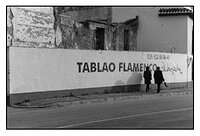
Tablao Flamenco

A
Tablao Flamenco

  • 2
  • 0
  • 50
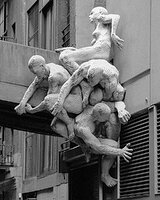
Untitled

A
Untitled

  • 1
  • 2
  • 100

Recent Classifieds

Forum statistics

Threads
204,341
Messages
2,867,276
Members
102,229
Latest member
chicanorico
Recent bookmarks
1
Thanks for that perspective @MattKing. Mind you, I don't contest the usefulness of professional associations, nor of associations like CAPA or RPS, which I recognize. I'm very specifically addressing the question of the utility of titles and other formalities that I find hard to connect to the otherwise useful activities and benefits of such organizations.

Seems very British to me.
 
My question: Would a photographer like Miroslav Tichy be admitted?
 
There is value to such an organization and the various distinctions within it so long as the members and others (institutions, galleries, customers) place a value on them. The standards of the 3 different levels seem reasonable, with the exception of the "Statement of Intent," which does not seem to convey or reflect any level of technical, professional or creative skill (other than creative writing).

I would take issue with this, as the statement of intent indicates your thought process of what you are trying to achieve.
 
What you are trying to achieve either shows in the work or it doesn't. How does a written statement alter or augment that? In some cases, a Statement of Intent may show that the photographer did not realize what he had intended to portray. Side note, I think "Artist's Statements" are a waste of time.

If I showed you this image, you could take it at face value or dismiss it, but if you know the meaning behind it, you may change your mind about the value of the image: -

1776895446224.png
 
What you are trying to achieve either shows in the work or it doesn't. How does a written statement alter or augment that? In some cases, a Statement of Intent may show that the photographer did not realize what he had intended to portray. Side note, I think "Artist's Statements" are a waste of time.

This tells me that you have never been a curator or run a gallery.
The Artist Statements are like a synopsis of a book - they help viewers or readers make decisions about where they will cast their attentions.
They also speak more to a series then they do to a single image.
Poor ones don't help. Good ones help the curious and inquisitive and those who wish to learn more.
 
Plus they help the adjudicators as they review portfolios for these prestigious awards and titles.
 
My question: Would a photographer like Miroslav Tichy be admitted?

I somehow think he would not have applied! But if he had, who knows, I think it's quite likely he would get one of the awards if he were alive today.

It seems most people on this thread have not actually seen examples of the portfolios that get recognised in these awards (as published in the RPS Journal) ... they are very diverse indeed. It's not "conventional" stuff as some appear to believe.
 
If I showed you this image, you could take it at face value or dismiss it, but if you know the meaning behind it, you may change your mind about the value of the image: -

View attachment 422938

That is true, Clive, but it is the exception among Koudelka’s photos. Most of them stand without need of commentary. Someone will no doubt prove me wrong, but I’ll be surprised if Koudelka ever wrote an Artist’s Statement.

I’m guessing here, but presumably an AS allows assessors to measure the entries against the (self-imposed) brief; also to ensure the panel don’t mis-understand the work. It therefore seems to be about a goal-oriented kind of photography. I suspect most of us on this forum are more dilettante in our approach, musing over what we’ve achieved after the event, if at all. Others crave the discipline of working up a project, I completely understand that.
 
I joined and applied for an LRPS because I qualified automatically when halfway through my IIP course. My membership lapsed, but after I retired I thought it may be worth rejoining and applying for other accreditations (gives me something to do). I got ARPS by submitting my first book, but unfortunatly they have now changed the rules about books and so I can't submit my second book for FRPS consideration.

It was my understanding that FRPS was invitation-only?
 
It seems most people on this thread have not actually seen examples of the portfolios that get recognised in these awards
I certainly haven't, I'd happily admit this. I did a little searching on the RPS website and could not find something like an index of title holders with links to examples or galleries. I might have overlooked them? I was not aware that the Journal was open access; I've had a quick peek and I see beautiful work indeed and the titles are included with the names.

Btw, my question was not "do title holders make beautiful work". I don't doubt some do, and I don't doubt that to a large extent it's subjective whether one finds it interesting.
 
I did a little searching on the RPS website and could not find something like an index of title holders with links to examples or galleries.
If you’re interested, I do have my own website. I don’t personally upload pictures to the RPS site.

 
Last edited:
If the archive is searched for ,eg, "rodinal" there are only about half a dozen hits for the last 100 years up to 2018 so this type of discussion often found on Photrio is not included.
I've just done a search as well with the link given, and 9 pages of listings are given going back to 1891(!!)

Terry S
UK
 
One thing I have been told is that some institutions will accept an FRPS in lieu of a terminal degree when applying for teaching positions - for example, Richard Sullivan (of Bostick & Sullivan) has an FRPS but not an MFA or PhD in chemistry, yet he teaches at University of New Mexico (he may be retired/emeritus now).
 
One thing I have been told is that some institutions will accept an FRPS in lieu of a terminal degree when applying for teaching positions - for example, Richard Sullivan (of Bostick & Sullivan) has an FRPS but not an MFA or PhD in chemistry, yet he teaches at University of New Mexico (he may be retired/emeritus now).

I think it's quite common in Fine Arts courses to have adjunct teaching staff who have little or no formal qualifications apart from their outstanding abilities and portfolios. Permanent tenured staff tend to have formal academic qualifications.
 
One thing I have been told is that some institutions will accept an FRPS in lieu of a terminal degree when applying for teaching positions - for example, Richard Sullivan (of Bostick & Sullivan) has an FRPS but not an MFA or PhD in chemistry, yet he teaches at University of New Mexico (he may be retired/emeritus now).

UNM did at one time have a very good photography program with several famous names on staff.
 
I'd buy and believe that book long before reading and believing an internet post by a writer using only a psuedonym. LOL

(Thanks for posting that. I was unaware of that book. Looks interesting; I'll be seeking a copy!)
 
I got it directly from Ron. It’s a tiny booklet, he published himself.
 
I'd buy and believe that book long before reading and believing an internet post by a writer using only a psuedonym.
Setting aside the intentional acidity conveyed in your comparison of apples to pitchforks: what in the FRPS title makes it a good predictor for its holder to be a competent author, specifically in the field of biographies or history?
 
Photrio.com contains affiliate links to products. We may receive a commission for purchases made through these links.
To read our full affiliate disclosure statement please click Here.

PHOTRIO PARTNERS EQUALLY FUNDING OUR COMMUNITY:


Ilford ADOX Freestyle Photographic Stearman Press Weldon Color Lab Blue Moon Camera & Machine
Top Bottom
