
• Welcome to Photrio!
    Registration is fast and free. Join today to unlock search, see fewer ads, and access all forum features.
    Click here to sign up

Has anyone used the Cinestill CS6 kit with non Kodak E6 film?

22886.jpg

A
22886.jpg

  • 0
  • 0
  • 7
22890.jpg

A
22890.jpg

  • 0
  • 0
  • 5

Recent Classifieds

Forum statistics

Threads
204,342
Messages
2,867,372
Members
102,230
Latest member
sesuone
Recent bookmarks
0

Jarrett

Member
Joined
Jun 16, 2017
Messages
86
Location
Spokane, Wa
Format
Medium Format
I'm wondering if anyone have any positive results using these kits for films other than Kodak E100.

I just tried with some Fuji slide film and they came out extremely dark even when I followed the instructions clearly. Someone else indicated that this could've been because it wasn't Kodak E100 which Cinestill recommend using the CS6 kit with.

I wondering if anyone else have similar results.
 
E6 is E6, so it should be standardised.

And Cinestill's clearly isn't. If you read their promos they've come up with a process that gets 4 more stops of dynamic range out of a slide.

Yeah. Sure. All that with virtually zero research money and two decades after big guys with infinitely more knowledge decided additional improvements were uneconomical. E-6 is not something you 3D print...
 
And Cinestill's clearly isn't. If you read their promos they've come up with a process that gets 4 more stops of dynamic range out of a slide.

Yeah. Sure. All that with virtually zero research money and two decades after big guys with infinitely more knowledge decided additional improvements were uneconomical. E-6 is not something you 3D print...
Exactly my point.
It was a lucky shot that they made something that might work so-so with Kodak E100. But any E6 kit should with all colour reversal films.
 
And Cinestill's clearly isn't. If you read their promos they've come up with a process that gets 4 more stops of dynamic range out of a slide.

Yeah. Sure. All that with virtually zero research money and two decades after big guys with infinitely more knowledge decided additional improvements were uneconomical. E-6 is not something you 3D print...

They've come up with a way to basically lower the Dmax and reduce contrast. Based on their samples, it's not something I personally would want to do to my chromes.
 
For what it's worth, back in the early Nineties I was told by a Fuji representative that some of the 3-bath kits available at the time were not entirely compatible with the (then) new generation of Fujichrome films, and required extended time in the first developer. This is partly understandable since those kits were produced before the new range of Fujichrome films hit the market. I never had problems with the Tetenal kits though; they always produced excellent results with Fujichrome film. I'm only speculating of course, but perhaps the Cinestill kit is based on an antiquated formula? And if it's the same problem, perhaps extended first development will help? The ideal, of course, is always to go with fully compatible chemistry, and for that you obviously cannot beat Fuji Hunt, although I also have full confidence in Tetenal.
 
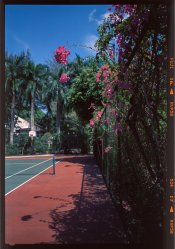
My slides have dried and I can confirm that that Fuji Provia doesn't work well with the Cinestill CS6 kit. They are extremely dark. I mean dark. I know I got my exposure correct because the RZ67 meter for slides never failed me. I also double checked with my spotmeter.

To doublecheck this I processed Kodak E100 alongside Provia 100F again in the same tank to compare. They're still drying as I type this, but the Kodak E100 is brighter and the Provia is really dark again. Probably needs extended developing times.
 
I'm wondering if anyone have any positive results using these kits for films other than Kodak E100.

I just tried with some Fuji slide film and they came out extremely dark even when I followed the instructions clearly. Someone else indicated that this could've been because it wasn't Kodak E100 which Cinestill recommend using the CS6 kit with.

I wondering if anyone else have similar results.
Just be aware that the Cinestill creative slide kit IS NOT AN E6 KIT. It is designed to facilitate interesting artistic chemistry experimentation. Even their Cinestill "Cs41" kit doesn't list 100 F as an approved processing temperature, which is weird. I got pretty normal results using the Cinestill Cs41 at standard times with Ektar 100.

If your results are dark you'll have to extend the time in the first developer. It's not really rocket science so presumably any kit will "work" if you find the right time combination. I would go ahead and try the times that they list for "push one stop" and see what happens. If not, I was able to grab an Arista pint kit at Glazers in Seattle (which is thoroughly not economical but it was there...).

Personally I would avoid running film in Cinestill "creative slide" kits until you have done thorough tests to understand the exact characteristics. It definitely seems like it would allow some interesting possibilities if you could figure out the times but again, not real E6.
 
I developed an Ektachrome as well as 2 Provias in Cinestill D9. They all look pretty much identical, with minimal differences because one Provia was expired for 10 years but cold stored. They are overall maybe a little bit darker than my reference slides from the lab, but that is not really noticable.
 
The original post mentions "CS6", that's their standard first developer, which, if you read through the datasheet and solution capacity etc., it sounds like Tentenal or some other kit - I don't have the web pages open now.

Anyway, the CS9 kit is the one with extended dynamic range and it differs in the first developer. As we know, the E-6 first developer is similar but not the same as plain B&W developer as the requirements are different. Cinestill is not the first one to tweak the first developer, so it is possible that the CS9 first developer could give more dynamic range, but of course everything comes as a cost. Someone already mentioned that perhaps it lowers DMAX and contrast, which sounds reasonable and something that can be tweaked with a B&W like developer.
 
FYI regardless of what they say probably best to use the 100 degree F processing temperature.
 
So we should use a cooler temp than what their kit calls for?
Their kit names several different temperatures (75, 85, 95, 105) and warns that low temps can result in color shifts. Color is typically run at 100 degrees F. With their "creative slide" kit I think the intent is to be more "creative" with the colors. They've substituted a different first developer anyways so you shouldn't expect development to spec as it is. But I'd feel better running them at standard temp unless you enjoy the aesthetic of a different temp.

With their Cs41 kit, they specify 102 F in their list but I _think_ that may be because the tank will run a bit cooler. E.g. with a steel tank I need to keep my water bath at 108F and pour my developer in at 101F to get the processing temp to settle at exactly 100F during processing. With a plastic tank I need 113 or so due to lower thermal conductivity. I also do not get the vibe that their Cs41 kit is designed to develop to spec either but it looks great from my testing plus it was available locally.

I did find a thermometer on Amazon for $10 that has a calibration potentiometer in it which was handy. You can calibrate it to ice water and then it agreed with the infrared one.
 
Hi Jarret - A year after your question, but found this thread precisely due to a similar experience. Wasted a roll. Bracketed the next and got good results 3 stops over exposed (see attached).
 

Attachments

  • Untitled 7.jpg
    Untitled 7.jpg
    1.8 MB · Views: 259
Photrio.com contains affiliate links to products. We may receive a commission for purchases made through these links.
To read our full affiliate disclosure statement please click Here.

PHOTRIO PARTNERS EQUALLY FUNDING OUR COMMUNITY:


Ilford ADOX Freestyle Photographic Stearman Press Weldon Color Lab Blue Moon Camera & Machine
Top Bottom