• Welcome to Photrio!
    Registration is fast and free. Join today to unlock search, see fewer ads, and access all forum features.
    Click here to sign up

Sense of Presence

Tablao Flamenco

A
Tablao Flamenco

  • 1
  • 0
  • 12
Untitled

A
Untitled

  • 1
  • 2
  • 66

Forum statistics

Threads
204,326
Messages
2,867,168
Members
102,223
Latest member
jeffwiedner
Recent bookmarks
0

cliveh

Subscriber
Joined
Oct 9, 2010
Messages
8,002
Format
35mm RF
Why do some photographic images have a sense of presence? I am not referring to carefully hand-crafted prints in this question, but images. Take some of Fox Talbots or Atget’s images, which exhibit a wonderful power of presence. They are merely a photomechanical process. So how can such a detached process embody the soul of the creator?
 
That is a good question. I honestly think the answer lies in the photographer's true love for his subject. Ronis' Paris pictures make me weep for the beauty of that city. He knew and loved the places he photographed. His street photography never intrudes, but pays homage to the people, the places and the time in which he lived.
 
This is what makes a photographer a good photographer in my opinion. It's the core separator of what has true feeling vs what doesn't.
 
Isn't it about the ability/skill/talent of connecting 'through' the camera probably unconsciously in a lot of cases.
I played trumpet and it often amazed me how music came through a piece of bent brass with three valves to press - I blew in one end and out the other came music of a sort. That music contained all my experiences, my practise (the scales, the chords and the listening) - not only the sum total of my musical education but also my 'self'.
It's the same with any intermediary tool that's used for creative expression isn't it?
 
Isn't it about the ability/skill/talent of connecting 'through' the camera probably unconsciously in a lot of cases.
I played trumpet and it often amazed me how music came through a piece of bent brass with three valves to press - I blew in one end and out the other came music of a sort. That music contained all my experiences, my practise (the scales, the chords and the listening) - not only the sum total of my musical education but also my 'self'.
It's the same with any intermediary tool that's used for creative expression isn't it?

I was a trumpet major as well, and I recall an experience in music school which profoundly shaped my whole career as a music teacher. While the rest of us were practicing scales and repertoire, (and, I'm sure, arguing over tubing bore and mouthpiece specs) one trumpet player I knew would talk about the sensation of playing... what it felt like to play the notes; the impression a line, phrase or improvisation left behind in its passing. It opened my eyes to a whole new musical experience. He would not know it, but his example to me influenced hundreds of music students over my 30 year career.
 
Last edited by a moderator:
This talk of music and photographic expression reminds me of a quote I read in the Larry Fink book, Somewhere there's Music.

"You blow in this end of the trombone and sound comes out the other end and disrupts the cosmos." - Roswell Rudd

In regards to how a person achieves a sense of presence or "disprupts the cosmos", well, it's my creative life's goal to find out :wink:
 
I appreciate the analogy, but can we return to visual imagery rather than music?
 
Why do some photographic images have a sense of presence? I am not referring to carefully hand-crafted prints in this question, but images. Take some of Fox Talbots or Atget’s images, which exhibit a wonderful power of presence. They are merely a photomechanical process. So how can such a detached process embody the soul of the creator?

I think your answer is in your question. They both may have considered their work to be "carefully hand-crafted prints".
They also may have considered the medium to be more than "merely a photo-mechanical process" or a "detached process".
 
it is because the creators were one with the process.
photography was an extension of who and what they were.
 
Go take some street scenes in a surreal medium like black and white and in 100 years someone may think you're incredible too.

Make sure you blow the exposure, grind some grit into the negative, and print poorly and you're all set.

In 100 years you're a genius.

To me there is nothing all that special about the work like Atgets, just that it transports you back to another time. No great trick here.

Time does it on its own. It's called nostalgia.
 
Last edited by a moderator:
Blansky how can you say that Atget the great, the powerful who inspired Friedlander and countless other modern photographers works only because of nostalgia? I never saw the allure of Atget myself either and believe you're right.

Dominik
 
Go take some street scenes in a surreal medium like black and white and in 100 years someone may think you're incredible too.

Make sure you blow the exposure, grind some grit into the negative, and print poorly and you're all set.

In 100 years you're a genius.

To me there is nothing all that special about the work like Atgets, just that it transports you back to another time. No great trick here.

Time does it on its own. It's called nostalgia.

Agreed. Not that I don't like some of the images. But yeah.
 
Why do some photographic images have a sense of presence? I am not referring to carefully hand-crafted prints in this question, but images. Take some of Fox Talbots or Atget’s images, which exhibit a wonderful power of presence. They are merely a photomechanical process. So how can such a detached process embody the soul of the creator?

In the case of portraits, I think it is connection photographer-to-subject, which makes possible a real subject-to-viewer connection. In that case, the subject has presence in the eyes of the person who views the print.

That connection is entirely separate from all the technical stuff... it is a personal, human, emotional and/or intellectual connection that transcends all the technicals and allows the subject's expression / mannerisms and the photographer's intent to speak for themselves.
 
Last edited by a moderator:
In the case of portraits, I think it is connection photographer-to-subject, which makes possible a real subject-to-viewer connection. In that case, the subject has presence in the eyes of the person who views the print.

That connection is entirely separate from all the technical stuff... it is a personal, human, emotional and/or intellectual connection that transcends all the technicals and allows the subject's expression / mannerisms and the photographer's intent to speak for themselves.

Or the so called connection can be entirely imagined by the viewer, much like celebrity stalkers imagine that when they see movies and pictures of actors they think the actor is talking only to them.

Much like magazine covers in newstands where the photographer has the model look straight in the camera so the magazine maintains that eye contact with the customer making them feel a connection that really isn't there, but makes them wants to buy the magazine anyway.

One always has to be careful of which illusions one buys into.

Some people also imagine that their cats talk to them, when really the cats can't really stand them. Usually for good reason.
 
Last edited by a moderator:
Some people also imagine that their cats talk to them, when really the cats can't really stand them. Usually for good reason.

So when my cat tells me that she can't stand me does that mean it isn't true? Or am I merely spiritually connecting with the truth?
 
So when my cat tells me that she can't stand me does that mean it isn't true? Or am I merely spiritually connecting with the truth?

You're just projecting.

Cats are sinister creatures who spend the days toying with you until they can find a way to open up the food tins on their own. Then they'll just kill you.

Some may even pretend to like you but most don't bother wasting their time.
 
I used this example when I judged a show a while back. Some photographers (new) like to photograph things to show they were there, they experienced, they found something. (sort of like a dog marks it's territory). A "seeing" photographer shows through a photograph what a place smells like, sounds, what it meat to be there, or be in the presence of the subject.

I was "called out" for giving a technically fine photo of a bald eagle a red ribbon rather than a blue. I said you may as well shot the eagle with a gun, it was a centered photo of a eagle in flat bright light sitting on a telephone pole. It told me nothing other than you got close to an eagle and wanted to tell the world that you had. I said, show my your passion for the eagle. I don't think he got it.
 
Why do some photographic images have a sense of presence? I am not referring to carefully hand-crafted prints in this question, but images. Take some of Fox Talbots or Atget’s images, which exhibit a wonderful power of presence. They are merely a photomechanical process. So how can such a detached process embody the soul of the creator?

No photographic image has a sense of presence, rather it has technical qualities that interrogate the sensitivities of the viewer. Long experience with photographic exhibitions incline me to think that the majority of viewers leave with the same preconceptions, preferences, and prejudices that they came in with. If a picture tweaks something in a viewer that viewer will say the picture has presence, is cool, waxes sublime, etc, etc. Some people see nothing, say nothing.

As for the detachment of the photographic process from the soul of the photographer I think it is more a case of someone with such-and-such a psychological make up inevitably produces pictures with a such-and-such appearance. Tracing the connection between the two is both fascinating and rewarding and underlies much of the appreciation of art in general.

 
No photographic image has a sense of presence, rather it has technical qualities that interrogate the sensitivities of the viewer. Long experience with photographic exhibitions incline me to think that the majority of viewers leave with the same preconceptions, preferences, and prejudices that they came in with. If a picture tweaks something in a viewer that viewer will say the picture has presence, is cool, waxes sublime, etc, etc. Some people see nothing, say nothing.

As for the detachment of the photographic process from the soul of the photographer I think it is more a case of someone with such-and-such a psychological make up inevitably produces pictures with a such-and-such appearance. Tracing the connection between the two is both fascinating and rewarding and underlies much of the appreciation of art in general.


I think you nailed it.
 
That's a strong western rationality.. I think the word nostalgia has been used to degrade experiences that are not objectively rational. If you think of things in that context, there can never really be a connection on a higher level than the five senses, your rationality won't let you. I'm guessing the higher level wouldn't even exist.

My opinion is that certain objects not only speak to you, but you can have a shared conversation with them, from your experiences (almost like Barthes' studium and punctum idea, probably misspelt). And that's regardless of the photographer's intentions and reasons. And the idea of presences in this question is a more relevant "conversation" to you than the other photographs.
 
Musila your reference to studium and punctum is very apt. "Presence" is one of those subjects that can be academized to any degree, and yet, at the end of the day, one of the most important things a viewer can say about an image is what can't be said... "I don't know why, but this image really... I can't describe it, it just, you know, I just feel it..."
 
No photographic image has a sense of presence, rather it has technical qualities that interrogate the sensitivities of the viewer. Long experience with photographic exhibitions incline me to think that the majority of viewers leave with the same preconceptions, preferences, and prejudices that they came in with. If a picture tweaks something in a viewer that viewer will say the picture has presence, is cool, waxes sublime, etc, etc. Some people see nothing, say nothing.

As for the detachment of the photographic process from the soul of the photographer I think it is more a case of someone with such-and-such a psychological make up inevitably produces pictures with a such-and-such appearance. Tracing the connection between the two is both fascinating and rewarding and underlies much of the appreciation of art in general.
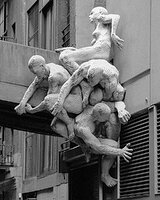
Maris, do you have the same view about other artistic mediums?
 
No photographic image has a sense of presence, rather it has technical qualities that interrogate the sensitivities of the viewer.

Bingo, that's how it works for me. Then I just make a decision...........I dislike it...or...I like it....or......I really like it.......or.......I just love it! Then, I move on.

As for the detachment of the photographic process from the soul of the photographer I think it is more a case of someone with such-and-such a psychological make up inevitably produces pictures with a such-and-such appearance.

I could never verbalize this myself, but I believe it to be true. I've a feeling that I'm going to be more closely psychoanalizing my own prints from now on.
 
Maris, do you have the same view about other artistic mediums?

At the risk of a gross generalisation, yes; that's the art game in a nutshell.
 
Photrio.com contains affiliate links to products. We may receive a commission for purchases made through these links.
To read our full affiliate disclosure statement please click Here.

PHOTRIO PARTNERS EQUALLY FUNDING OUR COMMUNITY:


Ilford ADOX Freestyle Photographic Stearman Press Weldon Color Lab Blue Moon Camera & Machine
Top Bottom

