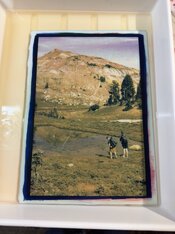
I am posting for open comment a process I'm going to attempt as I have found very little information during background research. I have had great success using the methods described by Simone Simoncini and Kees Brandenburg to replace the Gum Arabic + Ammonium Dichromate process I was using previously, and was able to show my work in my first group shows locally. I found quickly that a I wanted to have more copies of the prints I was making on hand and the amount of time I was spending printing, while fun, was not aligning with the amount of work I am looking to produce.
I began researching and attempting basic lithography, after the darkroom I work out of closed temporarily for flooding, including doing a single stone lithograph by hand and taking a class in Risograph printing.
The ideal process I'm hoping to replicate is a self-applied polymer version of commercially available polymer photolithography plates that can be developed in water and use inexpensive aluminum plates. I plan on using a direct transfer process with a wetted plate.
The testing methodology I've so far come up with is:
1. Confirm the polymer created by exposing the PVAc + SBQ is sufficiently hydrophobic to hold oil based lithography inks.
2. Assess if ball-ground or home wet sanded .015" Aluminum plates can hold enough water without etching for a clear image (commercial polymer plates seem to omit the acid etching step).
3. Assess the permanence of the polymer on the plate, can it be re-inked easily? can the ink be removed without damaging the image?
Before I embark on this process I was hoping for deeper insights on the feasibility of any of these processes, as I'm basically combining optimism and the materials I already have (5kg of semi-finished PVAc-SBQ emulsion) in hopes of reducing the time I spend making prints.
I began researching and attempting basic lithography, after the darkroom I work out of closed temporarily for flooding, including doing a single stone lithograph by hand and taking a class in Risograph printing.
The ideal process I'm hoping to replicate is a self-applied polymer version of commercially available polymer photolithography plates that can be developed in water and use inexpensive aluminum plates. I plan on using a direct transfer process with a wetted plate.
The testing methodology I've so far come up with is:
1. Confirm the polymer created by exposing the PVAc + SBQ is sufficiently hydrophobic to hold oil based lithography inks.
2. Assess if ball-ground or home wet sanded .015" Aluminum plates can hold enough water without etching for a clear image (commercial polymer plates seem to omit the acid etching step).
3. Assess the permanence of the polymer on the plate, can it be re-inked easily? can the ink be removed without damaging the image?
Before I embark on this process I was hoping for deeper insights on the feasibility of any of these processes, as I'm basically combining optimism and the materials I already have (5kg of semi-finished PVAc-SBQ emulsion) in hopes of reducing the time I spend making prints.