
• Welcome to Photrio!
    Registration is fast and free. Join today to unlock search, see fewer ads, and access all forum features.
    Click here to sign up

Your Top 3 Tips for Successful Fine Prints

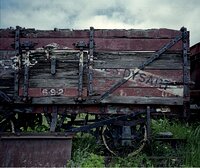
A coal wagon

A
A coal wagon

  • 4
  • 2
  • 32
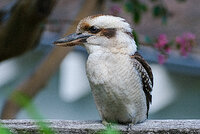
Morning Birdie

D
Morning Birdie

  • 1
  • 2
  • 36

Forum statistics

Threads
203,142
Messages
2,850,479
Members
101,693
Latest member
Liftahorse
Recent bookmarks
0

brian steinberger

Member
Allowing Ads
Joined
Jan 5, 2007
Messages
3,073
Location
Pennsylvania
Format
Med. Format RF
I would like to hear everyone's top 3 tips for successful fine exhibition prints. Sometimes I think there is not as much information about fine printing as there should be on APUG. And we have some very amazing printers here, so let's hear from you!

I'll start:

1. Make sure there is adequate shadow detail in your negatives
2. Deal with dry down in one or two ways, dry your test strips in a microwave, or test for a percentage of dry down based on the paper you use and reduce exposure accordingly.
3. F-stop timing has been a godsend to me. Working in stops makes test strips easier and also when changing enlargement sizes printing maps stay relatively unchanged.
 
Simplicity – Integrity - Belief.
 
1. Take a picture worth trying to print.
 
Practice - honest and brutal self appraisal of the actual print (not your feelings about the print or subject matter) - more practice.
 
1. Put the books back on the shelf and go see real prints in galleries and museums.
2. Work on a negative until you've wrung every bit out of the image. Make multiple versions and then go back and determine which is the best one, and why.
3. Repeat # 2 for many, many negatives.
 
look at your film, and contact sheets, and see if you can distill it down to one thing

make lots of prints and practice/print anything you can

don't change your paper and developer and film, get used to what you have
instead of pulling the rug out from under yourself
 
1. Put the books back on the shelf and go see real prints in galleries and museums.

This is on my list for this year! I still have yet to see a showing of silver gelatin prints. Pathetic I know, but I live a sheltered life in rural america... :smile: And finding when showings are going on seems very hard and frustrating to find information on.
 
1. Find the subject that you are supposed to photograph.

2. Spend a lot of time with your subject, learning how to photograph and print it to express your creative vision.

3. Embrace the philosophy that good enough is not. Let nothing stop you from making the absolute best photograph of which you are capable.
 
1 learn to step back from your print (while printing) and see it with fresh innocent eyes, as if for the first time. So you don't get caught up in tunnel vision of some particular detail.
See it as if it isn't your own.

2 Stay away from the grip of printing contrasty for power. A contrasty print is always louder and seemingly more powerful when comparing a less contrasty print side by side.
Stay in touch with the subtleties and remember a viewer won't see a side by side contrastier comparison.

3 Make the best nearly straight print you can first before making the printing more complicated. Keep the final printing as simple as you can and keep exact countings for dodging and burning, don't try to do it intuitively.
 
1 learn to step back from your print (while printing) and see it with fresh innocent eyes, as if for the first time. So you don't get caught up in tunnel vision of some particular detail.
See it as if it isn't your own.

This is a great tip. Something I have a hard time with. I get so focused and into what I'm doing that it's hard to relax and step back and just take it in as an outsider.
 
Keep it as simple as you can, a headache you will get if there are to many dodge/burn/masking steps.

Keep the area and hands clean, dust and chemicals, leads to stains and spotting.

Learn to adjust use a good grain finder, then use it for everything.
 
If you have a print that you are very happy with, do some extras. Then you can use those extras as references in your darkroom.

If you want, you can even use them wet, to help you compare your current work with the references.

Don't print when you are too tired.

Have fun!
 
Make your print simple, don't over complicate the printing process, and don't print the negative when it is fresh in your mind, leave the negative in the file for a while till you forget the emotion you felt when you took the photograph, that way you come to the print with a fresh mind, I have printed a negative within days of taking it, then come back to it many months afterwards and produced a completely different print, and a much better print.
Richard
 
1) A critical eye and a perfectionist nature are a huge advantage for good printing
2) Perseverence
3) Visits to museums/exhibitions to see real prints
4) A good negative to start with (in terms of both technical quality and content)
 
Last edited by a moderator:
1 You can't make fine prints from bad negatives, so choose one or two films (100 &400) and a developer and learn how to get consistently good negatives.

2 Choose a good paper and developer and again learn how to get the best from them.

3 Show & discuss your work with others who's own work you respect and get feedback, don't work in a total vacuum.

Ian
 
1. Visit galleries and see a wider range of superb prints and see what is really going on. Pay particular attention to how bright the light tones are and how they relate to the shadows (and blacks) in particular. Look at the overall contrast range and how this is impacted by the lightest and darkest area. If you are inexperienced, you might find this quite a surprise.

2. Spend as much money on paper and film as you do new gear

3. Spend more time in the darkroom than you do on the internet.

P.S. I am failing miserably on #3 right now, but will reverse the situation in a month!
 
1. make a fine negative
2. make a fine negative
3. make a fine negative

It just makes the job of printing to your expectations so damn much easier.
 
For 35mm and 120 users, making fine negatives is not always possible due to inevitable compromises that are made at the time of exposure and development.

... and poor negatives make for a skilful printer who will really sing when dealing with good negs!


1. make a fine negative
2. make a fine negative
3. make a fine negative

It just makes the job of printing to your expectations so damn much easier.
 
For 35mm and 120 users, making fine negatives is not always possible due to inevitable compromises that are made at the time of exposure and development.

... and poor negatives make for a skilful printer who will really sing when dealing with good negs!

That is just plain bad info.

Making a fine negative is a choice regardless of the film format. We don't have to compromise, we can choose to sacrifice the majority of a roll to get that fine negative anytime we feel like it. We can run whole rolls in each lighting setup. There are lots of ways to get fine negatives from roll film.

As to printing bad negatives making me a better printer, IMO, only in the sense that I learn how to shoot better next time.
 
I respectfully disagree. I suspect you are used to shooting under somewhat more controlled conditions than some, both circumstantially and with respect to time. Making a 'fine negative' is very often not remotely as achievable as you suggest for documentary/reportage photographers. Certainly when you return home with 90 rolls of film, some shot with considerable speed, in wildly varying lighting, what you suggest becomes a little tricky. Remembering precisely what is on each roll is tricky enough and the time to take a variety of reading and record that info is rare. Besides, sacrificing most of the negs for one suggests you know the relative value of every frame on a roll and that's pure fantasy unless you are used to shooting under very controlled circumstances and, even then, I would not consider such presumption wise. It suggests you know everything in advance of seeing the results and, while that might be largely true for LF photographers, or those shooting controlled work off a tripod, it is not the case for street/documentary/reportage when 'by the seat of your pants' sometimes best describes the experience.

I came from LF to smaller formats and wanted to think as you do, but had to decide whether I was interested primarily in 'great photographs' or 'technically great prints'. Whilst occasionally you know you nailed a great frame or two amidst a roll of much weaker images and will nudge development in their favour, it can be extremely foolhardy to mentally edit your images ahead of seeing them in the flesh. I should add that the negatives of many great street/docu/reportage photographers suggest they made the same compromise: pictorial considerations before technical perfection. That means editing after you have developed them and making decisions from there.

If a person follows your advice, they are putting technical considerations and blind assumptions ahead of pictorial factors and I would not recommend that. It also leaves no room for experimentation and pushing the envelope. After all, if you know exactly what all your frames look like, you are surely playing it safe. Your last line is interesting. It suggests you have not had to overcome any deficiencies in your negatives i.e. they are all perfect. Even AA admitted to having to work hard with imperfect negs (and presumably learnt to be a better printer from the experience).


That is just plain bad info.

Making a fine negative is a choice regardless of the film format. We don't have to compromise, we can choose to sacrifice the majority of a roll to get that fine negative anytime we feel like it. We can run whole rolls in each lighting setup. There are lots of ways to get fine negatives from roll film.

As to printing bad negatives making me a better printer, IMO, only in the sense that I learn how to shoot better next time.
 
Last edited by a moderator:
(0) Is the neg really worth printing? Assuming it is...

(1) First find out what is in the neg- understand its contrast index and what detail is where on the curve. To do this, I make a matrix of exposure and contrast on multigrade paper or just make some contacts in a bunch of different ways.

(2) Form a strategy: based on the results of (1), decide whether you can print to graded, or multigrade paper, whether you'll need split grade, how to dodge and burn, whether to bleach or whatever.

(3) Print it to matte fiber!!!!! <---okay this is personal :wink:
 
My point Tom, respectfully also, is simply that it is a choice.

Yes it is a question of what qualities we need to do our job. It is also a question of materials that we choose and as you point out subject matter.

If our subject matter is reportage and we expose to peg the midtones we can have a "fine" negative over a fairly wide placement range on many films.

Landscapers and fine art shooters typically have a different definition of fine. People shooting Pan F have a different view than those shooting TX.

I have done the 3000 shot weekends covering weddings and I still belive that in all cases, getting a "fine" negative is our choice.

Simply put, will we do what it takes or take what we get?
 
That is just plain bad info.

Making a fine negative is a choice regardless of the film format. We don't have to compromise, we can choose to sacrifice the majority of a roll to get that fine negative anytime we feel like it. We can run whole rolls in each lighting setup. There are lots of ways to get fine negatives from roll film.

As to printing bad negatives making me a better printer, IMO, only in the sense that I learn how to shoot better next time.


hi mark

i totally believe that if you can print bad negatives, you will become a better printer. the best way i learned how to print
was by printing bad negatives, and printing things that weren't supposed to be printed
because if you can print something that is bad, you will always be able to print something that is good.

it boils down to practice, and knowing your materials ...
 
Photrio.com contains affiliate links to products. We may receive a commission for purchases made through these links.
To read our full affiliate disclosure statement please click Here.

PHOTRIO PARTNERS EQUALLY FUNDING OUR COMMUNITY:


Ilford ADOX Freestyle Photographic Stearman Press Weldon Color Lab Blue Moon Camera & Machine
Top Bottom
