
• Welcome to Photrio!
    Registration is fast and free. Join today to unlock search, see fewer ads, and access all forum features.
    Click here to sign up

Why this difference in Paper size (12x16 vs 11x14)?

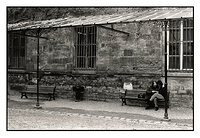
Amour - Paris

A
Amour - Paris

  • 0
  • 0
  • 37
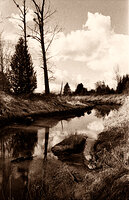
Bend in the river

H
Bend in the river

  • 2
  • 0
  • 55

Recent Classifieds

Forum statistics

Threads
203,235
Messages
2,851,836
Members
101,738
Latest member
parkeradam
Recent bookmarks
2
Ha!

The English system is based on multiples of 2 and 3, which include 12 and 16: dozens of eggs, 16ths of an inch ... A very useful system from a practical viewpoint.
This is the great and often overlooked practical advantage of Imperial measure. I've lost count of the number of times I've come across a recipe that's called for 910gm flour, 55gm sugar, or whatever, recipe amounts that are clearly taken from Imperial values and just converted. The great thing about pounds being sixteen ounces is that you can repeatedly halve them and still have nice integer numbers to deal with, right down to an ounce being sixteen drams. Ideal for recipes because so often you need to halve things or double them up. Sure, the scheme breaks down a little when you get to fourteen pounds in a stone and so on, but on the whole, the practical value is higher of manipulating twos and threes instead of hundreds.

Base 10's only saving grace is that it suits people who can only count on their fingers.
Metric makes it easy to calculate very large and very small numbers, that's the primary advantage. There's an old rule of thumb about using the 'right' unit for approximation purposes and rounding. So when you talk about a length of 'about 15 inches', you can expect the value to be in the range 14.5 to 15.5. You wouldn't give the distance to the Moon in inches, since this would have an implied accuracy of +/- 0.5 in. A recipe calling for 910gm implies an accuracy of +/- 0.5gm (though in practice nobody would would bother with that level of precision). I quite often see recipes with dry ingredients listed in grams, and liquid ingredients in fluid ounces or parts of a pint. (Fortunately, not developer recipes.)
 
All this discussion about imperial vs metric is really (12x12):wink:
 
12x16 prints look good on a 20x24 mat:smile:
 
The old thread in the enlarging forum concludes the correct formula for exposure compensation when changing print size relates to the change in the magnification. The amount of exposure change required depends on the size of the negative.

The formula is ((M + 1)/(m + 1)) ^ 2, where M is the new magnification and m is the old.

When computing this for various negative and print sizes:

PrintSizeXCor.jpg


It seems the old "one stop per paper size" adage isn't very accurate. Although 0.5 stop may not seem like that great an error, it is an entire print Zone in tone. Certainly nobody will argue that a 14 second print looks quite different from a 10 second print ...

I didn't understand the chart until Ian explained it.

It seems that the old one-stop-per-paper-size rule only approximately works for 35mm negatives.

Thanks for clarifying this.
 
Photrio.com contains affiliate links to products. We may receive a commission for purchases made through these links.
To read our full affiliate disclosure statement please click Here.

PHOTRIO PARTNERS EQUALLY FUNDING OUR COMMUNITY:


Ilford ADOX Freestyle Photographic Stearman Press Weldon Color Lab Blue Moon Camera & Machine
Top Bottom
