• Welcome to Photrio!
    Registration is fast and free. Join today to unlock search, see fewer ads, and access all forum features.
    Click here to sign up

"white dots" problem with Efke Ir820c film

Amour - Paris

A
Amour - Paris

  • 0
  • 0
  • 24
Bend in the river

H
Bend in the river

  • 1
  • 0
  • 42

Recent Classifieds

Forum statistics

Threads
203,229
Messages
2,851,784
Members
101,737
Latest member
Altamira
Recent bookmarks
0

Usagi

Member
Allowing Ads
Joined
Apr 17, 2007
Messages
362
Location
Turku, Finla
Format
Multi Format
Hi,

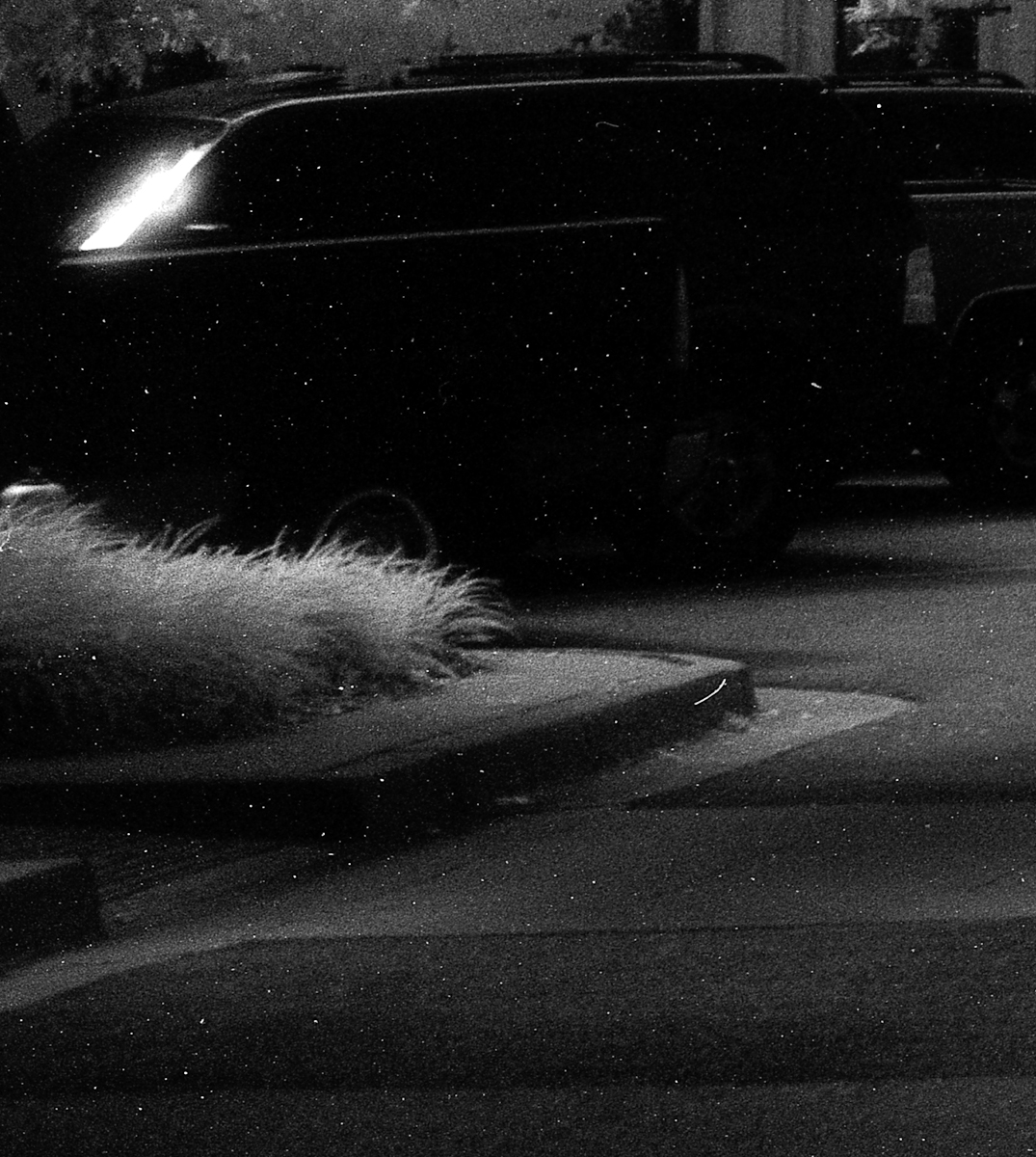
recenctly I got really weird results with Efke Ir820c film, 120-size. The whole roll is full of really small dots. On print and scan, they appear white, so they can be kind of failure on the emulsion or as also suggested, dust.

However I have never seen so small dust particles in my negatives.

All other rolls I developed in same evening are fine, it's just this film.

Any educated guess what this could be?


The attachment has full frame, without IR filter (I can see also that there's some uneven development and two similar scratches running along the side of whole film).


Here's also links to the crops of scan (2400dpi).
From the version without IR filter: http://jukkavuokko.com/linkatut/apug/2009-49-07 after cleaning crop.jpg

With IR filter: http://jukkavuokko.com/linkatut/apug/2009-49-08 ir-filtered after clean crop.jpg

 

Attachments

  • 2009-49-07 after cleaning.jpg
    2009-49-07 after cleaning.jpg
    131.8 KB · Views: 237
  • Deleted member 2924
  • Deleted
Wow, I got the exact same problem. Initially thought it was dust, cleaned the negative immaculately, and it never went away. Can't recall if I used super fresh film, and kept it constantly refrigerated after shooting though.
 
It seems to be really lo-fi product :sad:
Althought Efke has some good products also (at least I am very satisfied with ADOX CHS 100 Art, which is manufactured by Efke, I believe).

The problem is that after HIE is gone, there is only one IR film that is somewhat similar - Efke ir820c and especially it's 'aura' version.
Maco (Rollei) has way better speed but lacks halo effect and it's IR sensivity is more limited.

I wanted to test efke especially because it is available also at sheet film sizes.

BTW: How is the Rollei/Maco IR-film, does it have that @»¡!!!$$ PET base like many roll and 35mm films does?
 
We are stuck at the same problem: crap emulsion quality control (imho).
Why burn money on such lo-fi products?

'Cause there's no similar alternative?

I haven't had this particular problem, but it seems clear that Efke's quality control is open to some question. (I recall someone who should know describing their coating equipment as "museum-like", I believe.) On the other hand, they seem to be the only ones making an 820-nm IR film now---and in my opinion it's an excellent film, when problems don't arise.

So far either my luck has been good or my standards have been low, and I'm willing to take the chance---but I'm pretty tolerant of unexpected results, because I'm just doing this for fun anyway. If I were trying to do professional work with this film, reports of emulsion problems would worry me a lot more.

-NT
 
  • Deleted member 2924
  • Deleted
'Cause there's no similar alternative?

I haven't had this particular problem, but it seems clear that Efke's quality control is open to some question. (I recall someone who should know describing their coating equipment as "museum-like", I believe.) On the other hand, they seem to be the only ones making an 820-nm IR film now---and in my opinion it's an excellent film, when problems don't arise.

So far either my luck has been good or my standards have been low, and I'm willing to take the chance---but I'm pretty tolerant of unexpected results, because I'm just doing this for fun anyway. If I were trying to do professional work with this film, reports of emulsion problems would worry me a lot more.

-NT

Quality control is quality control, just because a piece of machinery is old, doesn't mean it can't work perfectly well, it just needs proper maintenance and quality control checks. I think one of the issues here is that those of us who are used to the excellent quality control of Kodak, Ilford and Fujifilm are a little spoiled. Efke is made in a former Eastern Bloc country, so people there probably are used to a few flecks in their emulsions, and less then perfect quality control.

At least these days people have options, you can buy excellent quality films from Fujifilm, Ilford and Kodak, but you have to pay a premium for that quality, or you can get Eastern Bloc films that are much cheaper, but a lower quality as well. I don't shoot that much film these days, so I can afford to buy better films, but I often think, if I had access to these films, 30 years ago, when I was just starting out, as a poor student, it would have been nice.
 
If you want to diagnose this problem, take a small snip of raw film and fix it, then wash and dry. If you see light spots on a "print" of this otherwise clear film, then the problem was most likely dust or some other contaminant in the emulsion before coating. If the film is clear with no spots, then the emulsion itself produced the spots by forming pepper grain. This is a defect that arises when making the emulsion. It has a variety of sources.

So, there might be either one or both of two problems that I can see.

PE
 
I shot a roll of it two weekends ago. I had the same problem. The spots one neg were so much, there is no way to fix it. I soup it in Diafine. None of the other 4 or 5 rolls I developed that week had any issues at all. I thought it was dust also, but this makes it unuseable. Odd thing is, other negs on the roll are ok.

3757199710_eb191c20ec_b.jpg

Look at the lower left of the image.

3757199430_7e35f96a9a_b.jpg

very next frame (maybe the one before). a few spots here and there, but not an issue at all.

There was one frame 10x as bad the first one posted here.

Jason
 
Quality control is quality control, just because a piece of machinery is old, doesn't mean it can't work perfectly well, it just needs proper maintenance and quality control checks. I think one of the issues here is that those of us who are used to the excellent quality control of Kodak, Ilford and Fujifilm are a little spoiled. Efke is made in a former Eastern Bloc country, so people there probably are used to a few flecks in their emulsions, and less then perfect quality control.

At least these days people have options, you can buy excellent quality films from Fujifilm, Ilford and Kodak, but you have to pay a premium for that quality, or you can get Eastern Bloc films that are much cheaper, but a lower quality as well. I don't shoot that much film these days, so I can afford to buy better films, but I often think, if I had access to these films, 30 years ago, when I was just starting out, as a poor student, it would have been nice.


The only problem I see with your logic here, is that I don't find Efke to be cheap in price. IR820 is right at $10 a roll. The rest about $5 and roll. Even the best Kodak and Ilford cost less. They just don't have the same look. I like their(Efke) 50 and 25 asa film and while they can have issues to, I have not seen anything like what I see in the IR stuff. But then agian I don't shoot it that much. Maybe the new AURA will be better in this reguard. I wonder if there is something unique to the IR emultion to cause this. Is that possible PE?

I also had the million tiny little scratches all over the negs, but they I can put up with.

Jason
 
If you want to diagnose this problem, take a small snip of raw film and fix it, then wash and dry. If you see light spots on a "print" of this otherwise clear film, then the problem was most likely dust or some other contaminant in the emulsion before coating. If the film is clear with no spots, then the emulsion itself produced the spots by forming pepper grain. This is a defect that arises when making the emulsion. It has a variety of sources.


Thanks PE, I'll do that test!
 
The only problem I see with your logic here, is that I don't find Efke to be cheap in price. IR820 is right at $10 a roll. The rest about $5 and roll. Even the best Kodak and Ilford cost less. They just don't have the same look. I like their(Efke) 50 and 25 asa film and while they can have issues to, I have not seen anything like what I see in the IR stuff. But then agian I don't shoot it that much. Maybe the new AURA will be better in this reguard. I wonder if there is something unique to the IR emultion to cause this. Is that possible PE?

I also had the million tiny little scratches all over the negs, but they I can put up with.

Jason

Unfortunately, cheap products don't always have cheap price tags, it depends on where you live though, a film can be $1 in one place and $10 in another depending on the supply vs. demand, and what a particular market will bare price wise.
 
Thanks PE, I'll do that test!

I would be interested in the result. This will help me answer Jason's question.

If it is dust and dirt in the emulsion prior to coating, it could be that they omitted the filtration step that is intended to get rid of all particulates larger than about 100,000 Daltons or maybe 10 microns.

If it is pepper grain, then something went wrong with the making stage of the emulsion such as a bad batch of gelatin, too little gelatin, or a variety of other things related to the precipitation stage.

And, IDK if this is related to the IR emulsion or not, but others seem to have reported this with other EFKE products. I cannot and will not judge, all I can do is comment after the fact.

PE
 
Thanks Ron. Your knowlege and experience is greatly appreciated.

Jason
 
Here's the result.
The clear, fixed test shows also dots, not in same form than my previous film but they're there and lots of them.

Looks like an astronomical photograph.

Attachment is 2200dpi crop. There's some dust clearly and lot of those dots.
 

Attachments

  • only-fix-and-wash.jpg
    only-fix-and-wash.jpg
    146.5 KB · Views: 161
Here's the result.
The clear, fixed test shows also dots, not in same form than my previous film but they're there and lots of them.

Looks like an astronomical photograph.

Attachment is 2200dpi crop. There's some dust clearly and lot of those dots.


Seems like I have seen that before :mad:


100% crops from film shot two weekends ago.

3779615044_9609157918_o.jpg


3778808689_c3bf4fc9c0_o.jpg


Still have a roll in the freezer.
 
Ok, this looks like severe dust and particulate matter in the emulsin just before coating. It could have been eliminated by simple filtration with the right filter. Probably someting as coarse as a cheap gold coffee filter would do the job. I have samples of my own coatings with and without filtration that look like good and bad comparisons of the above.

That is my guess right now. If true, this is a simple procedure that is being overlooked that could save a lot of customer dissatisfaction. If it were the pepper grain, that would be much harder to detect, but not impossible. Well, I guess you are trapped unless someone else makes IR emulsions. I am very sorry to see this happen.

PE
 
Hey folks, what are the batch numbers on your rolls? And expiration dates? I have some of this stuff in the freezer and I'm hoping its not the same stuff.
thanks
 
I am very sorry to see this happen.

PE

Yes, me too. Great product other wise and now just seems a waste.

Wildbill,

Mine is/was 2/2009. Apparently the last run before AURA went into production as every one I know of has only offered film with this date for some time. Still waiting for AURA 120 to come out.

To add insult to injury, I just bought a Cokin P007 IR filter for $50 USD.

Jason
 
Emulsion number 710525, exp 6/09 (been in freezer, so it should not be issue that it's expired month ago).
Still have couple of rolls and packet of sheet film is somewhere on route to my home (ordered it about two weeks ago).
 
Last edited by a moderator:
  • Deleted member 2924
  • Deleted
I had this problem with the non Aura version of the film and was a a pain. To minimise it I used to wash the film in the tank by filling it with water and emtying it at least 5 times till all the dye had fully gone, water at 20 degrees C all the time.

I am using the 120 version of the Aura film now and the film does not have this problem anymore. The Aura version of the film seems to give less problems. I do get some very small black holes or small black lines on my prints on the odd frame but thats it. The Aura version of the film has quality problems too but not as much as the non Aura version

M
 
I'm riding my bike in the middle of no-where yesterday and it hits me.... the stop bath is too strong. I had the same problem years ago and it was caused by too strong a stop bath.

Where you using a stop bath.... could you try a roll with a water rinse instead.

-Rob
 
I shot a roll of it two weekends ago. I had the same problem. The spots one neg were so much, there is no way to fix it. I soup it in Diafine. None of the other 4 or 5 rolls I developed that week had any issues at all. I thought it was dust also, but this makes it unuseable. Odd thing is, other negs on the roll are ok.

3757199710_eb191c20ec_b.jpg

Look at the lower left of the image.

3757199430_7e35f96a9a_b.jpg

very next frame (maybe the one before). a few spots here and there, but not an issue at all.

There was one frame 10x as bad the first one posted here.

Jason

Jason I can't help with your problem but I do like your photo. The composition is just great. Hope you solve it soon.

Cheers
Tex
 
I'm riding my bike in the middle of no-where yesterday and it hits me.... the stop bath is too strong. I had the same problem years ago and it was caused by too strong a stop bath.

Where you using a stop bath.... could you try a roll with a water rinse instead.

-Rob

Rob;

Stop bath does not cause this type of problem. It looks totally different.

In addition, the film would have to be so poorly hardened, that you would notice it, and you would have to be using a carbonate based developer.

PE
 
Photrio.com contains affiliate links to products. We may receive a commission for purchases made through these links.
To read our full affiliate disclosure statement please click Here.

PHOTRIO PARTNERS EQUALLY FUNDING OUR COMMUNITY:


Ilford ADOX Freestyle Photographic Stearman Press Weldon Color Lab Blue Moon Camera & Machine
Top Bottom