• Welcome to Photrio!
    Registration is fast and free. Join today to unlock search, see fewer ads, and access all forum features.
    Click here to sign up

What happened with this development?

Mackenzies Pocket

A
Mackenzies Pocket

  • 2
  • 0
  • 17
Flush

H
Flush

  • 2
  • 0
  • 24

Recent Classifieds

Forum statistics

Threads
202,910
Messages
2,847,425
Members
101,529
Latest member
Abjayan
Recent bookmarks
0

Photopathe

Member
Allowing Ads
Joined
Dec 9, 2017
Messages
164
Location
Montréal
Format
Medium Format
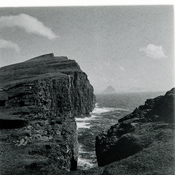
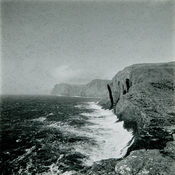
I just got this defect on the image after developing. I used Xtol 1+1. The thing is that other films from the same batch of Xtol (same method) came out perfect. Gives me the impression that it's related to development but can it be the film ? Otherwise for me it's difficult to explain. And if it's the film, does one know what can be the source of the problem. It's not old film and it's from a good brand (Rollei).
 

Attachments

  • DSCF7107.jpg
    DSCF7107.jpg
    443.4 KB · Views: 177
  • DSCF7110.jpg
    DSCF7110.jpg
    327.5 KB · Views: 165
  • DSCF7123.jpg
    DSCF7123.jpg
    400.9 KB · Views: 166
Usually this is due to an interaction between the backing paper on 120 film and the emulsion. The problem is often exacerbated by moisture and heat. Especially storage conditions and time before the film is processed, but after the roll has been taken from its foil wrapper are factors to consider.

It's not old film and it's from a good brand (Rollei).
Years ago I had this exact problem with Rollei Retro 80S. Not that it matters - it's a long time ago.
 
I just got this defect on the image after developing. I used Xtol 1+1. The thing is that other films from the same batch of Xtol (same method) came out perfect. Gives me the impression that it's related to development but can it be the film ? Otherwise for me it's difficult to explain. And if it's the film, does one know what can be the source of the problem. It's not old film and it's from a good brand (Rollei).


What format is this? 120 ? If so, looks a lot like mottling from the backing paper.
 
I agree with the others as to what it is. I also don't rate Rollei in the "good brands" in terms of quality control... those are Ilford, Fuji, and Kodak. And even with them, you can occasionally get problems like this.

That being said, I think the images are still quite good, especially the first one, which I would definitely still want to use/print.
 
This is on Aviphot 200, which is the same stuff as 3 films Rollei sells. I found that when I used a red filter, the problem got very intense, and when I didn't, it was barely noticable. Not sure why. Maybe an exposure difference.

54097097672_d5af2f6fd5_k.jpg
 
Ok thanks! It's good to know what it is and that it's not something I did during development. Will stop buying Rollei film, at least for a while to see if it happens again. Indeed it never happened to me so far with my Ilford films. It did happen once with Tmax 400 tough.

What about Foma? Is it a brand to avoid in medium format in that respect?
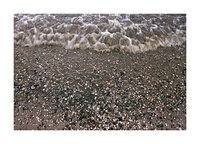
Also I would like to ask about this defect, the dark dots. Same problem?

Many thanks!
 

Attachments

  • Îles du nord 2025, 043.jpeg
    Îles du nord 2025, 043.jpeg
    49.9 KB · Views: 87
  • Îles du nord 2025, 044.jpeg
    Îles du nord 2025, 044.jpeg
    50.2 KB · Views: 79
What about Foma? Is it a brand to avoid in medium format in that respect?
Only their Fomapan 200 film is problematic in a similar way. The 100 and 400 are OK QA-wise.

Also I would like to ask about this defect, the dark dots. Same problem?

That looks like a different kind of defect, but the images are too small to make out what's going on exactly - and even with bigger images it may not be possible to figure out exactly what happened there.
 
Since it is 120, it is likely backing paper issue that has been popping up over the past decade.

FWIW, wrapper offset issues have been encountered for as long as there have been films with backing paper.
It isn't totally clear what has made them seem to be more prevalent - changes in film components and technology, changes in the paper industry, changes in the printing industry, changes in distribution and retail, changes in use patterns, the availability of the internet to share experiences.
It probably is some combination of all.
But I like to blame the internet :smile:
 
Only their Fomapan 200 film is problematic in a similar way. The 100 and 400 are OK QA-wise.


That looks like a different kind of defect, but the images are too small to make out what's going on exactly - and even with bigger images it may not be possible to figure out exactly what happened there.

Here is a larger version if it can help. Not able to make it larger with the 2m limitation here. Thanks!
 

Attachments

  • Îles du nord 2025, 043.jpg
    Îles du nord 2025, 043.jpg
    1.8 MB · Views: 79
FWIW, wrapper offset issues have been encountered for as long as there have been films with backing paper.
It isn't totally clear what has made them seem to be more prevalent - changes in film components and technology, changes in the paper industry, changes in the printing industry, changes in distribution and retail, changes in use patterns, the availability of the internet to share experiences.
It probably is some combination of all.
But I like to blame the internet :smile:

Definitely the internet!
 
One thing that can cause bubbles is residual wetting agent left on the tank or reels. But in a Paterson tank & reels with 120 film, those will usually be on the image border, not near the center like yours are. I've almost never gotten bubbles in the center of images, maybe it's your agitation method. The film type shouldn't be a big factor in whether you get bubbles.
 
I have seen something similar to your first example on old Lomo "lady grey" 120 film. I have also seen it on Rollei Retro 80s 120, albeit much less intense. I figured it was some sort of degradation of the emulsion.

Your second example looks like air bells, which I have seen in the middle on my last 3 or so frames at the end of the roll. That was on 35mm, though.
 
Thanks! Are some emulsions, some film types, more susceptible to this?
Not particularly. Foaming can be a problem with remnants of wetting agent, but this tends to manifest really as foam and larger bubbles. Such tiny bubbles probably arise from pretty complex interactions on the film surface as it's being wetted. I sometimes get them on my carbon tissue (which is a gelatin emulsion as well), in particular if I dunk a tissue into the water, immediately lift it up and then let it fall back again. For some reason this often causes small bubbles that turn out to be very, very persistent.

Overall I wouldn't worry too much about this; generally it can be avoided just fine with sufficient agitation during the initial phase of development as well as the often-advised tapping of the tank on the countertop.
 
Photrio.com contains affiliate links to products. We may receive a commission for purchases made through these links.
To read our full affiliate disclosure statement please click Here.

PHOTRIO PARTNERS EQUALLY FUNDING OUR COMMUNITY:


Ilford ADOX Freestyle Photographic Stearman Press Weldon Color Lab Blue Moon Camera & Machine
Top Bottom