• Welcome to Photrio!
    Registration is fast and free. Join today to unlock search, see fewer ads, and access all forum features.
    Click here to sign up

What causes photos to look like this?

Recent Classifieds

Forum statistics

Threads
202,034
Messages
2,834,147
Members
101,082
Latest member
lena_h
Recent bookmarks
0

tron_

Member
Allowing Ads
Joined
Dec 25, 2011
Messages
412
Location
Michigan
Format
Multi Format
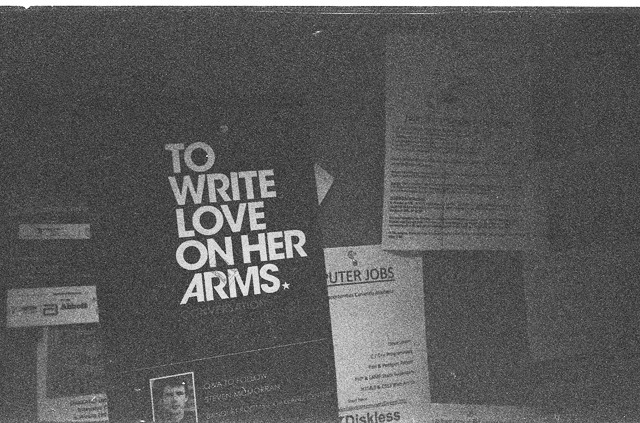
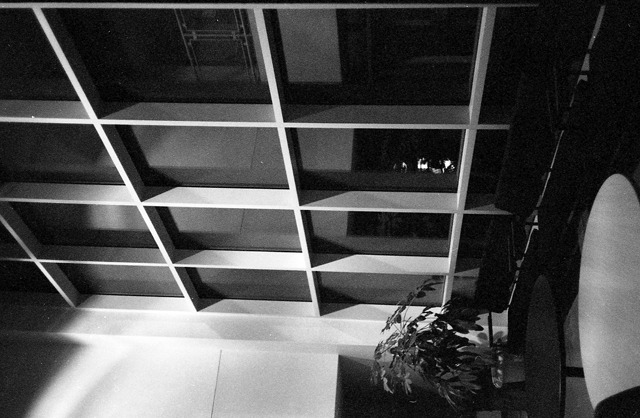
So I shot some really old Kodak BW400CN in my Olympus 35RC on Monday. I don't know when the film expired but judging by the cassette label, it was pretty old (12 exposure, had the old label). I figured why not, might as well give it a try.

I was pretty interested to see that some frames looked normal whereas others had a REALLY grainy and low contrast look to them.

So what most likely caused some of my frames to turn out like this?
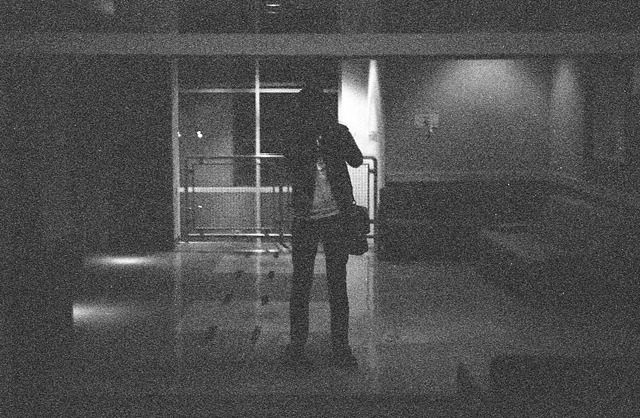
tumblr_mbcf1j327g1rw5bhpo3_r2_1280.jpg


tumblr_mbcf1j327g1rw5bhpo4_1280.jpg


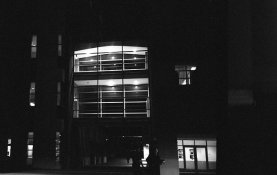
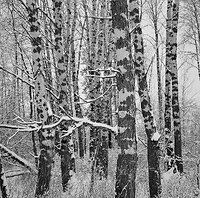
While others turned out like this (more normal):
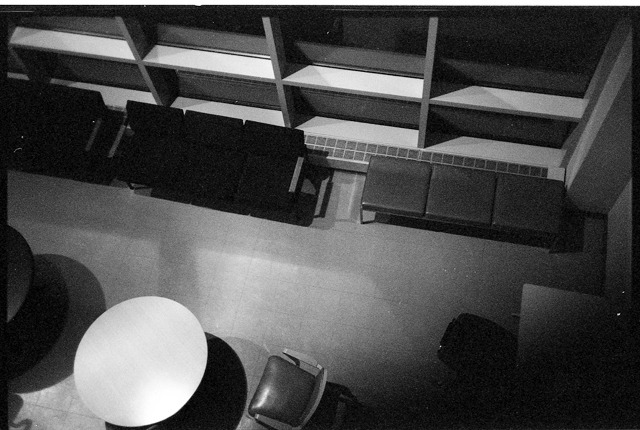
tumblr_mbcf1j327g1rw5bhpo2_1280.jpg


tumblr_mbcf1j327g1rw5bhpo1_1280.jpg
 

ajs77306

Member
Allowing Ads
Joined
Jul 23, 2012
Messages
12
Format
35mm
My response is also "exposure". I've had this occur before when shooting in low-light situations, with fresh film. Would this have happened to you if you had been shooting outdoors in indirect bright natural light? Would it have happened to you if you would have been using a faster lens? I don't think it would have.
 

ic-racer

Member
Joined
Feb 25, 2007
Messages
16,748
Location
USA
Format
Multi Format
You have underexposed the negatives. Try printing the first two with a higher grade paper.
 

pdeeh

Member
Allowing Ads
Joined
Jun 8, 2012
Messages
4,770
Location
UK
Format
Multi Format
Was this roll processed in B&W chemicals by any chance? (BW400CN is a C41 film)
as well as any underexposure, that might account for some of the low contrast and large grain of this otherwise rather nice film.
 
Last edited by a moderator:

mike-o

Member
Allowing Ads
Joined
May 29, 2005
Messages
45
Format
4x5 Format
My initial thought was exposure.
 

markbarendt

Member
Allowing Ads
Joined
May 18, 2008
Messages
9,422
Location
Beaverton, OR
Format
Multi Format
Yep, first two are under exposed.

I'm going to guess you we're you using the camera's meter to set/find exposure. Camera meters are notoriously easy to fool.

In the first shot the white light behind the subject (you?) probably tricked the camera, the second shot maybe the lettering. Shots three and four the meter happened to find good areas to work with.

All four though are probably the luck of the draw, all 4 could have easily gone the other way with a slight change in composition or your luck.

With all reflective meters, handheld or camera based, you have to figure out what the meter is telling you first then decide if that's right for the shot of if it needs an offset to get past the luck of the draw. Even the fancy metering system in a Nikon F6 can get fooled.

This doesn't mean you can't get usable readings with your Olympus, just that you have to take what it's telling you with a grain of salt.
 
OP
OP

tron_

Member
Allowing Ads
Joined
Dec 25, 2011
Messages
412
Location
Michigan
Format
Multi Format
Thanks for the replies, I appreciate it! As far as the meter used to shoot these, I didn't use the camera meter since I have not had a chance to rig up a Schottkey diode to get the correct 1.35V (I think it was 1.35V, I'll have to double check).

I had an Olympus 35RC that met an untimely end so I bought this beat up one off the big auction site and plan on restoring it. So these are just test shots to make sure everything is in working order.

Long story short, the meter I used was my brain. Apparently that is pretty easy to fool :whistling:

What is strange is that I have underexposed a couple frames I shot on the last roll I used in this camera (fresh roll of BW400CN) and the shots did not turn out like this. Here is an example of what an underexposed shot looked like off my last roll:

8037754038_9db5808a7a_z.jpg
 

summicron1

Subscriber
Allowing Ads
Joined
Jul 28, 2010
Messages
2,921
Location
Ogden, Utah
Format
Multi Format
the films have various sized grains and it is the larger that are more sensitive -- when you underexpose they are more prominent ... as to your last frame -- you may have underexposed, but the print/scan is to get t he light parts correct -- if you were to try to scan just the dark areas you would see this as well.

most color films do that, in my experience -- when the lab tries to print a shot where the flash doesn't go off on my snap shots the result also looks like this, grainy and yucky.
 

markbarendt

Member
Allowing Ads
Joined
May 18, 2008
Messages
9,422
Location
Beaverton, OR
Format
Multi Format
Fresh film is a good thing and can help but its not a guarantee.

You may need to re-think how you are defining underexposure.

True underexposure is where you have lost real detail and can't easily print what you want, like the first two examples you provided.

If you got all the info you needed on the negative, like in post 9, you did not underexpose.
 

Worker 11811

Member
Allowing Ads
Joined
Jan 18, 2010
Messages
1,719
Location
Pennsylvania
Format
Multi Format
I assume that you shot these photos somewhere on a college/university campus. Presumably in a common area of a dorm, a library or the student union?

I absolutely agree that low light and under exposure are the root cause of the problem but, further, I might add that most public areas in college buildings have icky light for photography. Usually fluorescent and/or indirect incandescent which often produces flat, lifeless and difficult to expose lighting conditions.

The human eye quickly adjusts to those conditions but cameras don't. Consequently, you have to be more conscious of the light you are shooting under when you go from one lighting condition to another, especially when shooting indoors.

For example, the first two shots probably came out crummy because you were in the middle of a room where there was little or no direct light. Only diffuse, room light. In the second two shots you seemed to be near a window or under a light fixture which gave you better, more direct light.

Bottom line: Learn to watch your light and use that to achieve the picture you want.

I don't know how many times I have been sizing up a picture and passed on it because the light wasn't what I wanted.
People often look confused when I tell them, "I don't like the light."
 

batwister

Member
Allowing Ads
Joined
Sep 4, 2010
Messages
913
Location
Midlands, UK
Format
Medium Format
The photographer.
 

kevs

Member
Allowing Ads
Joined
Aug 21, 2006
Messages
711
Location
North of Pangolin
Format
Multi Format
The lab's automatic printing machine compensated for thin negatives by giving too little exposure to the paper to give good blacks, thus showing up the grain. Machines are stoopid - if you want the low key look, print them so the shadows are black, not a dull grey.
 

ic-racer

Member
Joined
Feb 25, 2007
Messages
16,748
Location
USA
Format
Multi Format
Here is an example of what an underexposed shot looked like off my last roll:

View attachment 58034

Ok, I'll quantify it. The negatives from the first photographs presented in the original post are SEVERELY underexposed. If you post a scan of the negatives it will be much more clear (pun intended :smile:).
 

MattKing

Moderator
Moderator
Joined
Apr 24, 2005
Messages
55,333
Location
Delta, BC Canada
Format
Medium Format
Underexposure, plus the effects of trying to adjust for it through the adjustments available to those who print or scan.

The OP is seeing variations in the results because the adjustments vary.
 
Photrio.com contains affiliate links to products. We may receive a commission for purchases made through these links.
To read our full affiliate disclosure statement please click Here.

PHOTRIO PARTNERS EQUALLY FUNDING OUR COMMUNITY:


Ilford ADOX Freestyle Photographic Stearman Press Weldon Color Lab Blue Moon Camera & Machine
Top Bottom