


I have what I consider to be a pretty ideal collection of lenses (at least for the type of shooting I do): Mostly Nikkor primes, but also a couple of Voigtländers. I had always lusted over the 180/4 APO-Lanthar, and I eventually found one in excellent in-box condition, including the relatively rare hood, and all for about what it went for new back in the day. This lens became my third 180mm lens (I both the Nikkor AF-D and AiS f/2.8 versions), but after using it extensively, the Voigtländer has become my "only" 180mm lens. I thought as part of introducing myself to this forum, I would give a mini-review of this rarely seen lens.
The "biggest" thing about this lens is how incredibly small it is for a 180mm lens: In fact it is only 2mm wider and 1mm longer than the AiS 105/2.5, and weighs only 50g more. It takes 49mm filters rather than the Nikon standard 52mm. It is, perhaps not surprisingly, both shorter and lighter than the AiS 200/4. Compared to the f/2.8 180's, the Voigtländer is a LOT easier to carry around.
My three lenses for many years were the AiS 24/2, 105/2.5, and 180/2.8 Nikkors, but looking back I would say my approximate usage ratio with these lenses was 75% / 20% / 5% respectively, and the reason for light usage of the 180/2.8 was the size/weight and difficulty of nailing focus a f/2.8. That's why I was considering the Voigtländer as it would be pretty indistinguishable from the 105/2.5 size/weight so I'd be more willing to carry it around. But how is it to focus? Lots of people (including Bjørn Rørslett) have complained that long-distance/infinity focus is challenging with the Voigtländer. It's true that the focus ring is weighted to the closer distances (the lens goes to 1:4 at 1.2m, and has 350 degree focus throw), but I didn't find it difficult to adjust near infinity (which for this lens is over a kilometre away, so not just a telephone pole across the road!).
Mechanically, the lens is excellent, very solid feel, with a nicely damped focus (though some have complained the focus grip is a bit narrow which seems like carping to me). I have read that the focus-damping will loosen up with use, but mine is just perfect right now. It has half-stop detents on most of the apertures, and the ring is much higher quality than my MF Nikkors. I did find the lack of anywhere to grip the lens when mounting it a bit problematic (you are best to grip the aperture ring).
One of the noted downsides with this lens is the propensity for flare/ghosting in strong side-light, with reviews saying that the dedicated hood does not really help at all. The lack of effectiveness of the bayonet-mount hood is not surprising since both versions (the square LH-75 with a rubber cap and the round LH-75S with a metal cap) were actually designed for the Color-Heliar 75mm F2.5 SL with approximately 2.5x shorter focal length: Basically the dedicated hood is just too short to do a good job. I don't have the square version, but the round one is 37mm deep and has a 60mm opening. The hood looks perfect mounted on the lens, and the branded metal cap is really nice, but I quickly realized that it was pretty much useless for preventing flare.
Looking for alternatives, there are many Nikon hoods for 105mm to 135mm lenses, most of which are for a 52mm attachment, so I bought a 49mm to 52mm step-up ring so I could experiment. I have an HS-14 (snap-on style) which is for my Micro-Nikkor 105/2.8, and it is 55mm deep (including the adapter) and has a 68mm opening so some improvement, but probably still too short. The HS-4 (for the 135/3.4 and 105/2.5) is probably the longest Nikon hood that would fit, at 7mm longer than the HS-14, so we're up to a little over 60mm deep. There's also a very little-known HN-32 (screw-in style) for the IX-Nikkor 60-180 lens (first version without the bayonet-style hood-mount), but I can't find any details about the dimensions except that it's a 52mm thread-mount. The few fotos I've found indicate the HN-32 is longer than it is wide, so it might be the best official Nikon hood for this application. The IX lenses only cover 16.7mm x 30.2mm, so on a 180/4 on 24mm x 36mm it would be necessary to check for vignetting. In my searching for the HN-32 I accidentally tripped over the HN-30 hood for the Micro-Nikkor 200/4 AF-D lens, and it is probably even a better solution for this lens. It has a 62mm threaded mount, so still needs a step-up ring, but it's very deep (75mm) and has the lovely Nikon hammer-tone exterior (in fact it's just a really sexy piece of Nikon metal!). I found a NOS copy for a great price and this has become my standard 180 APO-Lanthar hood. The HS-7 has the advantage of mounting in reverse, but the HN-30 is deeper and actually designed for the focal-length of the lens, and will sit inverted on the lens in its case.
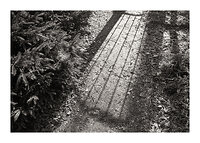
In real-world shooting with the 180/4 the results seem contrasty and sharp wide-open, even into the corners. Verdict: I am very happy with this purchase (if not for the price!). I paid less than the collector-frenzy prices that have been the norm, but given the small production numbers of this lens (somewhere between 700 and 1000 lenses in Nikon F-mount), you will doubtless have to open your wallet a little wider than might be entirely comfortable. In optical quality it easily eclipses the Nikkor 200/4, and the size/weight advantage over the 180/2.8 while maintaining high quality wide-open makes it a no-brainer for me. I held off buying this lens in the hopes that Cosina would release an updated (presumably chipped) version someday, but that doesn't seem likely. And Nikon is "focused" on fast-but-large lenses, so aside from a few pancake wides and normals is highly unlikely to consider the need for a medium telephoto "street carry" lens, so this Voigtländer is the only option for me.
Personally, I still think these APO-Lanthar Voigtländers are amazing lenses, and worth what you have to pay for them. In fact, prices for excellent used copies are now often about what they cost new (taking into account more than 20-years of inflation!), so in that sense it's not a completely insane investment. My suggestion is to keep looking and remain patient, as it looks like the Japanese collectors are gradually liquidating their stock of classic Voigtländer lenses, and as the Yen is doing poorly these days, good deals can be found. Always avoid any Voigtländer lens which mentions "clouding" or any other indication of fungus, and particularly for the 125/2.5 avoid heavily used copies as there is the risk of internal problems that would be expensive to repair.
The "biggest" thing about this lens is how incredibly small it is for a 180mm lens: In fact it is only 2mm wider and 1mm longer than the AiS 105/2.5, and weighs only 50g more. It takes 49mm filters rather than the Nikon standard 52mm. It is, perhaps not surprisingly, both shorter and lighter than the AiS 200/4. Compared to the f/2.8 180's, the Voigtländer is a LOT easier to carry around.
My three lenses for many years were the AiS 24/2, 105/2.5, and 180/2.8 Nikkors, but looking back I would say my approximate usage ratio with these lenses was 75% / 20% / 5% respectively, and the reason for light usage of the 180/2.8 was the size/weight and difficulty of nailing focus a f/2.8. That's why I was considering the Voigtländer as it would be pretty indistinguishable from the 105/2.5 size/weight so I'd be more willing to carry it around. But how is it to focus? Lots of people (including Bjørn Rørslett) have complained that long-distance/infinity focus is challenging with the Voigtländer. It's true that the focus ring is weighted to the closer distances (the lens goes to 1:4 at 1.2m, and has 350 degree focus throw), but I didn't find it difficult to adjust near infinity (which for this lens is over a kilometre away, so not just a telephone pole across the road!).
Mechanically, the lens is excellent, very solid feel, with a nicely damped focus (though some have complained the focus grip is a bit narrow which seems like carping to me). I have read that the focus-damping will loosen up with use, but mine is just perfect right now. It has half-stop detents on most of the apertures, and the ring is much higher quality than my MF Nikkors. I did find the lack of anywhere to grip the lens when mounting it a bit problematic (you are best to grip the aperture ring).
One of the noted downsides with this lens is the propensity for flare/ghosting in strong side-light, with reviews saying that the dedicated hood does not really help at all. The lack of effectiveness of the bayonet-mount hood is not surprising since both versions (the square LH-75 with a rubber cap and the round LH-75S with a metal cap) were actually designed for the Color-Heliar 75mm F2.5 SL with approximately 2.5x shorter focal length: Basically the dedicated hood is just too short to do a good job. I don't have the square version, but the round one is 37mm deep and has a 60mm opening. The hood looks perfect mounted on the lens, and the branded metal cap is really nice, but I quickly realized that it was pretty much useless for preventing flare.
Looking for alternatives, there are many Nikon hoods for 105mm to 135mm lenses, most of which are for a 52mm attachment, so I bought a 49mm to 52mm step-up ring so I could experiment. I have an HS-14 (snap-on style) which is for my Micro-Nikkor 105/2.8, and it is 55mm deep (including the adapter) and has a 68mm opening so some improvement, but probably still too short. The HS-4 (for the 135/3.4 and 105/2.5) is probably the longest Nikon hood that would fit, at 7mm longer than the HS-14, so we're up to a little over 60mm deep. There's also a very little-known HN-32 (screw-in style) for the IX-Nikkor 60-180 lens (first version without the bayonet-style hood-mount), but I can't find any details about the dimensions except that it's a 52mm thread-mount. The few fotos I've found indicate the HN-32 is longer than it is wide, so it might be the best official Nikon hood for this application. The IX lenses only cover 16.7mm x 30.2mm, so on a 180/4 on 24mm x 36mm it would be necessary to check for vignetting. In my searching for the HN-32 I accidentally tripped over the HN-30 hood for the Micro-Nikkor 200/4 AF-D lens, and it is probably even a better solution for this lens. It has a 62mm threaded mount, so still needs a step-up ring, but it's very deep (75mm) and has the lovely Nikon hammer-tone exterior (in fact it's just a really sexy piece of Nikon metal!). I found a NOS copy for a great price and this has become my standard 180 APO-Lanthar hood. The HS-7 has the advantage of mounting in reverse, but the HN-30 is deeper and actually designed for the focal-length of the lens, and will sit inverted on the lens in its case.
In real-world shooting with the 180/4 the results seem contrasty and sharp wide-open, even into the corners. Verdict: I am very happy with this purchase (if not for the price!). I paid less than the collector-frenzy prices that have been the norm, but given the small production numbers of this lens (somewhere between 700 and 1000 lenses in Nikon F-mount), you will doubtless have to open your wallet a little wider than might be entirely comfortable. In optical quality it easily eclipses the Nikkor 200/4, and the size/weight advantage over the 180/2.8 while maintaining high quality wide-open makes it a no-brainer for me. I held off buying this lens in the hopes that Cosina would release an updated (presumably chipped) version someday, but that doesn't seem likely. And Nikon is "focused" on fast-but-large lenses, so aside from a few pancake wides and normals is highly unlikely to consider the need for a medium telephoto "street carry" lens, so this Voigtländer is the only option for me.
Personally, I still think these APO-Lanthar Voigtländers are amazing lenses, and worth what you have to pay for them. In fact, prices for excellent used copies are now often about what they cost new (taking into account more than 20-years of inflation!), so in that sense it's not a completely insane investment. My suggestion is to keep looking and remain patient, as it looks like the Japanese collectors are gradually liquidating their stock of classic Voigtländer lenses, and as the Yen is doing poorly these days, good deals can be found. Always avoid any Voigtländer lens which mentions "clouding" or any other indication of fungus, and particularly for the 125/2.5 avoid heavily used copies as there is the risk of internal problems that would be expensive to repair.
