
• Welcome to Photrio!
    Registration is fast and free. Join today to unlock search, see fewer ads, and access all forum features.
    Click here to sign up

Visual how to showing the creation of Cyanotype

Filling In

H
Filling In

  • 1
  • 2
  • 49
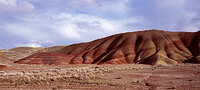
Painted Hills # 3.jpg

H
Painted Hills # 3.jpg

  • 4
  • 0
  • 92

Recent Classifieds

Forum statistics

Threads
203,211
Messages
2,851,511
Members
101,728
Latest member
BrickSandwich
Recent bookmarks
0

Christopher Colley

Member
Allowing Ads
Joined
Jan 24, 2005
Messages
279
Format
Multi Format
Greetings!

I am here to share a bit of a visual demonstration showing how I make a Cyanotype print. There are quite a few cyanotype how-to's on the internet! But, this is my cyanotype how to.

This is a step by step visual and text based demonstration.

Be warned! There are many photographs which add up to roughly 1.5 megabytes, this can be a long download on anything but a high speed connection so be patient..

(oh, also be warned! the photographs of this demonstration were not made using an analog camera!)


Dead Link Removed

I hope this is useful to someone... Hopefully there are not too many editing mistakes!

edit: I use a digital watch to time my exposure!
 
Last edited by a moderator:
Thanks for sharing Christopher! That was a good how-to article that will benefit the community; and I'm sure will garner some interest in the process. :smile: cameron
 
Christopher, Well done! I have never tried the Cyanotype process before, but your instructions will be very helpful when I do. Thank you very much for taking the time to make this step by step guide available to us.

Charlie..........................

A day later: I again say thank you for making your demonstration available to our list, also your added material answeres several questions for me. Your effort here is truly more than appreciated. CW
 
Last edited by a moderator:
Thanks Christopher. This has been added to my growing list of how to's
 
I made a slight update to the very bottom of the page Tom Kershaw. Do these images answer your question?
 
Thanks Christopher, trying the cyanotype process has been on my list of things to try for some time. Your article explains very clearly the steps involved.

Martin
 
Tom, if you can find a smooth surfaced paper that will hold the cyanotype well (both the sensitizer and the final Prussian blue pigment), and won't roughen with repeated wetting and drying, a cyanotype is capable of holding as much detail as a silver gelatin contact print. The best I've done was on Canson Montval "Rough" (which is a lot smoother than other cold pressed watercolor papers I've tried), but I'm still looking for a smoother surfaced, "harder" paper that has the same resistance to wetting as this reinforced watercolor paper. I'm tempted to try plain old posterboard -- it's certainly cheap enough to experiment on.

BTW, you can also tone cyanotype in strong, cold tea or tannic acid, either after bleaching in sodium carbonate solution, household ammonia solution, or without bleaching, to obtain a range of final colors from an orange-red to near-neutral black, while the paper will stain slightly and range from barely off white to a distinctly tan shade. This can open the process up for subjects that might not be at their best with a blue-toned print (like portraits -- lots of folks dislike portraits in cyanotype, but with tea toning they can look very much like matte-finish silver gelatin prints on an ivory- or buff-toned base -- a very good look for a portrait).
 
Donald,

Some really great advice, thanks. I guess I will need to read the primer prepared by Christopher Colley before comming back with any more questions. Ah..., just though of one; how long do the cyanotype solutions keep?

Tom.
 
On the bottles recieved from Bostick and Sullivan it says 1 year for dry chemistry (how it comes) and 6 months for wet mixed chemistry.

When I was first learning how to do this process I used B&S mixed wet A and B Cyanotype solutions that were mixed at least 1 year before I used them. This was about 1 year ago and the prints from those sessions are fine..

So, I will be dangerous and go against what the bottles say and proclaim myself that I believe the cyanotype chemistry offered by bostick and sullivan can last at least 1 year when mixed with distilled water and stored in a dark place in a room that never gets any sunlight and doesnt get very hot or very cold.
 
Added photograph of Cyanotype that has been toned to the bottom of the page to show that you do not have to be stuck with blue..
 
Donald Qualls said:
... I'm still looking for a smoother surfaced, "harder" paper that has the same resistance to wetting as this reinforced watercolor paper. I'm tempted to try plain old posterboard -- it's certainly cheap enough to experiment on...

I just tried Strathmore Bristol, a very smooth paper, and the results were quite striking - quite a lot of detail and tonal range compared to what I've gotten in the past with cold press watercolor papers. The surface stayed quite smooth, although there was some minor roughing after all the washing was complete. Overall though, I think I like the results much better than rougher papers.

- Randy
 
I've used Strathmore Bristol for some salt prints and it works well for them as well (and doesn't fog the silver nitrate the way the Canon Montval has done) -- I may never use watercolor again, for anything but watercolors.
 
Photrio.com contains affiliate links to products. We may receive a commission for purchases made through these links.
To read our full affiliate disclosure statement please click Here.

PHOTRIO PARTNERS EQUALLY FUNDING OUR COMMUNITY:


Ilford ADOX Freestyle Photographic Stearman Press Weldon Color Lab Blue Moon Camera & Machine
Top Bottom
