
• Welcome to Photrio!
    Registration is fast and free. Join today to unlock search, see fewer ads, and access all forum features.
    Click here to sign up

vintage halftone

Filling In

H
Filling In

  • 1
  • 2
  • 39
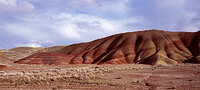
Painted Hills # 3.jpg

H
Painted Hills # 3.jpg

  • 4
  • 0
  • 86

Recent Classifieds

Forum statistics

Threads
203,208
Messages
2,851,450
Members
101,726
Latest member
Peter1111
Recent bookmarks
0

Nyarochrome100D

Member
Allowing Ads
Joined
Jun 21, 2006
Messages
10
Format
Multi Format
When I look at old halftone prints from 60's and 70's, it looks to me as if they used contrast masking in reproductions from slides.
This is specially visible on old saturated postcards, product brochurs etc.. The colors are very simplistic, and there are almost no highlights, plus there is that relief kind of a look, all of which are the effects of heavy contrast masking.
I really get the same kind of results while experimenting in photoshop with masking

If someone knows the usual practices of analog halftone printing from 70's, could you describe the steps to me (before making the actual plates)? Did it really include contrast/unsharp masking?
 
I launched a thread about that a while ago, and although you may not find all the information you need there, you can definitely stir the people who have been kind enough to answer me to add comments based on your question : (there was a url link here which no longer exists)

I'm always surprised by people who like ye olde halftone look. It's the most surprising taste, it seems!
 
I worked for a publisher in the 90s, mostly duplicating negatives on diazo film. Sometimes I had to make corections on negatives. Picking out individual halftone dots on film isn't fun. Nor is splicing together a halftone negative that was cut in the wrong place, and eliminating all evidence of the cut. Oh well, it's easier on halftone than on continuous tone film! Be glad you have digital photo editors!
 
Here is a great example of what I mean. I scaned this from an old cheap book from 1982, the cover could be even an older plate

scan11il.jpg


Whish part of the process caused this kind of look?

p.s. I didn't use any sharpening, the halo on things seems to be an indication that they used traditional unsharp masking in the print process
 
I am guessing here but I think this may be an painting. Illustrators used to do this sort of thing all the time in years gone past. So, not a photo at all.

lee\c
 
Last edited by a moderator:
take a look at the background, the TV and furniture, it kind of reveals that it's a photo (some parts look more photographic), but maybe the table and people are painted as you say. But I'm guessing maybe painting on top of photography, like retouching
 
Nyarochrome100D,

"Whish part of the process caused this kind of look? "

It was the whole process, not one part of it. You almost got it exactly right on your other thread on saturation. If you want I will look it up in a Kodak Data Guide and type it out. Maybe I can get my scanner up and running and scan some of the diagrams.

Just a thought.
 
(BTW What ARE these people eating?)

Another thought: make a good scan of your 70's print and look what the CMYK channels tell you in PS. Make another scan of a regular photo and compare with the vintage print. This will give you a clue about what's different - and perhaps a hint of how to achieve it. Personally I think you will only get there by printing the photo on paper with the use of color separated plates, because the vintage look also depends on the type of paper the images are printed on and the fact that the paper has it's own glossiness or lack thereof. But then you're deep into cross-over land where the borders between photography and printing melt into each other. Is this where you want to be? Or were you hoping to make prints like that in your darkroom?
 
What are they eating?

1. its shot on an older chrome stock- not so saturated as velvia.
2. the colors of the wardrobe and set are a pallette all their own!
3.It is a studio lit set and the stock, (I suspect Kodachrome) exposure, and printing chosen puts the little bitty toe
in a place that results in a good part of this "look".
4. Also notice that there is no real highlight, this was characteristic of the preferences of most creative directors of the era.
 
Last edited by a moderator:
I would guess it is a combination of the original transparency gamut, coupled with the photo offset press selection of dyes for reproduction. The dot screen helps lower contrast; kind of like a Harrision low contrast filter...

Oh, yeah, they are eating "Art Director Soup".
 
Hi there,

Maybe apug can start a half-tone forum, Photo Engineer was right, this is way too big for a thread. I didn't get the scanner up but did find a back-up disk. Attached is 2 flow charts for masking, there are at least a dozen methods. Kodak kept changing over time when they realized using the same filters for taking and printing does nothing for color balance.

Have fun with it.

To make it easier to read:

"Four continuous-tone separation negatives are made through standard color-separation filters, all to the same contrast and density range. Three positive pre-masks are then made from the three principal color-separation negatives. When properly made, each will almost exactly cancel the tone scale in the negative from which it was made, and the pair, when placed in register, will result in a nearly even density over the entire image area. Final color-correcting masks are then made by combining one of the pre-masks with a separation negative made with a different filter. The color-correcting masks are then combined with the separation negative in order to print the corrected positives.

Note: In this diagram, each arrow indicates an exposure; if the arrow passes through a filter, mask, or negative, the exposure was made that way."
 
Last edited by a moderator:
Photrio.com contains affiliate links to products. We may receive a commission for purchases made through these links.
To read our full affiliate disclosure statement please click Here.

PHOTRIO PARTNERS EQUALLY FUNDING OUR COMMUNITY:


Ilford ADOX Freestyle Photographic Stearman Press Weldon Color Lab Blue Moon Camera & Machine
Top Bottom
