• Welcome to Photrio!
    Registration is fast and free. Join today to unlock search, see fewer ads, and access all forum features.
    Click here to sign up

Vignetting from the P67 45mm lens with filters?

a sidebar

H
a sidebar

  • Tel
  • Feb 3, 2026
  • 0
  • 0
  • 102

Recent Classifieds

Forum statistics

Threads
202,159
Messages
2,836,075
Members
101,147
Latest member
Christinapricewashin
Recent bookmarks
0

Photopathe

Member
Allowing Ads
Joined
Dec 9, 2017
Messages
164
Location
Montréal
Format
Medium Format
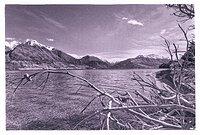
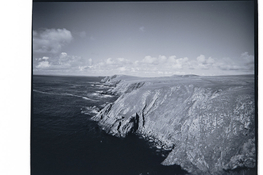
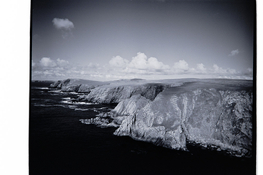
I am sometimes getting quite a bit of vignetting from one of my two favorite lenses, the 45mm. I am under the impression it only happens when using a filter. I always use a single filter (red most of the time), normal flat design. Other users have that experience ?
 

Attachments

  • DSCF7419.jpg
    DSCF7419.jpg
    168.5 KB · Views: 85
  • DSCF7424.jpg
    DSCF7424.jpg
    162 KB · Views: 81

DREW WILEY

Member
Allowing Ads
Joined
Jul 14, 2011
Messages
14,907
Format
8x10 Format
With very wide angle lenses at larger apertures, one can also use a step-up ring with oversized filters.
But what shows up in the posted examples is probably not filter vignetting, but just the natural illumination falloff characteristic of this lens and most other especially wide ones.
 
Joined
Nov 3, 2024
Messages
388
Location
Éire; Vic & QLD Aus rota
Format
Medium Format
That is not natural light falloff, but quite pronounced vignetting, akin to a Zero Image pinhole camera, where such vignetting is a natural characteristic. I do have this P67 lens – a go-to rav-fav in my open landscape arsenal of optics.

I use low profile B+W C-POL filter on this lens, not a full thickness filter. I suggest switching ovr to a slim profile filter and see if that improves the result. Also check there is nothing unscrewed on the front of the lens. I doubt the gelatin filter clasp at the rear element can be implicated, but check down there too.

My gut feeling though is that something more involved is at play with vignetting like that – not a characteristic at all of this excellent lens.
 

DREW WILEY

Member
Allowing Ads
Joined
Jul 14, 2011
Messages
14,907
Format
8x10 Format
There's a pretty dramatic difference in the amount of falloff between the medium wide 75's and the much wider 55's; and it's even more pronounced with the 45. It's hard to judge the degree in web images. Actual cutoff vignetting would probably look a little more triangular rather than round toward the corners, with a much more dramatic transition into blackness. I'm assuming he's giving us a "before" (left image) and "after" the filter attachment (right image) comparison. The left clearly exhibits some falloff; the right is much harsher.

But the fact that a red filter is involved means the rate of darkening of a blue sky increases more dramatically, disproportionately, even towards the corners, once one approaches the bottom of the film curve - entirely possible in this kind of scenario. I can only go from my own experience with a 55, where I deliberately gamed that characteristic. I can't remember if I ever borrowed my 82mm Super Angulon center filter to experimentally even out the field of illumination; it would have done the job, but only at annoyingly small f-stops.
 
Last edited:
Joined
Nov 3, 2024
Messages
388
Location
Éire; Vic & QLD Aus rota
Format
Medium Format
To be sure, it is now many years since I owned and used (in the landscape context) the SMC Pentax 67 55mm lens. I have written about this lens here and there; a particularly annoying problem being the internal rattling with the 55mm (latest generation) — so annoying in fact that I could not tolerate it rattling as I rolled along the plains! The archive would have several pics made with that lens, but off the top of my head, if there was any vignetting from it, I would never have bothered printing, and many prints were made with that lens, but many, many more with the 45mm.

@DREW WILEY, the sample images from the OP are certainly very, very high in contrast — shooting in bright light illustrated in those pics is not something I do, so your explanation certainly is plausible, but the vignetting is still very pronounced — a quite jarring effect.

____________________________________________________________________
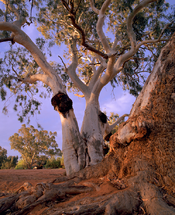
SMC Pentax 67 45mm f4 with CPOL, Velvia 50 (@EI40)
Diffuse, shadowed light.
Ancient redgums in the dry bed of Umberumberka Creek,
Silverton, New South Wales, Australia.
 

Attachments

  • UmberumberkaCreek Gums_Silverton_NSW.png
    UmberumberkaCreek Gums_Silverton_NSW.png
    1,013.7 KB · Views: 42

abruzzi

Member
Joined
Mar 10, 2018
Messages
3,269
Location
New Mexico, USA
Format
Large Format
its also worth pointing out the the P67 45mm ƒ4 lens is designed to allow the use of a gelatin filter in the rear:

1762471730554.png
 
Joined
Nov 3, 2024
Messages
388
Location
Éire; Vic & QLD Aus rota
Format
Medium Format
its also worth pointing out the the P67 45mm ƒ4 lens is designed to allow the use of a gelatin filter in the rear:

View attachment 410770

Yes, and few owners actually know about this! While undoubtedly handy...even novel, it is at the risk of ghosting and flare; and they are a PITA to use. No good at all in the wet, cool to cold environments I work in.
 

DREW WILEY

Member
Allowing Ads
Joined
Jul 14, 2011
Messages
14,907
Format
8x10 Format
I have a number of specialized Wratten gels in the lab. But out in the field, with sweaty hands and dust and grit flying around, they're an awfully fragile option, expensive too. Damp conditions, even worse.
 

xkaes

Subscriber
Allowing Ads
Joined
Mar 25, 2006
Messages
5,185
Location
Colorado
Format
Multi Format
As has been pointed out, super-wide lenses are subject to super light fall-off. The easiest approach is to stop down the lens as much as possible. If that is inadequate, you can use a center neutral density filter:

www.subclub.org/fujinon/center.htm
 

abruzzi

Member
Joined
Mar 10, 2018
Messages
3,269
Location
New Mexico, USA
Format
Large Format
I have a number of specialized Wratten gels in the lab. But out in the field, with sweaty hands and dust and grit flying around, they're an awfully fragile option, expensive too. Damp conditions, even worse.

but they won't vigniette, which is the point of this thread. I'll let the OP decide if that's a solution.
 
Joined
Nov 3, 2024
Messages
388
Location
Éire; Vic & QLD Aus rota
Format
Medium Format
but they won't vigniette, which is the point of this thread. I'll let the OP decide if that's a solution.

Tell him not to bother with gelatin filters — PITA is putting is politely. As @DREW WILEY notes, they are fragile, expensive and prone to easy ruination.

I'd like to see a photo of the red filter the OP is using, and of the front of the 45mm f4 lens. I am nowhere near convinced about the vignetting in the foregoing commentary. It just doesn't pass the pub sniff test.
 

xkaes

Subscriber
Allowing Ads
Joined
Mar 25, 2006
Messages
5,185
Location
Colorado
Format
Multi Format
That photo of the rear of the lens suggests to me that there will be vignetting when the lens is used at wide f-stops -- with or without a filter. Add to that normal light fall-off -- and a center neutral density filter would be the solution -- with or without other filters.
 

DREW WILEY

Member
Allowing Ads
Joined
Jul 14, 2011
Messages
14,907
Format
8x10 Format
Being an SLR with the rear of the lens in close proximity to the film plane, plus a filter back there, means that any dust or whatever on a gel - and they do attract dust and grit - will likely get into the shutter curtain and film itself, or onto the mirror, whenever the shutter and mirror is activated. Just looking for trouble. Doing this in a cleanroom environment is one thing; switching out lenses in the field with one of them configured with a rear gel can be something else entirely if you hope to keep it clean.

The problem with a CF plus red filter is that all that combined adds at least 4-1/2 stops of density. Plus CF's balance the illumination only at small stops, say, at least f/16 down. That's going to amount to a very long exposure in most cases. I was fully accustomed to that reality when working with view cameras on heavy tripods and f-stops typically anywhere from f/32 to f/64; but it kinda interferes with the concept of MF gear as being a little more spontaneous, and where diffraction loss starts setting in at f/16 with those much shorter focal length lenses.
 
Last edited:

Hassasin

Member
Allowing Ads
Joined
Feb 23, 2023
Messages
1,614
Location
Hassasstan
Format
Multi Format
I suppose lens hood is not involved in this experiment ?
 

JensH

Member
Joined
May 30, 2017
Messages
542
Location
Schaumburg, Germany
Format
Multi Format
I am sometimes getting quite a bit of vignetting from one of my two favorite lenses, the 45mm. I am under the impression it only happens when using a filter.
Hi.

You could do this test:
First set the camera speed to B, open the rear back (without film), open the shutter and hold it open.
Then look from the edges of the film gate through the lens plus filter.
If you see the rim of the filter, it will vignette at the aperture you used.

Jens
 

Lachlan Young

Member
Allowing Ads
Joined
Dec 2, 2005
Messages
5,109
Location
Glasgow
Format
Multi Format
The 45/4 is intended to be able to use an 82mm Pentax Bayonet filter on the front - by today's standards nowhere near a slimline filter, but compared to some (some older Heliopan mounts for example) they are quite a bit less deep. The rear mount gel holder is probably because Pentax's gel holder (which has internal structures to hold the gel) is probably prone to vignetting.
 

DREW WILEY

Member
Allowing Ads
Joined
Jul 14, 2011
Messages
14,907
Format
8x10 Format
They'll take ordinary threaded filters too. That was the case with all the "bayonet" style lens fronts. The 75/4.5 and 300mm tele lenses also accept 82mm filters.

I had one of those old Pentax gel filter holders laying around. The sandwiching material had gone to hell and gotten all sticky. I cleaned it up and repurposed it for an entirely different kind of application.
 

xkaes

Subscriber
Allowing Ads
Joined
Mar 25, 2006
Messages
5,185
Location
Colorado
Format
Multi Format
Here's what AI has to say. Seems on the ball, but doesn't consider CND filters.

The Pentax 67 45mm f/4 lens has some light fall-off (vignetting), particularly when shot wide open at f/4
. The effect is mild and typically disappears when stopping down the lens to f/5.6 or f/8.


Light fall-off characteristics

  • Aperture: The vignetting is most noticeable at the maximum aperture of f/4 and improves significantly as you stop down. Some users consider the lens an "effective f/5.6 lens," because of this improvement in corner performance when stopped down.
  • Filters: Using a filter, especially a thick one or an unsuitable step-down ring, can cause or worsen mechanical vignetting. This happens when the edge of the filter itself blocks light from reaching the film plane. However, some photographers report using slim step-down rings without issue.
  • Overall impression: For a wide-angle medium format lens, the 45mm f/4 is generally a solid performer, and many photographers find the light fall-off to be minimal and acceptable. The performance is often compared favorably to other lenses in the system, though the 55mm f/4 is sometimes cited for its slightly better corner sharpness.

How to manage light fall-off

  • Stop down the aperture: The most reliable way to reduce light fall-off is to shoot at f/5.6, f/8, or a smaller aperture.
  • Use a slim filter: If you use filters, choose a slim-profile version to minimize the risk of mechanical vignetting.
  • Embrace it: Some photographers intentionally use the vignetting effect to draw focus to the center of the image, embracing the characteristic rather than correcting it.

 
OP
OP
Photopathe

Photopathe

Member
Allowing Ads
Joined
Dec 9, 2017
Messages
164
Location
Montréal
Format
Medium Format
There's a pretty dramatic difference in the amount of falloff between the medium wide 75's and the much wider 55's; and it's even more pronounced with the 45. It's hard to judge the degree in web images. Actual cutoff vignetting would probably look a little more triangular rather than round toward the corners, with a much more dramatic transition into blackness. I'm assuming he's giving us a "before" (left image) and "after" the filter attachment (right image) comparison. The left clearly exhibits some falloff; the right is much harsher.

But the fact that a red filter is involved means the rate of darkening of a blue sky increases more dramatically, disproportionately, even towards the corners, once one approaches the bottom of the film curve - entirely possible in this kind of scenario. I can only go from my own experience with a 55, where I deliberately gamed that characteristic. I can't remember if I ever borrowed my 82mm Super Angulon center filter to experimentally even out the field of illumination; it would have done the job, but only at annoyingly small f-stops.
When not using a filter I have many other shots showing no vignetting at all, even wide open I believe. I think I have always only used red filter with this lens. I am under the impression the vignetting is indeed related specifically to the red filter.
I suppose lens hood is not involved in this experiment ?
I always use the lens hood.
Hi.

You could do this test:
First set the camera speed to B, open the rear back (without film), open the shutter and hold it open.
Then look from the edges of the film gate through the lens plus filter.
If you see the rim of the filter, it will vignette at the aperture you used.

Jens
I just did. It's impossible to see the rim of the filter.
Here's what AI has to say. Seems on the ball, but doesn't consider CND filters.

The Pentax 67 45mm f/4 lens has some light fall-off (vignetting), particularly when shot wide open at f/4
. The effect is mild and typically disappears when stopping down the lens to f/5.6 or f/8.


Light fall-off characteristics

  • Aperture: The vignetting is most noticeable at the maximum aperture of f/4 and improves significantly as you stop down. Some users consider the lens an "effective f/5.6 lens," because of this improvement in corner performance when stopped down.
  • Filters: Using a filter, especially a thick one or an unsuitable step-down ring, can cause or worsen mechanical vignetting. This happens when the edge of the filter itself blocks light from reaching the film plane. However, some photographers report using slim step-down rings without issue.
  • Overall impression: For a wide-angle medium format lens, the 45mm f/4 is generally a solid performer, and many photographers find the light fall-off to be minimal and acceptable. The performance is often compared favorably to other lenses in the system, though the 55mm f/4 is sometimes cited for its slightly better corner sharpness.

How to manage light fall-off

  • Stop down the aperture: The most reliable way to reduce light fall-off is to shoot at f/5.6, f/8, or a smaller aperture.
  • Use a slim filter: If you use filters, choose a slim-profile version to minimize the risk of mechanical vignetting.
  • Embrace it: Some photographers intentionally use the vignetting effect to draw focus to the center of the image, embracing the characteristic rather than correcting it.
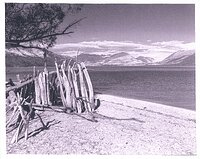
I'll soon do a test roll with and without the red, at f4 as well as stepped down 2 stops.
 

Hassasin

Member
Allowing Ads
Joined
Feb 23, 2023
Messages
1,614
Location
Hassasstan
Format
Multi Format
I always use the lens hood.
And .. it is the dedicated one ? Obvious follow up question. Original hood in no way will obstruct anything

Secondly, I seriously doubt photos show light fall-off, as it is to me way too abrupt.
 
OP
OP
Photopathe

Photopathe

Member
Allowing Ads
Joined
Dec 9, 2017
Messages
164
Location
Montréal
Format
Medium Format
And .. it is the dedicated one ? Obvious follow up question. Original hood in no way will obstruct anything

Secondly, I seriously doubt photos show light fall-off, as it is to me way too abrupt.

Yes, the original P67 lens hood for the 45mm. You mean to say the light fall-off would come from the scan? If that would be so, all my photos would have that and it's not the case. I just double-checked the negative and on inspection I can see the vignetting. Although I will admit it looks more subtle there. I could do a proof print of the whole film sometime soon.
 

Hassasin

Member
Allowing Ads
Joined
Feb 23, 2023
Messages
1,614
Location
Hassasstan
Format
Multi Format
Yes, the original P67 lens hood for the 45mm. You mean to say the light fall-off would come from the scan? If that would be so, all my photos would have that and it's not the case. I just double-checked the negative and on inspection I can see the vignetting. Although I will admit it looks more subtle there. I could do a proof print of the whole film sometime soon.
All I can say, to me it does not look light fall off, nor lens hood issue. I have the lens and the hood, have not used it much, but had not noticed any of it. No filters though. If you see it on negative then scan is not the problem. So it's all leading to filters you have. Probably best to see frames with slim type on. You can get some "cheap" ones of Amazon or ebay. All you need is skylight for the test, just slim version.
 

DREW WILEY

Member
Allowing Ads
Joined
Jul 14, 2011
Messages
14,907
Format
8x10 Format
A dedicated hood for a lens that wide is marginally effective at best, if one is aimed into the sun. An adjustable compendium hood works better; but those are clumsy for handheld use or general portability. The fact is, wide-angle lenses have inherent falloff, regardless.

The thickness of a thread-on glass filter isn't going to be an issue unless you're trying to shoot the lens wide open or nearly so. Slim filters can sometimes be hard to attach or remove, but are the better option in this case. When you're talking about filters as big as 82mm, sometimes cost determines the choice. All of my 82's are regular thickness multi-coated (HMC) Hoya ones - probably the best bang for the buck.

I really don't like fiddling with thin filters with cold or sweaty fingers - too easily dropped while trying the thread or unthread them. And hard to get a purchase on if they get stuck - I use ordinary plastic Zip-ties like a little plumbing strap wrench.
 
Last edited:

Hassasin

Member
Allowing Ads
Joined
Feb 23, 2023
Messages
1,614
Location
Hassasstan
Format
Multi Format
The lens has light fall off. What is shown in photos does not look gradual enough to be for fall off, but mechanical obstruction. This is IMO of course.
 
Photrio.com contains affiliate links to products. We may receive a commission for purchases made through these links.
To read our full affiliate disclosure statement please click Here.

PHOTRIO PARTNERS EQUALLY FUNDING OUR COMMUNITY:


Ilford ADOX Freestyle Photographic Stearman Press Weldon Color Lab Blue Moon Camera & Machine
Top Bottom