• Welcome to Photrio!
    Registration is fast and free. Join today to unlock search, see fewer ads, and access all forum features.
    Click here to sign up

Using Diafine with toy cameras how?

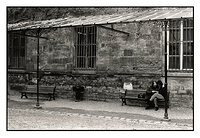
Amour - Paris

A
Amour - Paris

  • 0
  • 0
  • 37
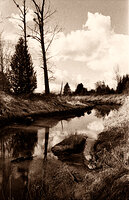
Bend in the river

H
Bend in the river

  • 2
  • 0
  • 55

Recent Classifieds

Forum statistics

Threads
203,235
Messages
2,851,836
Members
101,738
Latest member
parkeradam
Recent bookmarks
2

Clifford Davis

Member
Allowing Ads
Joined
Apr 27, 2009
Messages
10
Format
Plastic Cameras
I use a lot of different cameras including large format, but what I enjoy most is using my Holga 135BC TLR and my Diana F+. I have found that Diafine developer is more convenient for me to use than anything, problem is my pictures come out 50/50. I know it speeds your film up but I have no way of controlling how I shoot these cameras so the pictures aren't washed out. Even using 100 iso in cloudy days I get washed out shots. Is it possible to go less than the 3 minutes a and 3 minutes b ratio? less time less washed out shots? really need some help here. would an nd filter help? Cliff
 
If the negatives not the prints look "washed out" as in thin or rather transparent, then you are not developing for long enough.
 
I will disclose I do not know the limits of your particular cameras, but do know from reading their spec's in the past that they are very limited as far as exposure is concerned. So the problem is not the developer/development but the fact that the camera is so limited in exposure abilities due to a very limited set. You do need to stay with the normal development procedure for Diafine, especially for a mixed roll of exposures. You will not have success to get a full roll of normally exposed and developed negs with the camera your shooting unless you take alternative procedures. During a sunny day and with the Sunny16 rule you probably can get a normal exposure shooting 100 ISO film, 1/ISO @ F16, limited only by your shutter speeds and aperture choices, but once the light goes down you do not have the means to expose enough for a properly exposed negative. Here is where you need to compensate by either shooting a higher speed film or double or even triple exposing the same scene, sometimes not a possibility. If you do shoot a higher speed film during a cloudless day you will probably not have the shutter speed you need for the higher ISO film, so you will have to use ND filters to bring the exposure in line. This is the cameras limit I saw that prevented me from buying the camera and the only thing to do to prevent bad exposures is to use the camera within it's means or make compensations. While the developer can give a decent neg out to 3 stops underexposure, it cannot do it will all films. I suggest shooting 400 ISO TriX and using ND filters during the day. Then in subdued light you might be within the developer/film/shutter speed combination to pull decent negs even when exposing 2 or 3 stops under. Hope this helps.
 
Since you can't control exposure with the camera, you have to rely on other ways to do it.

Wayne has a nice idea with ND filters, something I employ with normal cameras to be able to use wide apertures in the middle of the day. It works. Get some that are +1, +2, +3 stops, shoot 400 film and work with it for a while.
I used a Holga in the past and shot mostly Tri-X 400 in sunny conditions. With Pyrocat developer I got really brilliant negatives that printed themselves on Grade 2 paper.

Shooting a toy camera is always a compromise, which is part of its charm. I eventually stopped using the Holga much, but kept one for sentimental reasons. You will learn to accept negatives of wildly changing density as normal, and you deal with it at the printing stage usually, unless there is something you can do at the time of exposure.

Good luck!

- Thomas
 
Two bath developers do not work well with the modern thinner films because not enough developer is absorbed in the thin emulsion. Therefore film choice becomes important. See if you can find a double coated film like the old Verichrome Pan as these tend to be thicker.
 
I don't know. I've seen some really beautiful work with modern Tri-X and Fuji Acros, which are both modern films. Nice negative densities and glorious prints, full of sparkle.
There is nothing like proving a theory wrong by practically doing it.

Two bath developers do not work well with the modern thinner films because not enough developer is absorbed in the thin emulsion. Therefore film choice becomes important. See if you can find a double coated film like the old Verichrome Pan as these tend to be thicker.
 
I don't know. I've seen some really beautiful work with modern Tri-X and Fuji Acros, which are both modern films. Nice negative densities and glorious prints, full of sparkle.
There is nothing like proving a theory wrong by practically doing it.

I don't know about the Fuji but I believe that Tri-X is double coated at least it was for many years.
 
Clifford,

I have had good luck with Diafine and Tri-X 400 in a Holga (a 120N in my case). But it was no accident. For me, this combination was explicitly the "plan" I worked out when I first bought the camera; the idea being that it would provide the widest exposure latitude possible given the limited adjustability of the camera. It sounds like you were thinking of something similar. Overall I think it worked well and was consistent with the whole idea of keeping things as simple and casual as possible. On the other hand, I have to admit that getting to that point included going to the resort of measuring the actual shutter speed of the camera, and modifying the aperture of the camera to get two real settings that were exactly what I wanted (not exactly "casual") . All this to insure that exposures would be "in range" for the lighting conditions in which I wanted to use the camera.

I guess what I am saying is that Diafine should be able to work well for you. It may just be that you are on the edge of the usable exposure range of the system (i.e., the particular combination of film speed, shutter speed, and aperture you have).

I am not entirely sure what you mean by washed out though. Is this the prints or the negatives? Assuming you are referring to an effect indicative of overexposure, then I think the ND filter idea could be a good one. It also occurred to me that you could use contrast filters instead of (or in addition to) the ND filter to help knock down the exposure while simultaneously picking up the contrast-enhancing effects get you get with those.

So yeah, in general whatever it takes to get you into the right range for better exposure! As for reducing the development time, it probably won't help. My understanding is that Diafine is designed to develop to completion, and anything less than the 3 minute minimum will probably just make life difficult and unrepeatable (if it even has the effect you were hoping for at all - I am not sure).

Other ideas: Double check that you have mixed the A and B components correctly in the first place; and think about whether it is possible that you have contaminated them (e.g., gotten some B into A).

Jeff

 
Photrio.com contains affiliate links to products. We may receive a commission for purchases made through these links.
To read our full affiliate disclosure statement please click Here.

PHOTRIO PARTNERS EQUALLY FUNDING OUR COMMUNITY:


Ilford ADOX Freestyle Photographic Stearman Press Weldon Color Lab Blue Moon Camera & Machine
Top Bottom