
• Welcome to Photrio!
    Registration is fast and free. Join today to unlock search, see fewer ads, and access all forum features.
    Click here to sign up

Trying to solve an issue with marks on film

Sunk

H
Sunk

  • 0
  • 0
  • 11
Sentry

A
Sentry

  • sly
  • Dec 16, 2025
  • 1
  • 1
  • 25

Forum statistics

Threads
201,224
Messages
2,820,720
Members
100,597
Latest member
Filmzgerald
Recent bookmarks
0

MMXVI

Member
Allowing Ads
Joined
Aug 1, 2016
Messages
10
Location
USA
Format
Medium Format
I don't post here much. Been very slowly getting back into a film hobby, now that I no longer shoot commercially. I'm having an issue I haven't yet solved. Appreciate opinions on what appears to be uneven development, or could be an issue with a light leak on a film back on one roll, and I don't know on the other one wth the single streak.

Developed one roll with no issues as described below.
A day later developed 2 rolls of fresh trix 120 on separate jobo spools, same batch. Rotary process in a jobo tank, my own motor base w/adjustable speed and direction. 5 minutes 15 seconds, Clayton F60 1:9 500ml. This is enough coverage and capacity. 54rpm, reversed every 5 seconds for first minute, then every 10 seconds for remainder. Fixer was rotary as well, a bit longer (10 mins, as it's close to end of life). Presoak of one - two minutes. Each roll shot on a different camera.

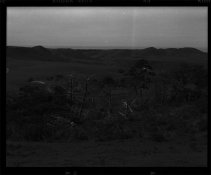
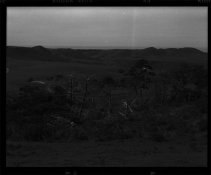
First attached image: frame number 2, from a Pentax 67. I've pulled the curves down to better show the mark in the sky. No other frame on this roll has a mark like this. Second, the strip, first 3 frames (1,2,3), from an RZ67, the rest of the frames are fine. These were all overexposed aprox +1 - +1.5 stops, again curves pulled down to better show the marks.

My film is tightly spooled, stored out of bright light, and these were freshly shot. Loaded in a changing bag (old) at night. I've shot and processed my own film since 1989.
drip.jpg
flaws.jpg
 

Attachments

  • drip.jpg
    drip.jpg
    167.1 KB · Views: 101
  • drip.jpg
    drip.jpg
    167.1 KB · Views: 85

Kino

Subscriber
Allowing Ads
Joined
Jan 20, 2006
Messages
7,908
Location
Orange, Virginia
Format
Multi Format
First of all, are these defects clearly visible on the negatives over a light box, or do they only show up in the scan?

Second, you state these are 1 to 1.5 stops over exposed; were they processed for normal development? Do they appear substantially more dense than your normal negatives?

Third, have you tried printing them or have you just scanned them? If you have only scanned them, you might try printing them to see if the artifacts remain.

The first frame exhibits density plus in the negative in the streak, so I suspect a drop of contaminated water, somehow splashed onto the frame some amount of time before the film was totally immersed in the prebath. Was the jobo reel totally dry when you processed this frame or was it loaded in a tank that had been used just prior and reused? I am thinking if you reused the tank, unless you totally dried-out the interior and the reels with hot air, a drop might have been trapped in some crevice and dropped on the film film, slightly increasing density.

The last three frames certainly look like the outer portions of the reel are getting more agitation and development than the inner/middle of the roll.

All of these defects might reside in a portion of the toe of the film that will simply not show up upon printing, but will show up in a scan when the scanner tries to push the logarithmic values of a film negative into a linear digital space.
 
OP
OP

MMXVI

Member
Allowing Ads
Joined
Aug 1, 2016
Messages
10
Location
USA
Format
Medium Format
Hi Kino -

1) These artifacts are visible in the negatives.
2) They appear a stop or so denser.
3) I have scanned them and nothing in my experience suggests the marks will magically go away on a print. They are not that low in the curve.
I sold my wet (color/BW) darkroom in 1999 and no longer optically print.

Hard to see where that water might have come from. Possibly the reel, but usually in my warm climate (74º) a used reel will dry in less than 24 hours.
All my gear was dry when I started. Wet reels are tough to load anyway, as the emulsion sticks.

Other than using tri-x, instead of FP4/Tmax and P67/RZ67 instead of Hasselblad, I'm basically processing the way I have going back to 1989, which is why I'm surprised. Your thought on the line/drip is quite rational, but it feels less probable. We'll see....

I too am thinking the agitation (too much/little) may be an issue to work upon.
Attached below is frame 6 from that strip (no issues).
308b-s.jpg
 

Kino

Subscriber
Allowing Ads
Joined
Jan 20, 2006
Messages
7,908
Location
Orange, Virginia
Format
Multi Format
A full stop? Wow, that's substantial! Would these three frames be the outer frames on the Jobo reel?
 
OP
OP

MMXVI

Member
Allowing Ads
Joined
Aug 1, 2016
Messages
10
Location
USA
Format
Medium Format
Outer, yes, and the top reel. A full stop because I changed lenses and forgot my filter :tongue: But honestly, there is a ton of room to adjust (curves) as the development is not too hot, and the light is predawn. The motor base I use was custom built by an engineer in the early 80's. It has no gear or relay to automatically reverse. On some films that's not a big deal. Back in the day I manually switched direction every 5 secs (PITA, but you don't run off and forget either). I found I can go to 10 secs w/Acros. I've just started playing with tri-x for the first time in decades - I don't know if it is more agitation critical.
Possibly the first part of the lead came up for a bit and added more agitation/vibration to the tank. Could be a fluke. Reminds me of something I'd sometimes do when solarizing prints w/ a speedlight: give the tray a hard lift to create a wave which would ripple through the print.

Thanks for feedback! :smile:
 

Kino

Subscriber
Allowing Ads
Joined
Jan 20, 2006
Messages
7,908
Location
Orange, Virginia
Format
Multi Format
Oh, I thought you meant the edge defects were a stop darker than the surrounding negative. I wasn't commenting on the overall density...

Anyway, good luck.
 
OP
OP

MMXVI

Member
Allowing Ads
Joined
Aug 1, 2016
Messages
10
Location
USA
Format
Medium Format
lol.... edge defects on the strip, maybe a zone difference. That line/drip on frame 2 a bit more.
 

winger

Subscriber
Allowing Ads
Joined
Jan 13, 2005
Messages
3,980
Location
southwest PA
Format
Multi Format
There may be some answers in this thread that will help you - (there was a url link here which no longer exists)
My problem is fairly similar. (my drip is watermarks from bad drying, but the edges did the same thing)
 

bdial

Subscriber
Joined
Jan 2, 2005
Messages
7,507
Location
North East U.S.
Format
Multi Format
5 minutes is pretty short, if the wetting is't even there isn't much time to recover. I'd try a pre-soak and see if that helps.
 

MattKing

Moderator
Moderator
Joined
Apr 24, 2005
Messages
54,718
Location
Delta, BC Canada
Format
Medium Format
Any chance that re-fixing with fresh fixer might make a difference? You did indicate it was close to the end of its life.
 
OP
OP

MMXVI

Member
Allowing Ads
Joined
Aug 1, 2016
Messages
10
Location
USA
Format
Medium Format
Thanks folks.
These aren't watermarks, but density changes.
If the fixer was bad, I'd think it would present in more than one little line/drip.
5 minutes is fine, I do pre-soak. I used 5 minutes w/ FP4 (not plus) for 8 years, with no issues. The deal here, to extend time I either need to go below 68º, or dilute the developer further, then I hit capacity issues. I could change developers but I really like this stuff. When my main film (FP4) was new and improved to death in the late 90's, the highlights blocked up more easily (FP4+) and the time would have been in the low 4:00, I switched film. I'm still testing the tri-x, I may even add 15-30 seconds to build some density with this combo.
 

RauschenOderKorn

Member
Allowing Ads
Joined
Apr 14, 2016
Messages
814
Location
Bavaria, Germany
Format
Medium Format
My best guess:

frame number two received a drop of water before the developer / presoak was filled into the tank, maybe from a tank not being totally dry. I have had the same issue with paper, looks just like that.

With the other frames, I'd guess that the presoak was insufficient for rotation development. Jobo recommends a full five minutes. This should be especially important, as the development time is rather short, so minor deviations won't compensate.
 

AgX

Member
Allowing Ads
Joined
Apr 5, 2007
Messages
29,972
Location
Germany
Format
Multi Format
I too am thinking the agitation (too much/little) may be an issue to work upon.

Artefacts as yours (different from bromide-drag) are not a matter of too low or too high agition, but too regular agitation, resulting in steady streams of different flux along the emulsion surface.

You already hinted at reversal of rotation direction, you may try raising the reversal frequency.
 
Joined
Sep 10, 2002
Messages
3,651
Location
Eugene, Oregon
Format
4x5 Format
Can't help with the drip mark, but the other problem is increased density along the edges due to developer surging. I had this problem years ago (before I switched to sheet film and never looked back). I spent a couple of sessions in the darkroom doing nothing but exposing an entire roll of 120 to light, loading it onto the reels and developing with different agitation schemes and different amounts of developer in the tank.

My results were that I had to not completely fill the tank with developer, but still ensure that there was enough developer in the tank to cover the film when the tank was standing. Additionally, I found that rather vigorous agitation worked best. Not "cocktail-shaker" agitation, but much more vigorous than the agitation I had used with 35mm film.

I suggest you set the reel in the tank with the top off and fill it with water till the reel is just covered and then measure that amount of water to find how much developer you need for your tank. And then agitate a bit more vigorously (maybe one or two more inversions in five seconds than you are used to) as a starting point for testing developing evenness.

Best,

Doremus
 

AgX

Member
Allowing Ads
Joined
Apr 5, 2007
Messages
29,972
Location
Germany
Format
Multi Format
Doremus, the OP employes automated rotary agition.
 
Joined
Sep 10, 2002
Messages
3,651
Location
Eugene, Oregon
Format
4x5 Format
Doremus, the OP employs automated rotary agitation.

Oops, I overlooked that part! Sorry for any confusion. (I really need to read more carefully instead of skimming...)

So, if we assume that the Jobo is doing it's job correctly, then the areas of increased density are likely due to a light leak, maybe from not tightly winding the film after shooting (which the OP says is not the problem...) or whatever. This would be easily cured (and diagnosed) by being extra careful handling the film.

However, the increased density on the sides of the film sure looks like an agitation/developer surge problem to me. That coupled with the description the OP gives of his careful film handling leads me to believe that maybe the Jobo isn't doing its job correctly.

If it is due to agitation, the principle behind the problem is the same: more agitation at the film edges than in the middle. I'm not familiar with the Jobo reels for 120 and the exact configuration of the tanks, but there could be something causing increased exchange of developer along the edges of the film; the reels themselves, some ridges or raised areas in the tank, etc. Or, the speed and rate of reversal of the motor base could be setting up waves or surges that result in more agitation on the sides of the film than in the middle. If that is the case, changing rotation speed and the reversal interval should yield different results.

Hope this helps now.

Doremus
 

RauschenOderKorn

Member
Allowing Ads
Joined
Apr 14, 2016
Messages
814
Location
Bavaria, Germany
Format
Medium Format
I looked it up again in the "B/W Handbook for professional developing with JOBO rotary processors" (Jobo Part #4191): Jobo clearly indicates that they recommend a full 5 minute pre-soak to ensure homogeneous development.

Besides, Jobo recommends a development speed of 75 rpm for the System 1500 and 2500 tanks (50 rpm for the 3000) for the same reason. Streaking of 120 film at low rpm is a known and documented problem (e.g. (there was a url link here which no longer exists)).

You should also consider that the rotation direction of a Jobo processor will change completing every second turn, so it changes a lot more than your processor. Taking into account Doremus explanations, probably the few changes in direction have allowed for particular flow to build up delivering more developer to some areas of the film than to the rest.
 

AgX

Member
Allowing Ads
Joined
Apr 5, 2007
Messages
29,972
Location
Germany
Format
Multi Format
Basically or in first instance the velocity of the fluid running over the emulsion has effect just on the speed in which the processing evolves.

However the occuruance of spontaneous turbulance or turbulance behind some object (part of reel) is also dependant on that velocity.

In theory a homogeneous stream over the whole emulsion surface should be best. Though where that cannot be achieved a multiple of turbulances that are relocating may be an alternative.

As said by a fellow member above, in case of doubt one should expose film samples as homogeneous as possible and test process them (under varying form of agitation) to establish whether un-equal development occurs.
 
OP
OP

MMXVI

Member
Allowing Ads
Joined
Aug 1, 2016
Messages
10
Location
USA
Format
Medium Format
AgX - If that is the case, why do I not see it on other rolls processed the same? The only changes I've made in the last year + vs fifeteen years as a commercial photographer are going from five second reversal intervals to: five seconds/first minute, then ten seconds through the development.

"Basically or in first instance the velocity of the fluid running over the emulsion has effect just on the speed in which the processing evolves."
Subservient to the rate the film and developer may chemically react. There will be a plateau.


Doremus - I've used the exact same gear/method since 1989 - film & cameras being the differences.

Rausch - I'm basically doing what has worked for fifteen + years of usage - based on following jobo's advice on rpm and direction changes as received in 1989. How do you explain 15 years of even development with a different model? I just manually counted rotations on my gear: 9.5 every 10 seconds (57rpm). @ 72rpm 1.2 per second that would be a change of direction every 2.4 seconds, that is significant agitation turbulence, I don't see a need for an increase in direction change that severe. I might try adding another 15 rpm instead of adding the additional time I planned to slightly increase density. I could also go back to my original direction change every 5 secs.

At this point, I'm done with this thread. I believe it is either a fluke or two, and possibly the first part of the lead came up for a bit and added more agitation/vibration to the tank. Again, I'm seeing two different artifacts on some rolls but no problem on others.
 
OP
OP

MMXVI

Member
Allowing Ads
Joined
Aug 1, 2016
Messages
10
Location
USA
Format
Medium Format
fyi - Behind Jobo's recommendation of 5 minute pre-soak (more about setting development time schedule for all films than even development) :

(there was a url link here which no longer exists)
 

Petraio Prime

Member
Allowing Ads
Joined
May 17, 2009
Messages
177
Format
35mm
I don't post here much. Been very slowly getting back into a film hobby, now that I no longer shoot commercially. I'm having an issue I haven't yet solved. Appreciate opinions on what appears to be uneven development, or could be an issue with a light leak on a film back on one roll, and I don't know on the other one wth the single streak.

Developed one roll with no issues as described below.
A day later developed 2 rolls of fresh trix 120 on separate jobo spools, same batch. Rotary process in a jobo tank, my own motor base w/adjustable speed and direction. 5 minutes 15 seconds, Clayton F60 1:9 500ml. This is enough coverage and capacity. 54rpm, reversed every 5 seconds for first minute, then every 10 seconds for remainder. Fixer was rotary as well, a bit longer (10 mins, as it's close to end of life). Presoak of one - two minutes. Each roll shot on a different camera.

First attached image: frame number 2, from a Pentax 67. I've pulled the curves down to better show the mark in the sky. No other frame on this roll has a mark like this. Second, the strip, first 3 frames (1,2,3), from an RZ67, the rest of the frames are fine. These were all overexposed aprox +1 - +1.5 stops, again curves pulled down to better show the marks.

My film is tightly spooled, stored out of bright light, and these were freshly shot. Loaded in a changing bag (old) at night. I've shot and processed my own film since 1989.
View attachment 179475 View attachment 179476


You might try manual processing. I bet the problem will disappear.
 
Photrio.com contains affiliate links to products. We may receive a commission for purchases made through these links.
To read our full affiliate disclosure statement please click Here.

PHOTRIO PARTNERS EQUALLY FUNDING OUR COMMUNITY:


Ilford ADOX Freestyle Photographic Stearman Press Weldon Color Lab Blue Moon Camera & Machine
Top Bottom