• Welcome to Photrio!
    Registration is fast and free. Join today to unlock search, see fewer ads, and access all forum features.
    Click here to sign up

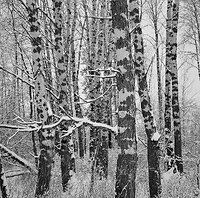
tri-x rated at 200 asa

Paper Birch.jpg

H
Paper Birch.jpg

  • 0
  • 0
  • 9
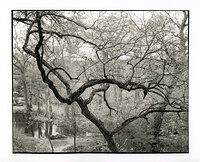
Krause 4

H
Krause 4

  • 4
  • 0
  • 48

Recent Classifieds

Forum statistics

Threads
203,058
Messages
2,849,240
Members
101,626
Latest member
Rick_P
Recent bookmarks
0

shango

Member
Allowing Ads
Joined
Jan 20, 2008
Messages
2
Format
35mm
Hello to the group.

I just shot a couple of rolls of tri-x at 200
I did this as it was suggested to achieve
a different look from tri-x. Basically I'm trying to tone down
the contrast a bit. Apparantly this is common practice.
However, I won't be able to process these rolls myself.

My question is, if I take these rolls to my favorite lab,
do I ask for a pull process, or process normal?

I'm inclined to pull, but I want to check here before
I might ruin a couple of good shots.

Sorry if this has been covered. I tried a search on this.

SG
 
If you want to lower contrast in your negatives, develop for a shorter period of time.
Shooting the film at an exposure index of 200 just means you're giving more exposure, moving the shadow tones farther up from the toe of the tonal curve of the film (see manufacturer's data sheet).
What it in reality means is that you'll get better shadow separation, but overall contrast shouldn't be affected until you alter development time.
If you develop that roll normal you will probably get workable negs unless it was extremely bright and you metered for the shadows. If it was low contrast lighting you should be fine. But to achieve a compressed tonal scale, or lowered contrast, you need to shorten development time. How much? Only trial and error can tell for sure.
- Thomas
 
Yes, rating at 200 and shortening the dev time would be a "pull".

Generally, pulling lowers contrast...but you could develop normally as well and get great negatives. That extra stop of exposure is easily handled by negative film.
 
Normal works great, but I would still pull it 10-15%.
 
my favourite setting!

200iso - develop 4 min (or as I do 3.45min) in HC110. fantastic film!
 
I use to shoot it that way, then pull process. The result was less contrast, which could allow a softer look to the final images. Oddly enough, I recall a Kodak magazine ad that described that, and had an image that was of a pilot with a WWI era biplane. I liked the look in that old ad, so I gave it a try for a while. It may have been in a National Geographic magazine, since I recall going through old issues at the library when I was in college (graduated 1998). Anyway, probably appropriate for doing shots of people, though I prefer AGFA APX100, or more recently Ilford HP5+.

Ciao!

Gordon Moat Photography
 
my favourite setting!

200iso - develop 4 min (or as I do 3.45min) in HC110. fantastic film!

I did a roll @ 200 last summer, but I did HC-110 dil. B, develop 5 min (agitation 10 secs/min throughout). I consider "normal" 400 ISO development to be HC-110 Dil. B. at 7.5 min, so I did pull it.

Decent results (for me, anyway) such as the attached.
 

Attachments

  • img021-mod4-flip-web.jpg
    img021-mod4-flip-web.jpg
    229.8 KB · Views: 384
I did a roll @ 200 last summer, but I did HC-110 dil. B, develop 5 min (agitation 10 secs/min throughout). I consider "normal" 400 ISO development to be HC-110 Dil. B. at 7.5 min, so I did pull it.

Decent results (for me, anyway) such as the attached.

I normally develop in HC110 21 degrees approx. (dil B) in 6 min (30 sec agitation).

I just love the 200 setting. fine sharp grain and all the tones from the 400 film..

beautiful.
 
Alot of people rate 400TX near the EI 250, and develop it in rodinal. I concur with that, and get good negs with a long tonal scale. I actually prefer more contrast than that combination affords, but it's nothing that can't be sorted out in the darkroom.

I've overexposed 400TX by at least 4 stops on my Holga, and still managed to get wonderful prints from those negs. They needed a lot of burning in, and were as grainy as you could want, but the image still worked. It's hard to overexpose a film like Tri-X. You should be in good shape.
 
Depending on what metering mode you are using, spot, center weighted, or matrix, you may need to expose at 200 in order to avoid underexposure with Tri-X. You could try taking one roll in and asking for reduced development as you say you are inclined to do, and, depending on how that came out, give the same or different instructions on the remaining rolls. I always shoot Tri-X at 200 in 35mm on center weigted meter mode and develop in XTOL 1:3 @68degrees for 12.5 minutes (this is the time that is often recommended for Tri-X exposed at 400). If I wanted to reduce contrast on Tri-X exposed at 200, I would develop it for 10.5 minutes, or less depending on how much I wanted to control contrast. If the subject or lighting was obviously high contrast, I would at least try one roll at a reduced development time and go from there.
Good Luck
 
My current formula for Tri-X 35mm is 250, Rodinal 1:100, 20 minutes, 20ºC, 30 sec. initial agitation, 3 gentle inversions every 3 minutes thereafter. Yields long tonal scale and good grain characteristics, but for low contrast scenes you may want to go to 1:50 and adjust the time accordingly.
 
I'm with Mabman on this one. EI 200, 30 seconds initial agitation, 2 gentle inversions each 30 seconds thereafter for 5 minutes total at 68 degrees f/20 degrees C. This was my standard for Tri-X for years.
 
Thanks for all the great responses. Very good info.
 
Photrio.com contains affiliate links to products. We may receive a commission for purchases made through these links.
To read our full affiliate disclosure statement please click Here.

PHOTRIO PARTNERS EQUALLY FUNDING OUR COMMUNITY:


Ilford ADOX Freestyle Photographic Stearman Press Weldon Color Lab Blue Moon Camera & Machine
Top Bottom