
• Welcome to Photrio!
    Registration is fast and free. Join today to unlock search, see fewer ads, and access all forum features.
    Click here to sign up

Tri-X 400 exposed as 100, developed as 800

Recent Classifieds

Forum statistics

Threads
201,860
Messages
2,831,268
Members
100,987
Latest member
Rubens Cavallari
Recent bookmarks
0

Devlog

Member
Allowing Ads
Joined
Sep 9, 2014
Messages
44
Location
Berlin
Format
Multi Format
Dear photographers,

yesterday I shot a Tri-X 400 with ISO 100 and developed it as a 800 film. In figures: HC110 with the dilution 1:40 and developed it for eight minutes.
The motivation: I toyed around with a fake-film software which had some settings for Tri-X like

N Tri-X 400 +1 --

I liked the look of one setting, which read
N Tri-X +3 -
and asked people about the meaning. Even the plugin-manufacturer's help desk couldn't help, the lady couldn't understand my questions obviously.

Someone who could often help me with other questions suggested it is related to the zone system and that's about pulling and pushing.

I know how to push a Tri-X 400 as everybody does here I guess. I prefer Xtol or HC110 to do that. What I don't know is the language behind the
N Tri-X +3 -

Does that mean the film fake software VSCO emulates the look of a Tri-X 400, pulled three times to 50 and ... now what? ... developed as a 800 Film or developed as a 200 film? There are other settings like
N Tri-X +1 ++
for example.

Yesterday I saw what I can do and started with pulling down to 100 and pushing the development to +1 (like I would try a push to 800). It was quite nice. Of course the negatives were quite dark, but all I needed was a clean gamma correction. I will try some variations with the development time, but overexposing the Tri-X for about +2EV was quite a nice surprise.
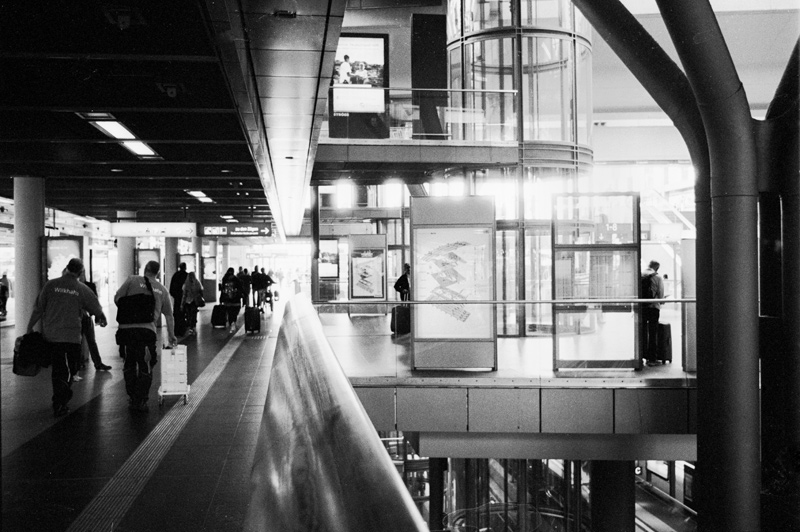
20010551680_d6018db05b_o.jpg

Nikon F4, 35/2.8 Ai-S, 1/15, ƒ/5.6, Kodak Tri-X 400 @100, Kodak HC110 1:40 (8 mins)
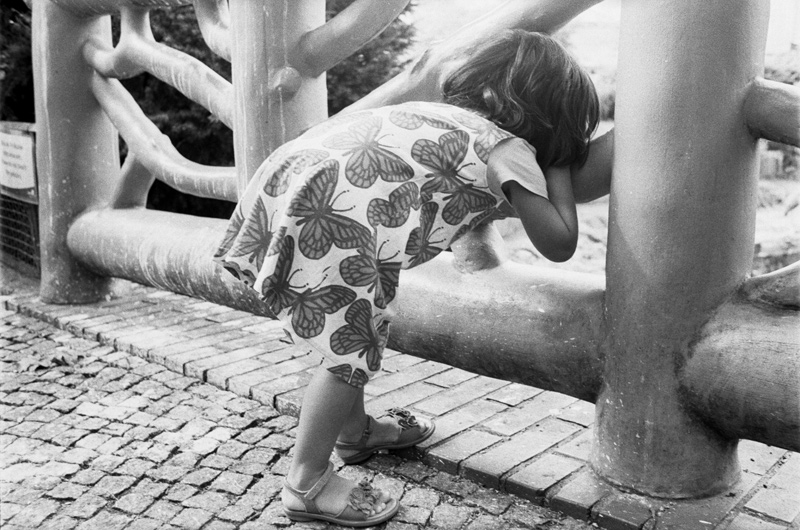

19993658058_a1434fc7fe_o.jpg

1/30, ƒ/4, same roll

In the same development tank was a Neopan 400, exposed as a 200 and developed as a 620 I guess (HC110 1:40 8min).
A popular tutor in germany says: Exposing correctly is not equal to a pretty picture. I like the 50ies, 60ies look in it, but I do not fully understand the contradiction in pulling the exposure and simultaneously pushing the development. I just tried it because of the fake film software, and I am happy that I did it (but would like to understand more about it).
 
Last edited by a moderator:

Oscar Carlsson

Member
Allowing Ads
Joined
Oct 15, 2009
Messages
231
Location
Stockholm, Sweden
Format
Multi Format
I'm not quite sure what you are after, but there is no such thing as 'developing as X'. ISO speed is determined by measuring minimum density on the film, that is shadows. You then develop for your highlights, if the contrast is low then you develop a bit longer to place your highlights at the appropriate location on the film curve. This is basic zone system terminology which most people are familiar with.

The names in the fake-film filter software (which can result in really nice results, but that is a discussion for DPUG) are entirely arbitrary and do not necessarily correspond to anything in the film world.

It sounds like you overexposed and overdeveloped your film. If this look pleases you, use it! But I guess the negatives are going to be a bit dense. :smile:
 

Colin Corneau

Member
Allowing Ads
Joined
Nov 20, 2007
Messages
2,365
Location
Winnipeg MB Canada
Format
35mm RF
Highlights look really blown out to my eyes, which I guess is to be expected with, as Oscar notes, overexposing and overdeveloping.

But as he also says, if it's a look you like and that prints well for you and your eye...go for it. Photography is supposed to make you happy.
 
OP
OP
Devlog

Devlog

Member
Allowing Ads
Joined
Sep 9, 2014
Messages
44
Location
Berlin
Format
Multi Format
Colin, Oscar: Thank you for your quick responses! I know there is something to improve in the pictures, but generally I like the results.
Yes, the negatives are really dense, that's what I expected. But what I didn't expect was that the highlights still live.

Of course they are blown out, but not everywhere. In a back light situation as in the station above of course they are blown out (nice contrast to the shadows), but in the portrait from behind it's not too bad.

Generally I am after this: Seen the hieroglyphes in the fake film software VSCO, I had the idea to try something in that direction.
I knew what would have happed if I pulled the exposure AND the development, but I didn't knew what would happen when pulling the exposure and pushing the development.

I hope someone could explain that (what that means to the shadows and the highlights and the grey tones).
My guess: Saving details in the shadows (by pulling the exposure), increasing the contrast (by 1+ push development) and less details in the highlights (not to get too greyish results).
 

Oscar Carlsson

Member
Allowing Ads
Joined
Oct 15, 2009
Messages
231
Location
Stockholm, Sweden
Format
Multi Format
The contrast between the outdoor highlights and the indoor shadows is severe, hence the lack of separation in those highlights. In the child picture, the contrast is not as severe. Hence the difference. Also, if you had back lighting and relied on your cameras built-in meter, it might have underexposed it and reduced the density of your highlights further.

By overexposing the film you reduce the contrast slightly, and then by overdeveloping you increase it again. But now this is getting beyond my current knowledge in the extremes of development/exposure, but again, please don't rely on the film software to having any connection to reality and results from their descriptions. They are a fine source of inspiration but results can only be had by testing it yourself, and if the results are not what you are expecting from the software...I wouldn't rely on the software as a oracle.
 

removed account4

Subscriber
Allowing Ads
Joined
Jun 21, 2003
Messages
29,832
Format
Hybrid
hi devlog

beautiful photographs you have made !

i am a fan of over exposure and over development, it has a
really nice unique look to it you can add to your bag of tricks.
one thing i like to do when i expose like this is
have 2 baths of developer ... i do things a bit differently than hc110 ...
i use dektol and caffenol c.
i dilute the dektol about 1:8 or 1:10 and i agitate 1 full min and 10s every min for 4 ( so 4-5 mins total )
then i pour out the deitol and add caffenol c ( with 15cc of straight dektol mixed in )
and agitate continuously for 4-5 mins ... i started doing this with ansco130 until i ran out. it will work with ansco130 too, and very well.
sometimes the film is so dense i can't see what hte image is, even through a flood light. the image is a beautiful suprise when it's printed.
 

MattKing

Moderator
Moderator
Joined
Apr 24, 2005
Messages
55,200
Location
Delta, BC Canada
Format
Medium Format
There are a whole bunch of mixed terms here.

"Push" and "Pull" are two terms that relate only to development, not to exposure.

You "Push" development to increase contrast. In Zone System parlance, N+1, N+2, and N+3 refer to three different levels of increase in contrast, which is sometimes referred to as expansion (although that may have more relevance to older style films that are mostly no longer available).

N-1, N-2 and N-3 or "Pull" development is used to reduce contrast, and is sometimes referred to as contraction.

In pure Zone System work, you measure the contrast in the scene, and then you adjust the contrast of the negative (using N+ or N- development) to match your printing paper.

When it comes to exposure, you should just use the terms over-expose or under-expose (by X number of stops).

In many cases, people are forced by low light conditions to under-expose their film. They then resort to a "Push" development to help preserve the results. The "Push" development doesn't really help with the under-exposed shadows in the scene, but it does improve the contrast of the otherwise muddy looking near shadows and lower mid-tones. All at the potential cost, however, of a loss of detail in the highlights, which become more dense when you increase development.

Some times, increasing the exposure doesn't really hurt the highlights, because the total subject brightness range is relatively narrow, and there is enough latitude in the film to properly record those highlights with normal development. Other times, the increase in exposure will cause those highlights to block up, because the subject brightness range is large. In those cases, the traditional approach is to "Pull" development to bring those highlights back down.

If you over-expose and over-develop a photo where the subject had an average subject brightness range,you will get more detail in the darker areas of the scene, but may lose substantial amounts of highlight detail. Which is fine, if that is what you intend.

Much of this discussion needs to be related to how you are displaying the results, and the process you use to get there. If you are printing in the darkroom, APUG is here to help you with the choices and techniques available. If there is scanning and digital steps involved, we don't 5alk about them here, but the sister site - DPUG.ORG - deals with that.

The software labels you refer to are not meaningless, but don't expect a lot of help from them when it comes to questions about "real" film.

Have fun.
 
OP
OP
Devlog

Devlog

Member
Allowing Ads
Joined
Sep 9, 2014
Messages
44
Location
Berlin
Format
Multi Format
Oscar, thanks again. Of course I wouldn't rely on the fake film software manufacturer. But I am grateful that they inspired me to try something new with film.

Jnanian, merci beaucoup. I'm glad you like the pictures, I'm happy with the results and will come back to the idea of overexposing and overdeveloping. I'm also glad that I experimented when my daughter (almost three years old) learned to ride her bike alone - classic shots! So I had a Nikon F5 and a 50mm with me and the Neopan - two novices.

Two-bath-developer seems very reasonable for this kind of development process, also to save details in the shadows. Very good suggestion. Once I was fond of Pyrocat, but it was too complicated for me to find a fitting fixer - which should have been alkaline, but somehow I wasn't experienced enough for that. Then I tried some Emofin, but it takes too long for me to learn how to use it properly. HC110 offers some range of styles, I had also some experience with 1:100 with nice results. Bottom line: I need something which is easy to handle ;-)

Matt, thank you for the information. Yes, getting the terminology straight is of course a good idea. Now I'll speak of my N-2 exposure and N+1 development. Your information about the Zone System was very helpful.

My intention: To print the best results in the darkroom, for the first glance I scan the negatives - but this is meaningless for me because my questions are exclusively related to exposure and development. Of course I didn't expect real substantial help about development details, but my thoughts were: "If they name it 'N Tri-X +3 -' they might have an idea what developing finesses with simultaneously pushing and pulling is all about.
 
Last edited by a moderator:

RalphLambrecht

Subscriber
Allowing Ads
Joined
Sep 19, 2003
Messages
14,933
Location
K,Germany
Format
Medium Format
Dear photographers,

yesterday I shot a Tri-X 400 with ISO 100 and developed it as a 800 film. In figures: HC110 with the dilution 1:40 and developed it for eight minutes.
The motivation: I toyed around with a fake-film software which had some settings for Tri-X like


I liked the look of one setting, which read and asked people about the meaning. Even the plugin-manufacturer's help desk couldn't help, the lady couldn't understand my questions obviously.

Someone who could often help me with other questions suggested it is related to the zone system and that's about pulling and pushing.

I know how to push a Tri-X 400 as everybody does here I guess. I prefer Xtol or HC110 to do that. What I don't know is the language behind the

Does that mean the film fake software VSCO emulates the look of a Tri-X 400, pulled three times to 50 and ... now what? ... developed as a 800 Film or developed as a 200 film? There are other settings like for example.

Yesterday I saw what I can do and started with pulling down to 100 and pushing the development to +1 (like I would try a push to 800). It was quite nice. Of course the negatives were quite dark, but all I needed was a clean gamma correction. I will try some variations with the development time, but overexposing the Tri-X for about +2EV was quite a nice surprise.

20010551680_d6018db05b_o.jpg

Nikon F4, 35/2.8 Ai-S, 1/15, ƒ/5.6, Kodak Tri-X 400 @100, Kodak HC110 1:40 (8 mins)


19993658058_a1434fc7fe_o.jpg

1/30, ƒ/4, same roll

In the same development tank was a Neopan 400, exposed as a 200 and developed as a 620 I guess (HC110 1:40 8min).
A popular tutor in germany says: Exposing correctly is not equal to a pretty picture. I like the 50ies, 60ies look in it, but I do not fully understand the contradiction in pulling the exposure and simultaneously pushing the development. I just tried it because of the fake film software, and I am happy that I did it (but would like to understand more about it).
I'm surprised you 've got as good as a result out of it as you did.Just proves again that overexposure is rarely a problem:wink:
 

removed account4

Subscriber
Allowing Ads
Joined
Jun 21, 2003
Messages
29,832
Format
Hybrid
hi again devlog

good to see you are experimenting and having a good time, that is half the battle :smile:
with regards to printing ... not sure if you have ever done split filter printing
but les mclean has a wonderful article on how to do it .. http://www.lesmcleanphotography.com/articles.php?page=full&article=21
and it really makes things glow ...
ralph's book is awesome and inspiring as well, definately something to have in the library !

john
 
Photrio.com contains affiliate links to products. We may receive a commission for purchases made through these links.
To read our full affiliate disclosure statement please click Here.

PHOTRIO PARTNERS EQUALLY FUNDING OUR COMMUNITY:


Ilford ADOX Freestyle Photographic Stearman Press Weldon Color Lab Blue Moon Camera & Machine
Top Bottom
