

• Welcome to Photrio!
    Registration is fast and free. Join today to unlock search, see fewer ads, and access all forum features.
    Click here to sign up

Tray agitation and shuffling methods?

Bookcase detail

A
Bookcase detail

  • 0
  • 0
  • 0
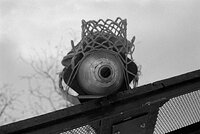
Cone and Hoop

A
Cone and Hoop

  • 1
  • 0
  • 29

Recent Classifieds

Forum statistics

Threads
202,761
Messages
2,845,224
Members
101,512
Latest member
FastFred
Recent bookmarks
0

rwboyer

Member
Allowing Ads
Joined
Oct 16, 2009
Messages
522
Location
MD USA
Format
Medium Format
I recently started to process A LOT of sheet film at the same time and i have used trays since before time began. Here is a question for those of you that do/have done tray development.

I have employed the shuffle method for agitation in the past that has worked fine for a few sheets at a time but now that I am doing a larger volume I worry that I will run into issues from a consistency standpoint as well as getting tired for the amount of development time per batch that I require for the CI's I am shooting for.

If possible could anyone describe their working method for more than 3 sheets using tray development?

Constant shuffling - shuffling at some interval ?

My development times are 10mins - 15mins with constant shuffle.

RB
 
Constant shuffling, bottom to top, emulsion side up, no more sheets than I can shuffle in 30 sec. usually for ABC pyro.

If I'm only doing 2-3 sheets, I tend to slow down the shuffling to occupy the agitation cycle length I'm after.

I also rotate the stack 90-degrees 1/4, 1/2, and 3/4 the way through usually.
 
Constant shuffling, bottom to top, emulsion side up, no more sheets than I can shuffle in 30 sec. usually for ABC pyro.

If I'm only doing 2-3 sheets, I tend to slow down the shuffling to occupy the agitation cycle length I'm after.

I also rotate the stack 90-degrees 1/4, 1/2, and 3/4 the way through usually.

Thanks David - couple questions for you:

1) Why the 30secs max - takes me much less time with the number that I process currently - what do you see as issues with more than 30? Loss of developer activity on the buried sheets?

2) Explain the rotation to me if you can - If you are using constant shuffle what does it matter to keep track? I use the the edge code orientation just to know if I have gone through the whole pile or not. I orient all edge codes down except one sheet that i have the edge code up. Maybe I am misinterpreting your goal of 90 degree rotation - I have not done this ever as I am scared that the film that is "rotated out" will not receive exactly the same development on both halves?

Thanks again

RB
 
Different strokes for different folks -


I use a slosher to process six sheets at a time. I agitate by alternately lifting opposing corners of the slosher insert continuously for the first 30 second, and then for 5 seconds out of every 30 for the remainder of the development cycle. I life the insert just enough that when I put it back down, developer is forced through the holes in the bottom of the insert to gently lift the individual sheets - while I'm doing this in total darkness, I try to use the sense of feel to not lift the insert completely out of the developer.
 
Different strokes for different folks -


I use a slosher to process six sheets at a time. I agitate by alternately lifting opposing corners of the slosher insert continuously for the first 30 second, and then for 5 seconds out of every 30 for the remainder of the development cycle. I life the insert just enough that when I put it back down, developer is forced through the holes in the bottom of the insert to gently lift the individual sheets - while I'm doing this in total darkness, I try to use the sense of feel to not lift the insert completely out of the developer.

Don't think that type of thing is practical with 8x10. Or is it?

RB
 
I develop up to 12 sheets of 8x10 at a time, though I try to keep it under that when possible. I shuffle through the stack from the bottom with each sheet moving once per minute. I will divide the minute by the number of sheets and shuffle at that rate, so 12 sheets would get one sheet moved every 5 seconds. 4 sheets would have one shuffled every 15 seconds. Every few minutes I rotate the entire stack 90 degrees and continue shuffling. This means that if the notch codes for the stack were on the top edge when I started, after 2-3 minutes I will rotate the stack so the notches are on the left side, then again to the bottom after a few more minutes, then the right, then back to the top. No matter which way the stack is rotated, I always pull the sheet from the bottom of the stack with my right hand and pull to the right. The sheet comes completely out of the developer when I shuffle it, but since it is only for a second or two, I don't worry about it.

Sounds like a good plan for more sheets to me. Thank you.

RB
 
Don't think that type of thing is practical with 8x10. Or is it?

RB

Sloshers are available for 8x10. They are available at Photographers formulary although they are hard to locate on the website. They hold 4 8x10 negs in a 16x20 tray. However, they won't fit a standard Patterson 16x20 tray which is somehwat smaller than some. The older Kodak Duraflex trays are somewhat larger and work well with the slosher but they are just large enough that they don't fit in my sink. Also, they require large volumes of developer, especially for 1 shot use which is a nuisance if processing a lot of film. So they 8x10 slosher would be great if you have the room and your developer was replenished. I admire someone who can shuffle a dozen 8x10 negs with even development and no scratches. I am careful but still find small scratches on my tray-developed negs. No way I would blow $60 of film and potentially good photos on the learning curve. I have settled on tubes which are relatively slow, but very precise and relatively foolproof.

For 4x5, sloshers are great. The 6 sheet slosher fits in an 11x14 tray with about 1500 ml of developer. You can easily develop each frame for different times if need be. Minimal handling of film - no scratches. I still use tubes but might use a slosher if I were starting from scratch.
 
i have processed upto 40 sheets of 4x5 film using the shuffle method
i lift and flop sheets from the bottom onto the top
and keep one hand making sure the stack is together (on the side)
i have gotten maybe 1 or 2 scratches out of maybe 1500 sheets of film.
the most difficult thing isn't pulling the sheet out of the bottom of the stack
it is separating the sheets in the pre-soak water bath ...
i shuffle continuously ...
maybe once or twice or at most three times i stop and walk to the timer to see
how much time is left ...
 
Thanks David - couple questions for you:

1) Why the 30secs max - takes me much less time with the number that I process currently - what do you see as issues with more than 30? Loss of developer activity on the buried sheets?

Yes, I don't want to overagitate by going too fast or underagitate by letting some sheets remain in the stack for too long, and I try to time it usually to one cycle per 30" with most developers (15" for PMK) for more consistent agitation whether I'm processing three sheets or eight sheets.

2) Explain the rotation to me if you can - If you are using constant shuffle what does it matter to keep track? I use the the edge code orientation just to know if I have gone through the whole pile or not. I orient all edge codes down except one sheet that i have the edge code up. Maybe I am misinterpreting your goal of 90 degree rotation - I have not done this ever as I am scared that the film that is "rotated out" will not receive exactly the same development on both halves?

Thanks again

RB

Every 1/4 the way through the development time, I rotate the whole stack counterclockwise to reduce the likelihood of overdevelopment along the edges or streaking from repeating the same constant motion in the same direction and continue with the shuffling pattern.

I take the bottom sheet out of the developer when shuffling. I think I'd need a lot more developer to keep it submerged, and keeping it submerged might add to the risk of damaging the top sheet.
 
What's "A LOT?" Maybe this can help. You can use the same basic design, but scale it up to a 16x20 sheet of lexan to accommodate about 12 sheets at a time. No shuffling. No scratching. Looks like it will give even development if you agitate the tray properly.

http://www.philbard.com/panel.html
 
What's "A LOT?" Maybe this can help. You can use the same basic design, but scale it up to a 16x20 sheet of lexan to accommodate about 12 sheets at a time.

http://www.philbard.com/panel.html

Alternately, have you looked at the feasibility of using a deep tank with hangers? If your volume of film is enough, a replenished developer in a deep tank makes sense.
 
I also use David's method - the 30 sec rule is good, it keeps every sheet open to the developer when it is moved to the top of the stack each 30 sec, where it receives maximum exposure to the chem. This means 6 - 8 sheets at a time would be my normal amount, I have done up to 10 without problems, but don't like to go that many unless the situation demands it.
I also rotate as he says. One other thing I do - I do a lot of multiple images - pan strips if you will. The uniformity between negs is even more important than normal - especially skies, pretty much driven by development. When unloading from the holders, I clip (with one of those little fingernail clippers) the corner of the first one in the stack (e-up, as David said). Then into the water bath, e-up, same order bottom to top. Then into the Dev, same way. When I move to the stop, I make sure the clipped corner is on the bottom, and transfer in the same sequence, to ensure first is still first - the one with the clipped corner. I also do this when rotating, just for good measure.
BTW - an 8x10 tray with 1500cc of developer for 4x5.
 
Tank Develop

I've shuffled, used the Yankee tank, and have
tank and hanger processed sheet film. The
later method is the one I'd use were I to
once again process sheet film.

I found it to be a relaxing method. Chances of
marring the surfaces is nil. Tanked chemistry
is good for months and is a natural for
replenishing. Hangers of almost
any size are available. Dan
 
Dan - I used 4x5 hangers in a tank made, I think, for 5x7, held about 3 liters of chem. My method was to drain from alternate corners, 2 times each, each minute, then a quick tap for air bells. I tried to make the pick up and set down motion just fast and slow enough to avoid surge effects, which was successful with HC110, but I never could get rid of uneven development (mostly ok, but I never knew when a sky would show it).
And when trying them for semi stand with Pyrocat HD, I could see surge effects from the holes in the hanger sides.
Any suggestions?
 
The Tank & Hanger Method

Dan - I used 4x5 hangers in a tank made, I think, for 5x7, held
about 3 liters of chem. My method was to drain from alternate
corners, 2 times each, each minute, then a quick tap for air
bells. I tried to make the pick up and set down motion just
fast and slow enough to avoid surge effects, which was
successful with HC110, but I never could get rid of
uneven development (mostly ok, but I never
knew when a sky would show it).

And when trying them for semi stand with Pyrocat HD,
I could see surge effects from the holes in the hanger
sides. Any suggestions?

The solution; HC110 + hangers without holes! Are such hangers
made? I did some work in a portrait studio environment which
used the tank and hanger method. They also did commercial
work and helped the local newspaper now and then. They
must have had very little tolerance for surge effects or
uneven development.

Surge effects are due to more and less agitation in specific
areas. What ever the method of agitation surge effects
are always present; some times easily perceivable
some times not.

Perhaps short periods of energetic agitation followed by
protracted still times will work to minimize surge and
uneven development. Dan
 
These "surge" effects are usually bromide drag, which results from insufficient agitation. With semi-stand development, the cause is...semi-stand development.

My tank agitation scheme is to lift and drain to one corner, then the next agitation cycle I lift and drain to the other corner. If you're getting drag from some particular film/dev combination, then I'd try agitating more frequently and adjusting development time to compensate for the increased contrast.

Also, are you sure your tanks had enough solution to cover the film? I have three types of 5x7" tanks, one that holds 5 quarts and two that hold 4 quarts. A 3 litre 5x7" tank would be kind of narrow, but maybe there are stainless tanks in that size designed to fit in a water jacket.
 
I pre-soak long enough to be sure they're all separated and equally slimey. Rotate top sheet 180 degrees from the rest so you can feel that its edge is different than all the rest. Pick them all up and place in developer, then agitate quickly through the stack twice in the first 30 seconds. Put thumb and middle finger of left hand on either side of the stack to keep them from floating around too much (I use 4x5). Don't squeeze tight, just keep them organized. With right hand put fingers under the stack and draw the bottom one out, then lift it out of the developer and drop it on top of the stack. Make sure it lands flat with a satisfying "splat". Agitate once through stack each 30 seconds, making sure the one negative you turned 180 degrees is always on top of the stack each 30 seconds. For the last 30 seconds, gather them up in an organized pile, drain them a bit, then drop them as group in the fixer and agitate through the stack as quickly (and safely) as you can for the first 30 seconds, then once through the stack every 30 seconds thereafter.

I put a 1/4 inch thick plastic rod on the bottom of the sink, turn each tray a bit, then prop the top left corner on the rod. If the sheets want to wander around they always end up in the bottom right corner...this helps if doing long developing times with minimal agitation. I also find it more comfortable agitating at an angle instead of directly away from my body.

Simple, eh?

Murray
 
Thanks Dan and David, for your responses.
Maybe the tanks are just oversize for 4x5, but not big enough for 5x7. The hanger top ends sit on a shelf which is an inch or two below the top of the tank (where the lid sits - light tight). I put enought chem to cover them by a half inch or so, and the bottom of the hangers is at least an inch or more above the bottom of the tank, so plenty of room and chems. I can get 6 -8 hangers side by side. I've never seen any other tanks like these - they are a very hard rubber (or maybe Bakelite - they appear to have been spray painted an orange color). I got four of them with a 5th with holes drilled in the bottom and some other darkroom stuff back in 1980 or so for less than $100.
Maybe I'll give the Pyrocat another shot and block off the holes.
 
My tanks are kodak hard rubber...like the one shown here in the back:

Dead Link Removed

You can see there is significant space to the sides of the tank...towards the "top" and "bottom" of the sheets in portrait orientation. So when I'm developing, I will take all the hangers and slowly slide them sideways all the way to one side, and then all the way back to the other side, which is about an inch of travel. Then I will pick them up and down slightly. And every time I do this I rearrange them so there is even space between them all. I do this every 30s at least and then every minute or two I do the lift-and-tilt method. Every couple minutes I pick each one out and inspect it, then put it back. I haven't had any uneven development or surge marks from my hangars, but I worry because lots of people say that agitation is critical with tanks and hangars. Yet I don't think I would even try the shuffle method of tray development. When I did trays, it was one-at-a-time, or with a slosher.
 
I Think Otherwise

These "surge" effects are usually bromide drag,
which results from insufficient agitation.

Surging, gushing. When agitating, whatever the method,
the mechanics of the equipment used are going to cause in
certain areas accelerated movement of the fluid in relation
to the whole of the body of fluid. The increase in flow be it
turbulent or laminar has the same effect as an increase
in agitation. Surge areas are more fully developed.

Bromide drag is the inhibiting of development by some
developing agents. Reportabley Metol is while phenidone
is not inhibited. Bromide drag produces areas of less
development. Dan
 
Photrio.com contains affiliate links to products. We may receive a commission for purchases made through these links.
To read our full affiliate disclosure statement please click Here.

PHOTRIO PARTNERS EQUALLY FUNDING OUR COMMUNITY:


Ilford ADOX Freestyle Photographic Stearman Press Weldon Color Lab Blue Moon Camera & Machine
Top Bottom
