• Welcome to Photrio!
    Registration is fast and free. Join today to unlock search, see fewer ads, and access all forum features.
    Click here to sign up

Tonal range

100 years ...

A
100 years ...

  • 0
  • 0
  • 22
Synchronized pool cleaners

A
Synchronized pool cleaners

  • 0
  • 0
  • 51

Recent Classifieds

Forum statistics

Threads
202,998
Messages
2,848,532
Members
101,591
Latest member
rmertas
Recent bookmarks
0

Gary Holliday

Member
Joined
Apr 12, 2006
Messages
824
Location
Cambridge, UK
Format
Medium Format
I'm on the lookout for a new film. I had been using APX 25 120 for a long running landscape project, but that's almost gone. So is the Jessops Pan 50 and the Efke 50 choice was unsuccessful!

I like slow emulsions with top notch tonal range. Dev of choice is Rodinal 1+50.

Any recommendations?
 
Try Pan-F in Rodinal. Efke 50 and 25 have a kind of unusual spectral sensitivity that may not be to your taste.
 
2nd on the Pan-F in Rodinal. I must say that I do like Efke 25 quite a bit, especially in Pyrocat HD, 2+2+100 for 10 min., but the QC leaves a lot to be desired.
 
Ilford Pan-F. It's an amazing film. Not my style of film, but if you like slow emulsions, you will neither be disappointed by the tonal range, nor the grain. As the others said, Rodinal is a good choice for it, I used 1+100 dilution and an EI of 25. It's really sharp.

- Thomas
 
Pan F is very nice, although I second the Rodinal 1:100 dilution, which seems to tame is tendency to be slightly high contrast.

Adox/EFKE 25 is also pretty good at 1:100:
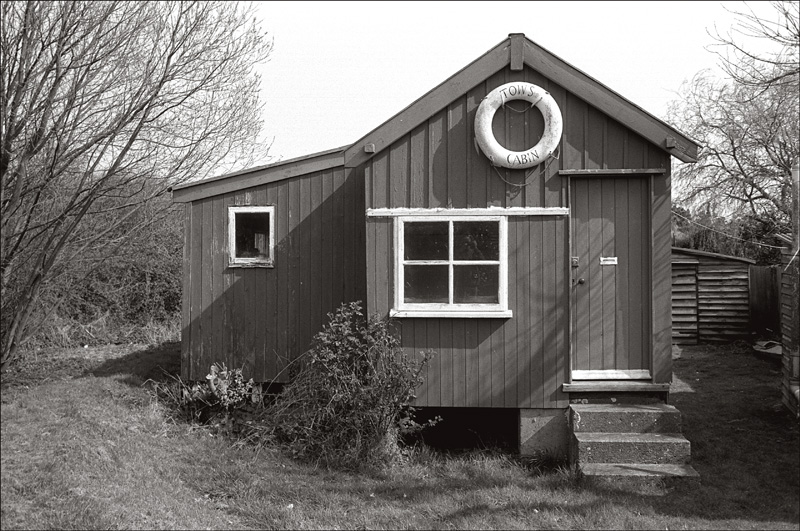
76832954.jpg


The slower Adox films have similar caveats to Pan F WRT contrast when developed at 1:25/1:50.

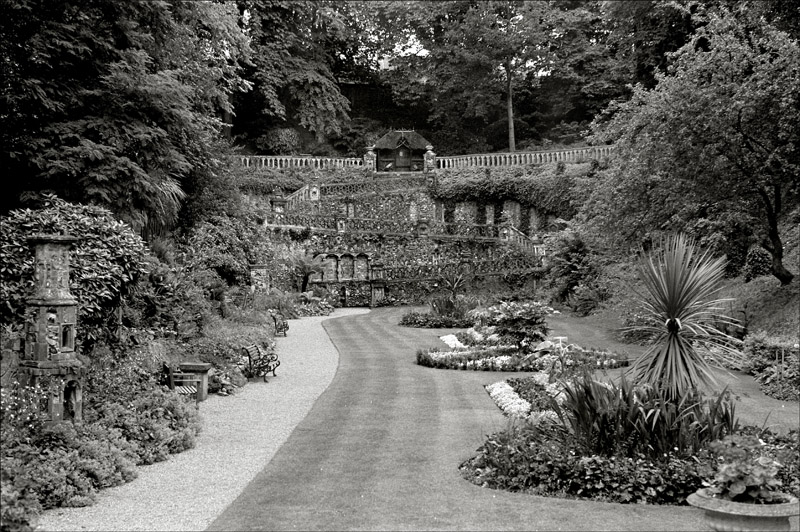
Don't overlook Fuji Acros when Rated at 80 ISO and 1:100 for 18 mins

64013727.jpg


At this dilution its tonal range is superb, and grain may be finer than some conventional cubic grain films.

I too miss the Agfa APX films, but at the moment there are enough emulsions out there to get similar results (no need to cry in our beers just yet) :D

http://photo-utopia.blogspot.com/
 
...

Don't overlook Fuji Acros when Rated at 80 ISO and 1:100 for 18 mins

...

Mark, I'd be glad to know also what kind of agitation do you use. I have 20 sheets of this film in the fridge to try out, and I like the tonality of your shot (btw. any filters or plain Acros rendition?)

Thanks a lot
 
The Rollei film is not APX 25, but it is amazing. The tones are fantastic and the contrast, for me, has been fairly low. If it were cheaper, it would be my main film
 
Is Rodinal still available or is it only available via mixing the chemicals? My local darkroom photography shop has lost its lease and I was advised it wasn't available any longer? Thanks for your assistance. Jon
 
Pan F+ in Sprint standard

Pan F+ works very well with Sprint Standard developer. Try it at 22 C for 7 min.
at i.e. 32. First min. slowww continuous agitation then follow with 3 slow inversions/min. Accutance, shadow detail, highlights excellent +++ with virtually no grain.Standard dilution 1:9. I presoak for 1 min. Not sure that it's necessay.
 
Ilford Pan F at EI 25 or EI 12 to manage contrast in outdoor scenes, at EI 50 if you will be using it indoors with studio flash. To me, tonality is unbeatable, grain very manageable, very sharp. I don't use Rodinal that much but there should be no problem with Rodinal. If by any chance you don't like the tonality in Rodinal, try DDX or XTOL.
Doug Webb
 
I understand the concept of 'pushing' film speed.

I see that many people get preferable results at half-speed with b/w.

Is there an explanation (other than it looks good) for what happens at fractional EI?

Thank you
 
Mark, I'd be glad to know also what kind of agitation do you use. I have 20 sheets of this film in the fridge to try out, and I like the tonality of your shot (btw. any filters or plain Acros rendition?)

Thanks a lot

Sorry I missed this question.
The shot was taken on Acros at slightly lower than box speed, 1:100 for 18 mins, agitation continuos 30sec (gentle) then 2 inversions per min.
The shot was taken on a 35mm BTW
 
I see that many people get preferable results at half-speed
with b/w. Is there an explanation (other than it looks good)
for what happens at fractional EI? Thank you

The producers of film have a legitimate way of inflating film
sensitivity values beyond realistic field use values. All things
being equal a negative is more dense the lower the EI. Dan
 
The actual film speed is dependant on your particular equipment, the developer and your technique, especially in developing.

One way to determine your film speed is to, for a given film, expose a series of test negatives from a black target, develop them using your normal method, then compare the density to some sort of known standard.
I'm recently begining my film speed quest using Bruce Barlow's method and the test kit he sells. So far I'm finding that, for me, Tmax 100 is perhaps more like Tmax 80.

Bruce's kit is available at Dead Link Removed. You can also get people to read the negs with a densitometer.

I'm sure there are other descriptions of the process, and other methods in here, but I've not looked.
 
I'm sure there are other descriptions of the
process, and other methods in here, but I've
not looked.

I can think of no reason to use a black target.
Who's great idea was that?
A Sturdy Board gray, 20 x 30 inch and clear blue
sky serves well. Dan
 
I use ilford pan f+ all the time in 120. I always develop it in aph 09 at 1+40 (or Rodinal 1+50)
rated at EI 32, for 7 minutes. Gentle continous agitation the first 30 seconds and then two gentle inversions every 30 seconds thereafter. This combination has given me the best results so far.
Best Regards
Mads
 
I can think of no reason to use a black target.
Who's great idea was that?
A Sturdy Board gray, 20 x 30 inch and clear blue
sky serves well. Dan

I believe the theory is to factor out at least some of the non-linearity in light meter cell responses at the lower and upper ends.

Using the same meter and light, four stops down from a gray card reading may not indicate the same exposure as a four-stop blacker card metered directly. Similarly with a pure white card three stops up from the gray card.

Testing at the actual boundaries helps to removes the meter as a variable, provided one always uses that same meter.

Ken
 
Photrio.com contains affiliate links to products. We may receive a commission for purchases made through these links.
To read our full affiliate disclosure statement please click Here.

PHOTRIO PARTNERS EQUALLY FUNDING OUR COMMUNITY:


Ilford ADOX Freestyle Photographic Stearman Press Weldon Color Lab Blue Moon Camera & Machine
Top Bottom