
• Welcome to Photrio!
    Registration is fast and free. Join today to unlock search, see fewer ads, and access all forum features.
    Click here to sign up

tmax 400 in rodinal - results

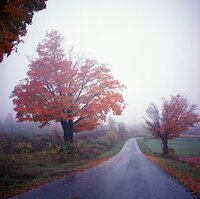
Rainy Day Trees

A
Rainy Day Trees

  • 6
  • 1
  • 92
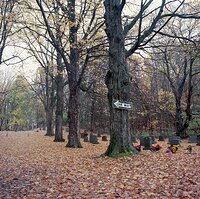
One Way

A
One Way

  • 3
  • 1
  • 91

Recent Classifieds

Forum statistics

Threads
203,157
Messages
2,850,718
Members
101,704
Latest member
yppnq
Recent bookmarks
0

pierods

Member
Allowing Ads
Joined
Dec 18, 2007
Messages
380
Format
35mm
Last edited by a moderator:
Perhaps you can get much better results.

First, did you judge scans, or prints ?

How did you agitate the film ?
What was you exposure ?

Technique is everything with Rodinal... not so much "Right vs Wrong",
but with so many possibilities, you might be able to get just what you want.
 
Last edited by a moderator:
With the new T-Max 400 I've been using Agfa Rodinal at 1+25 with very good results. 8X10 in tubes on Uniroller base with continuous agitation. For medium format, use tank with 15sec agitation every minute.
 
With the new T-Max 400 I've been using Agfa Rodinal at 1+25 with very good results. 8X10 in tubes on Uniroller base with continuous agitation. For medium format, use tank with 15sec agitation every minute.

But what did the OP do to get results that were not pleasing ?
 
Well, first of all, it's 135 format, so I can't do N developments etc.

It was a small tank, 10 seconds agitation/minute.

I tend to think that rodinal somehow messes with the t-grain.

I did the same development with hp5, and although the grain was still there, I got much more pleasing results.

I'll do a test roll at 1+25, 1+100 and stand just in case.
 
Rodinal & T-grain films are an exceptionally good combination, I've had exceptionally good results with both Tmax100 & 400 in 35mm & 120, excellent fine grain, tonality and sharpness (acutance). In used the combination to shoot art nudes and the mid-tone/skin tones are wonderful.

As has been said you do need to find the optimum dilution, developing time and film speed EI that suits you and your working methods, get it right and Tmax films & Rodinal won't let you down.

Ian
 
I've really liked 120 format TMAX 400 in Rodinal; 1+80, 20C, agitate 4 times in first minute, then one agitation every 3 minutes. Hint that might help: I began my developing work with Delta 100 in Rodinal, 1+50, with vigorous agitation once per minute [at least 10 s.] and found it very harsh and contrasty. Backing off the time slightly, and agitation to once ea. 3 minutes gave superb results.
 
Rodinal & T-grain films are an exceptionally good combination, I've had exceptionally good results with both Tmax100 & 400 in 35mm & 120, excellent fine grain, tonality and sharpness (acutance). In used the combination to shoot art nudes and the mid-tone/skin tones are wonderful.

As has been said you do need to find the optimum dilution, developing time and film speed EI that suits you and your working methods, get it right and Tmax films & Rodinal won't let you down.

Ian

could you give a starting point? I'm very bummed out...
 
Do THIS:

15 minutes, with agitation for ten seconds at the beginning, then at the 5th and 10th minute.

It should get you very close.

Now, are you scanning or printing your film ?

d
 
Well I used 3 different dilutions depending on the contrast, I used Rodinal for my 5x4 work too.

However for 35mm & 120 work with Tmax 400 I always used Rodinal at 1+50 for 7½ mins @ 20°C, at 200 EI and agitation in a Paterson tank was continuous inversions for the first 30 second then 2 inversions every minute.

It's the drop in dev time & increase in exposure that really controls the tonality. Everyone works differently but that was very close to Agfa's recommended times.

Ian
 
Do THIS:

15 minutes, with agitation for ten seconds at the beginning, then at the 5th and 10th minute.

It should get you very close.

Now, are you scanning or printing your film ?

d

scanning, what's the difference? you need more/less density?
 
Not an expert like cardwell and grant - but TMX in Rodinal has been very good for me in the past. The Rodinal / t-grain combination is in no way inferior to Rodinal / random grain.

I have found cardwell's starting points to be a great - starting point.
 
Scanning.

Ah. We've got a problem.

Scanning Rodinal & TMY is like drinking re-heated coffee,
or beer that has been left in a glass for two days.


Unless you are using a billion dollar drum scanner,
you can't actually see the grain, and the scanner knows its out there and goes nuts trying to guess what it looks like.
Aliasing, in other words.

The other, bigger problem, is that a negative with enough highlight density to print
a brilliant white is hard to scan. Well, not so much to scan,
but even the best computer displays can't present the lower shadows, or higher brights.

You end up throwing out most of the data to fit a computer display. Everything looks the same on a display.
On a display, my work looks like Weston's. In real life, umm, not so much.

All the virtues which make Rodinal and TMY2 a complete joy to print
work against it for scanning.

For scanning, look up Sandy King's post for Diafine.
 
Scanning.

Ah. We've got a problem.

Sorry it's a little off topic, but will you get a better on-screen representation of the image by scanning a print rather than a neg?

Bob H
 
Thanks Trexx - The perfect answer for an old fart like me!!

Bob H
 
sure, and there is a lot of good info at our gender-indeterminate sibling site:

http://www.hybridphoto.com

we can help you get your negs right for making prints,
but if you are primarily scanning, there are a few hurdles you have deal with !
 
When T-Max first arrived on the market, I used it exclusively with Rodinal and got very good results. I made B&W prints only. This was long before I had entered the digital realm.

D F Cardwell hit it right on. Scans of my negs look like muddy, grainy crud. I can't scan old 35mm negs at all. The answer? Make prints and scan those, buy a better scanner, or send the negs out for scanning. Or read Sandy King's postings and articles on Diafine. You can't win using small negs on a typical home-model flatbed. Okay, enough digital talk.

Peter Gomena
 
One more second for Don's advice. Print the negs to judge the exposure and development. And sometimes, for mid tones, your "normal" printing recipe may have to change, to optimize for the combination.
Sometimes I find that changing the ratio of VC filtration (low vs high contrast mix) brings out something in the neg I didn't see (and certainly wouldn't see by scanning a neg).
Scanners have difficulty with heavy areas in film, unless very expensive ones, and, as Don points out, 255 levels is not much compared to a silver print. As a friend of mine use to say, "the primary job of the scanner operator is to decide what to throw away..." :smile:
 
I just picked up an old Korona View 8x10 camera, and was thinking about trying TMax400 sheets with it. I've really liked Rodinal so far for my 120 and whatever 35mm work I do...this is great information to read. Thanks, folks.

Apologies if this hijacks anything but...for straightforward environmental portraits, is this is good film choice? I'd be doing just contact prints (no 8x10 enlarger in my future, without a lottery win).
 
Photrio.com contains affiliate links to products. We may receive a commission for purchases made through these links.
To read our full affiliate disclosure statement please click Here.

PHOTRIO PARTNERS EQUALLY FUNDING OUR COMMUNITY:


Ilford ADOX Freestyle Photographic Stearman Press Weldon Color Lab Blue Moon Camera & Machine
Top Bottom
