
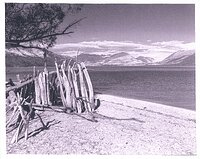
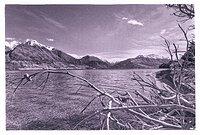
I have recently started shooting film, and I have decided I need to figure out how to develop and scan myself to avoid bankruptcy. For instance, B&W 35mm film is $24 for development and low resolution .jpegs at the local camera shop. Add in the cost of film and I'm looking at almost $1 per photo before printing. No thanks.
I don't have the space for a tabletop DSLR scanning setup, and alignment/focus there seems like a headache anyway, so I've decided to go with the Nikon ES-1 slide copy attachment, together with a Nikon 24MP crop sensor DLSR and and 40mm AF-S DX Micro-NIKKOR f/2.8 G. I already own the camera, and the investment in the lens and copy attachment should pay for itself about a dozen rolls. (I only shoot 35mm at the moment, so I'm not worried about not being able to handle medium format.)
My plan is to shoot into a speedlight, though I'm not sure if I need a modifier, or to put it in a white-lined box, or something of that nature. Maybe setting it against a white wall will be enough? Also, how is the negative held by the copier, exactly? Should I invest in some slide holders with anti-Newton glass, or will just sticking it on with masking tape be enough?
Does anyone have experience using such a setup? Are there any pitfalls to be aware of, or tricks for getting better results?
And will I notice a substantial increase in quality over 3000 by 2000 pixel jpeg scans my lab gives me?
Thanks in advance for any advice or comments you may have. I'd like to have this fairly well planned out before I pull the trigger on buying the lens and attachment.
(There is also the issue of color-correcting C41 negatives, but I'll cross that bridge—and create that thread—when I get there.)
I don't have the space for a tabletop DSLR scanning setup, and alignment/focus there seems like a headache anyway, so I've decided to go with the Nikon ES-1 slide copy attachment, together with a Nikon 24MP crop sensor DLSR and and 40mm AF-S DX Micro-NIKKOR f/2.8 G. I already own the camera, and the investment in the lens and copy attachment should pay for itself about a dozen rolls. (I only shoot 35mm at the moment, so I'm not worried about not being able to handle medium format.)
My plan is to shoot into a speedlight, though I'm not sure if I need a modifier, or to put it in a white-lined box, or something of that nature. Maybe setting it against a white wall will be enough? Also, how is the negative held by the copier, exactly? Should I invest in some slide holders with anti-Newton glass, or will just sticking it on with masking tape be enough?
Does anyone have experience using such a setup? Are there any pitfalls to be aware of, or tricks for getting better results?
And will I notice a substantial increase in quality over 3000 by 2000 pixel jpeg scans my lab gives me?
Thanks in advance for any advice or comments you may have. I'd like to have this fairly well planned out before I pull the trigger on buying the lens and attachment.
(There is also the issue of color-correcting C41 negatives, but I'll cross that bridge—and create that thread—when I get there.)


